

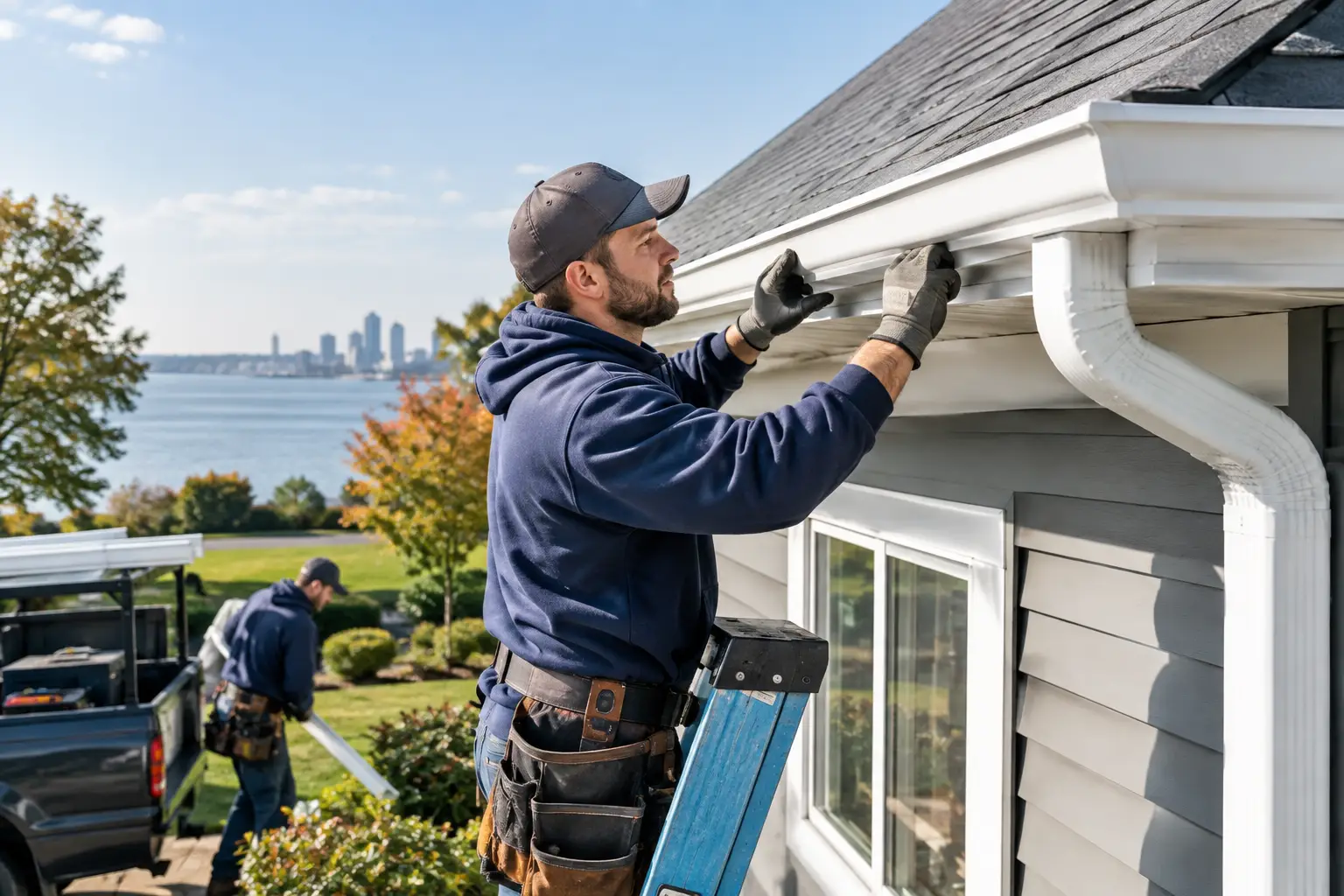
Gutter Installation NJ That Protects Homes
A heavy New Jersey rainstorm can expose a gutter problem in minutes. Water spills over the edge, washes mulch out of beds, stains siding, and pools where it does not belong. Professional gutter installation NJ homeowners can depend on is not simply an appearance upgrade. It is a practical part of protecting the roofline, foundation, siding, and landscape from repeated water damage.
For many properties, gutters are easy to overlook until a leak, overflow, or damaged fascia board makes the issue impossible to ignore. A properly designed system collects roof runoff and carries it away from the building in a controlled path. When the system is undersized, poorly pitched, clogged, or pulling away from the home, that protection breaks down.
Why Gutter Installation Matters in New Jersey
New Jersey homes face steady rain, wind-driven storms, snow, ice, falling leaves, and fast seasonal temperature changes. Those conditions put constant pressure on gutters and downspouts. Even a small installation error can allow water to sit in the wrong area or run behind the gutter instead of into it.
The result may be more than a wet walkway. Overflowing gutters can saturate soil around the foundation, contribute to basement moisture, damage exterior trim, and create ice hazards near entrances in winter. On homes with aging roofs or siding, uncontrolled runoff can speed up deterioration around the eaves and wall penetrations.
Gutters also work as part of a larger exterior system. A roof that is missing drip edge, a damaged fascia board, loose siding, or poor drainage grading can affect how well the gutter system performs. That is why an experienced exterior contractor should look beyond the gutter itself before recommending a solution.
What a Proper Gutter System Includes
A complete installation is more than fastening metal channels to the edge of a roof. It starts with measuring the roofline and considering how much water each section must handle. Long roof runs, steep roof slopes, and valleys that collect runoff may need larger gutters, additional downspouts, or a different downspout location.
Correct Sizing and Placement
Five-inch gutters are common for many homes, but they are not the right answer for every roof. Six-inch gutters can offer added capacity for larger roof areas or sections that receive concentrated runoff from valleys. The best choice depends on the structure, roof design, and drainage needs, not on a one-size-fits-all recommendation.
Downspouts must be placed where they can move water efficiently without creating a new problem at the base of the home. A downspout that discharges too close to the foundation can leave the property vulnerable to pooling and soil erosion. Extensions or drainage solutions may be needed to direct water farther away.
Secure Pitch and Strong Fastening
Gutters need a slight, consistent slope toward the downspout. Too little pitch allows standing water and debris buildup. Too much pitch can look uneven and reduce the gutter’s ability to catch runoff along the roof edge.
Secure fastening matters just as much. Loose spikes, damaged hangers, and failing fascia boards can cause gutters to sag or pull away under the weight of water, snow, and ice. Quality installation uses appropriate hangers and checks the condition of the mounting surface before the new system goes up.
Protection at the Roof Edge
Water should flow off the roof and into the gutter, not behind it. Proper flashing and drip-edge details help guide runoff where it belongs while protecting the roof deck and fascia. If these components are missing or damaged, installing new gutters alone may not solve the underlying moisture issue.
Seamless Gutters vs. Sectional Gutters
Homeowners considering gutter installation in NJ often ask whether seamless gutters are worth the investment. In many cases, they are. Seamless aluminum gutters are formed to fit the measurements of the home, limiting the number of joints along each run. Fewer seams generally mean fewer places for leaks to develop over time.
Sectional gutters are made from pre-cut pieces joined together during installation. They can be a practical option for smaller repairs or certain budget-driven projects, but every connection requires attention and maintenance. The trade-off is straightforward: sectional materials may have a lower initial cost, while seamless systems typically provide a cleaner appearance and fewer potential leak points.
Aluminum is a popular material because it is lightweight, corrosion-resistant, and available in many colors. Other options may suit specific architectural styles or budgets, but material selection should account for durability, maintenance expectations, and how the system will look against the roof and siding.
Signs Your Home May Need New Gutters
Some gutter problems can be corrected with cleaning, resealing, or reattaching a loose section. Others point to a system that has reached the end of its useful life. If you see repeated overflow during normal rain, water marks beneath gutter seams, peeling paint around the eaves, or rust and holes, it is time for an inspection.
Visible sagging is another concern. Gutters that hold standing water or pull away from the fascia are not just unsightly. They can allow water behind the system and add stress to already weakened trim boards. Persistent foundation-area puddles, washed-out landscaping, and damp basement walls can also indicate that downspouts are not directing water far enough from the structure.
Do not assume every drainage issue is caused by gutters alone. A professional evaluation can distinguish between a failing gutter system, a roof-edge problem, clogged underground drainage, or grading that directs water back toward the home. That clarity helps prevent paying for a repair that addresses only part of the problem.
Gutter Guards: Helpful, but Not Maintenance-Free
Gutter guards can reduce the amount of leaves, twigs, and roof grit that enter the system. They are especially useful near mature trees, where repeated clogs can cause overflow and unnecessary wear. However, a guard is not a substitute for proper gutter sizing, secure installation, or occasional inspection.
Different guard styles perform differently depending on the type of debris around the property and the roof design. Fine mesh may keep out smaller debris but can collect material on top. Other covers may shed larger leaves well but allow smaller particles into the gutter. The right choice depends on the home and the maintenance level you want to manage.
Even protected systems should be checked after major storms and before winter. Downspout outlets, roof valleys, and the top surface of guards can still collect debris. Regular attention is less costly than discovering a drainage failure after water has entered the home.
When Gutters Should Be Addressed With Roofing or Siding Work
Gutter replacement is often the right time to inspect nearby exterior components. If a roof is being replaced, the contractor can assess the drip edge and roofline before new gutters are installed. If fascia is soft, cracked, or rotted, it should be repaired first so the new system has a sound mounting surface.
The same principle applies to siding and chimney areas. Water escaping a gutter can leave stains and moisture damage on siding, while poorly placed downspouts can direct runoff toward masonry. Coordinating these connected repairs under one qualified contractor can reduce repeat visits, avoid conflicting recommendations, and provide a more complete result.
Top Pros Construction LLC approaches exterior work with that whole-property perspective. A gutter concern may be limited to a downspout adjustment, or it may reveal roof-edge, fascia, siding, or masonry damage that needs prompt attention. The goal is a clear recommendation based on the condition of your property, with up-front communication before work begins.
Choosing a Contractor for Gutter Installation NJ Homeowners Can Trust
The lowest estimate is not always the lowest long-term cost. Ask whether the contractor is licensed and insured, how they assess drainage needs, what materials and fasteners they use, and whether they inspect the fascia and roof edge before installation. You should also understand what is included: removal and disposal of old gutters, downspout extensions, guard options, cleanup, and final inspection.
A dependable contractor should explain recommendations in plain language. You deserve to know why a larger gutter is suggested, why a downspout needs to move, or why adjacent repairs are necessary. Clear answers make it easier to choose a system that fits your home instead of accepting a generic installation.
Before the next hard rain tests your roofline, take a close look at where water goes once it leaves the roof. A well-planned gutter system gives it one safe direction: away from the parts of your property you work hard to protect.