
When Brick Step Repair NJ Is Needed for Your Home
A loose brick at the front entry can seem minor until a guest catches a foot on it, water works its way behind the step, or the damage spreads across the landing. Brick step repair NJ property owners need is often about more than appearance. Safe, stable steps protect the people entering your home or building, help preserve the masonry around the entryway, and prevent a smaller repair from becoming a larger reconstruction.
New Jersey weather is especially hard on exterior brickwork. Rain, snow, ice, freeze-thaw cycles, and shifting soil can all affect brick steps over time. The right repair starts by identifying why the steps are moving or deteriorating, rather than simply covering the visible crack with new mortar.
Signs Your Brick Steps Need Professional Attention
Not every surface mark means the entire staircase needs to be rebuilt. A hairline crack in mortar may only require targeted repointing, while bricks that move underfoot usually point to a more urgent concern. The key is to watch for changes in stability, drainage, and the condition of the surrounding masonry.
Schedule an inspection if you notice bricks that rock or feel loose, missing or crumbling mortar joints, widening cracks, uneven step heights, or a landing that slopes toward the house. White powdery staining on the brick, known as efflorescence, can also signal that moisture is moving through the masonry. While the staining itself is not always serious, the water source should be addressed.
Pay close attention after winter or a severe storm. Water can enter small gaps, freeze, and expand, gradually breaking apart mortar and shifting bricks. When a step has begun to settle, repeated foot traffic can accelerate the damage. This is particularly relevant for multifamily properties and commercial entrances, where high use places more stress on already weakened masonry.
Why Brick Steps Fail in New Jersey
Brick is durable, but a brick step is only as stable as its base, mortar joints, drainage, and connection to the surrounding structure. Most failures develop gradually. Understanding the cause helps determine whether the repair should be limited to the visible surface or include work below it.
Water intrusion and poor drainage
Water is one of the most common causes of damaged brick steps. Downspouts that discharge near an entry, gutters that overflow, or grading that directs water toward the steps can saturate the base beneath the masonry. Over time, soil can wash away or settle, leaving portions of the step without proper support.
A repair that ignores drainage may look good initially but fail again as water continues to reach the same area. For this reason, a professional evaluation should consider nearby gutters, downspouts, and the way water moves across the property.
Freeze-thaw damage
When water enters porous brick or deteriorated mortar and freezes, it expands. Repeated cycles can cause spalling, where the face of a brick flakes or breaks away, and can weaken mortar joints. Older steps are often vulnerable because their mortar has weathered over years of exposure.
Matching the repair materials to the existing masonry matters. Mortar that is too hard or poorly suited to the brick can create new problems by forcing moisture through the brick instead of allowing the wall or step assembly to manage it properly.
Settlement and movement below the steps
Cracks that continue through several courses of brick, gaps between the steps and the house, or a noticeably tilted landing may indicate settlement. This does not automatically mean a major structural issue, but it does mean the base and support conditions need to be evaluated before cosmetic repairs are made.
In some cases, only a section needs to be removed and reset on a properly prepared base. In others, widespread movement makes rebuilding the affected steps the more dependable option. The appropriate scope depends on the condition below the brick, not just what is visible at the surface.
Brick Step Repair NJ: Choosing the Right Scope of Work
A dependable masonry repair begins with a close inspection of the brick, mortar, base, and adjacent surfaces. The goal is to preserve sound material whenever practical while correcting the conditions that caused the failure.
For localized mortar deterioration, repointing may be enough. Damaged mortar is carefully removed from the joints and replaced to restore a secure, weather-resistant finish. This approach works well when the bricks remain stable and the base has not shifted.
When individual bricks are cracked, spalled, or loose, the affected units may need to be removed and reset or replaced. A contractor should inspect the surrounding area rather than treating each loose brick in isolation. Nearby movement or moisture damage can mean additional masonry needs attention before the repair is completed.
If the steps are leaning, sinking, separating from the structure, or failing across multiple areas, partial or full reconstruction may be the sounder long-term decision. Rebuilding creates an opportunity to correct the base, establish proper alignment, and address drainage near the entry. While this is a larger project than spot repair, it can prevent repeat repairs caused by unresolved movement below the surface.
What a Professional Repair Process Should Include
Clear communication matters when an entryway is involved. Property owners should understand what is damaged, why it happened, and what the recommended work is intended to correct. A detailed scope also helps distinguish necessary repairs from optional cosmetic upgrades.
The process generally starts with examining the tread surfaces, risers, sidewalls, mortar joints, and landing. The contractor should look for evidence of water intrusion, settlement, and deterioration in nearby masonry. If steps are unsafe, access may need to be limited until repairs are complete.
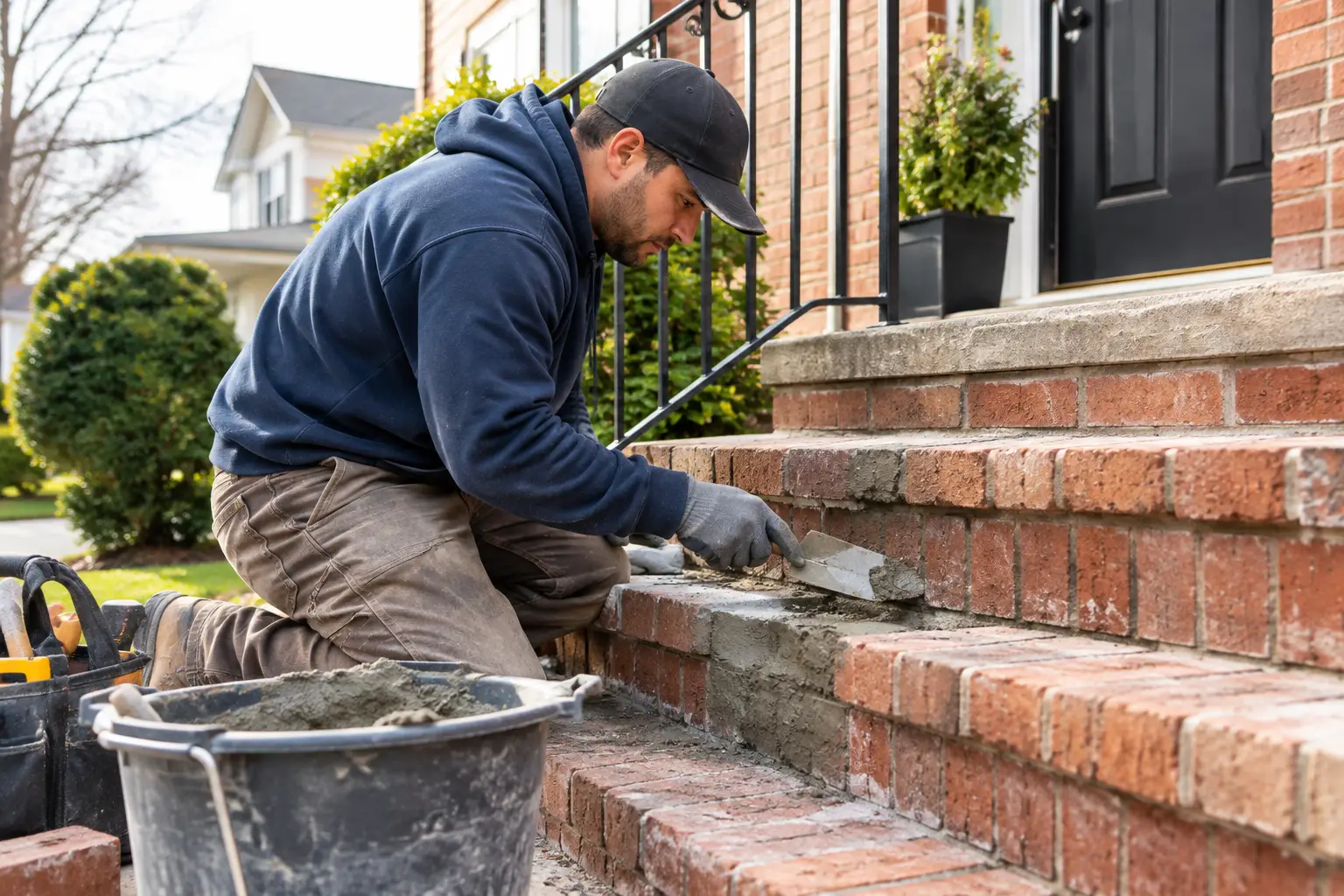
The repair work may involve removing unstable brick and failing mortar, preparing or correcting the support area, resetting or replacing masonry, and finishing joints to match the existing construction as closely as possible. The surrounding work area should be protected, and debris should be removed once the work is finished.
Appearance is part of a successful repair, but stability comes first. Color variation between new and existing brick can occur, especially on older homes. A skilled masonry contractor can help select materials that complement the existing steps, while being straightforward about what can and cannot be matched exactly after years of weathering.
When a Small Repair Can Wait and When It Cannot
A minor mortar crack that is not growing and does not affect the stability of the step may be monitored briefly. However, loose bricks, uneven treads, open gaps, or damage near a frequently used entrance should not be delayed. These conditions create a trip hazard and allow water to reach deeper into the masonry.
Property managers should be especially proactive with common entrances, tenant walkways, and storefront steps. A documented inspection and timely repair can reduce disruption while protecting the property and the people who use it every day.
Avoid relying on a quick surface patch for bricks that move or a landing that has settled. Covering the symptom may temporarily improve the appearance, but it does not restore support or stop water from entering the assembly. A lasting repair addresses the failed mortar, brick, base, drainage, or combination of conditions involved.
Questions Homeowners Often Ask
Can cracked brick steps be repaired without rebuilding them?
Often, yes. If the damage is localized and the base remains stable, repointing mortar or replacing damaged bricks may restore the steps. Rebuilding becomes more likely when there is widespread settlement, extensive movement, or deterioration throughout the structure.
Are loose bricks on exterior steps dangerous?
They can be. Loose or uneven brick can create a trip hazard, and the movement may worsen as people continue to use the steps. It is best to have unstable steps assessed before the affected area expands.
Will fixing gutters help protect brick steps?
It may. If overflowing gutters or poorly placed downspouts are directing water toward the entry, correcting that drainage issue can be an essential part of protecting the masonry repair.
For homeowners and property owners throughout New Jersey and Staten Island, Top Pros Construction can inspect damaged brick steps, explain the source of the problem, and recommend a practical repair plan. Addressing movement and water early helps keep the front entrance safe, solid, and ready for the seasons ahead.