
Masonry Water Damage Repair for Lasting Protection
Water stains on an interior wall, crumbling mortar beneath a chimney, or brick that stays dark long after rain are not cosmetic concerns. They can signal that water is moving through the exterior of your property. Professional masonry water damage repair identifies how moisture is entering, corrects damaged materials, and helps protect the wall, chimney, or foundation from further deterioration.
For homeowners and property managers, the goal is not simply to make brick or stone look better. The right repair should address the source of water intrusion and restore the masonry assembly so it can shed water as intended.
Why Water Damages Masonry
Brick, stone, block, and mortar are durable, but they are not maintenance-free. Masonry is made up of individual units and joints, and each part must work together to manage rain, melting snow, and moisture. When mortar joints crack, flashing fails, a chimney cap is damaged, or drainage sends water toward the structure, water can enter small openings and create larger problems over time.
New Jersey and Staten Island properties also experience freeze-thaw cycles. Water absorbed into deteriorated brick or mortar can freeze, expand, and force the surface apart. This can lead to spalling, where the face of a brick flakes or breaks away, as well as loose mortar, shifting masonry, and widening cracks.
Water damage may be especially serious around chimneys, parapet walls, steps, retaining walls, window openings, and foundation areas. These locations often receive direct weather exposure or depend on nearby roofing, flashing, gutters, and grading to keep water moving in the right direction.
Signs You May Need Masonry Water Damage Repair
Some damage is easy to see, while other signs appear inside the building first. A prompt inspection is a practical step when you notice recurring moisture or visible deterioration, especially after heavy rain or a storm.
Common warning signs include cracked, missing, or recessed mortar; white, chalky residue on brick known as efflorescence; loose or flaking brick faces; damp spots on interior walls; peeling paint near masonry; and water staining around a fireplace or chimney breast. Rusting metal components near masonry can also point to long-term water exposure.
A crack does not always mean the structure is failing, and discoloration does not always mean water is actively entering the building. However, these conditions should not be ignored. A professional assessment can distinguish between surface weathering and a repair that requires immediate attention.
When the Situation Is More Urgent
Contact a qualified exterior contractor promptly if a chimney is leaning, bricks are loose or falling, a wall is visibly bulging, or water is entering the property during rain. These issues can affect safety as well as the building envelope. Temporary measures may limit additional moisture, but the underlying cause still needs to be corrected.
Finding the Source Before Repairing the Surface
Lasting masonry repairs start with inspection, not sealant. Applying a coating over cracked joints or damaged brick may hide the symptom for a short time, but it can trap moisture or allow water to continue traveling behind the wall.
A thorough inspection looks at the complete area around the damage. That can include mortar condition, brick or stone integrity, chimney flashing, roof intersections, caps and crowns, window or door openings, gutters, downspouts, and the way water drains across the property. The location of interior staining is not always the location where water begins entering.
For example, moisture appearing near a chimney may result from failed flashing at the roofline, cracks in the chimney crown, damaged mortar joints, or a combination of these problems. Water at the base of a masonry wall may be related to overflowing gutters, a missing downspout extension, or grading that directs runoff toward the foundation.
This is why a clear repair scope matters. Property owners should understand what is damaged, why it failed, and which related exterior conditions should be addressed to help prevent the issue from returning.
Common Masonry Water Damage Repair Methods
The appropriate repair depends on the material, the age and condition of the masonry, the pattern of damage, and the source of moisture. A reliable contractor will recommend only the work needed for the condition found.
Repointing Deteriorated Mortar Joints
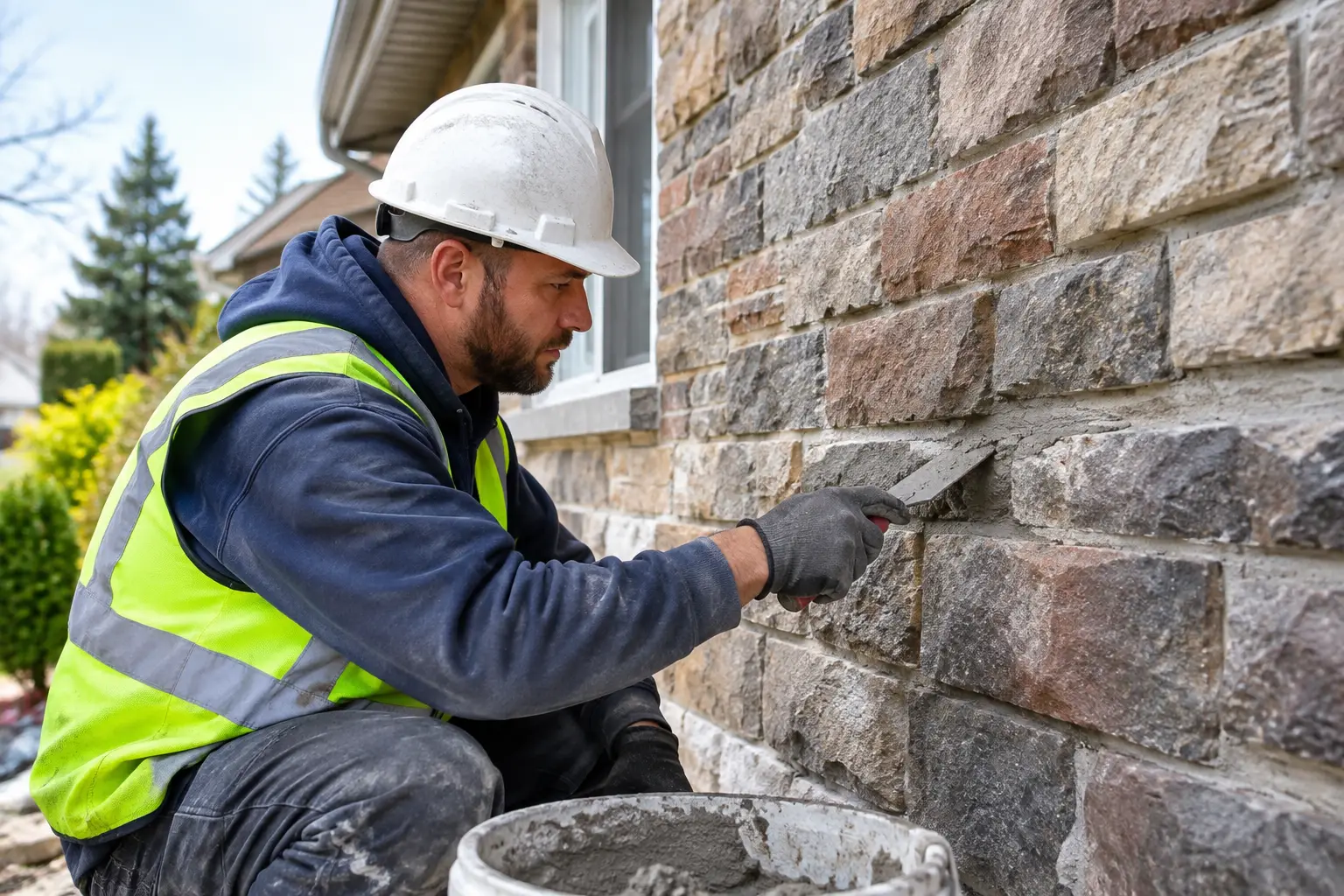
Repointing removes failed mortar from joints and installs new mortar to restore the wall’s weather resistance and appearance. Proper preparation and mortar selection matter. Mortar that is too hard or poorly matched to older masonry can contribute to future brick damage, so the repair should suit the existing structure.
Repointing is often effective when mortar joints are cracked, eroded, or missing but the surrounding brick or stone remains sound. It is not a solution for masonry units that have already broken down from repeated water exposure.
Replacing Damaged Brick or Stone
Spalled, cracked, loose, or severely deteriorated masonry units may need replacement. This work is more than placing a new brick in an opening. The affected area needs to be carefully removed and rebuilt so it remains stable, aligns with the surrounding wall, and has properly finished joints.
Matching the appearance of existing masonry can be important for visible facades, chimneys, and entry areas. Exact matches are not always available, particularly on older properties, but careful material selection can produce a cohesive repair.
Chimney Repairs and Waterproofing Details
Chimneys receive weather from every direction and are a frequent source of masonry leaks. Repairs may include repointing, replacing damaged brick, rebuilding a deteriorated chimney crown, correcting flashing at the roof, or addressing damaged caps and other protective components.
A water-repellent treatment may be appropriate after necessary masonry repairs are complete. It depends on the wall material and its condition. The product must allow masonry to release vapor rather than trapping moisture inside, and it should never substitute for correcting open joints, cracks, or drainage problems.
Correcting Drainage and Roofline Problems
Masonry work is often connected to roofing and gutter performance. Clogged or undersized gutters, leaking roof edges, damaged flashing, and downspouts that release water next to a wall can overwhelm even well-maintained masonry.
Correcting these conditions may be the most important part of the project. If runoff continues to soak the same section of brick or stone, the damage can return regardless of how carefully the masonry surface was repaired.
What to Expect From a Professional Repair Process
A well-managed project begins with an on-site evaluation of the visible damage and the surrounding exterior systems. The contractor should explain whether the condition appears isolated or whether water may be traveling from a nearby roof, chimney, gutter, or drainage issue.
Once the scope is established, the work area should be protected to reduce disruption to landscaping, walkways, siding, roofing, and nearby surfaces. Damaged mortar or masonry is removed carefully, repairs are completed using suitable materials, and surrounding details such as flashing or drainage components are addressed when necessary.
Curing time is also part of quality masonry work. New mortar needs appropriate conditions and time to develop strength. Weather can affect scheduling, particularly during periods of heavy rain, extreme heat, or freezing temperatures. A contractor should set clear expectations rather than rushing work that needs proper preparation and curing.
Top Pros Construction LLC approaches exterior repairs with the full building envelope in mind, because masonry, roofing, chimneys, gutters, and siding often affect one another. That perspective helps property owners avoid spending on a surface repair while an adjacent water-entry point remains unresolved.
How to Help Prevent Future Water Damage
Preventive attention is often less disruptive than waiting for a leak or major masonry failure. Periodically check mortar joints, chimney areas, retaining walls, and exterior steps for cracks, missing material, or changes in appearance. After severe weather, look for displaced caps, loose bricks, overflowing gutters, and new staining.
Keep gutters clear and make sure downspouts carry water away from the foundation and masonry walls. Trim vegetation that holds moisture against brick or stone, and avoid allowing soil or mulch to cover masonry weep areas or sit too high against the wall. If you see recurring efflorescence or dampness, arrange an inspection before winter weather increases the risk of freeze-thaw damage.
Protect the Masonry Before Damage Spreads
Water-related masonry problems rarely improve on their own. Small mortar failures can become loose brick, and a minor chimney leak can eventually affect roofing, ceilings, insulation, or interior finishes. The most useful next step is a professional inspection that identifies the water path and provides a practical repair plan.
With timely masonry water damage repair and attention to the surrounding roofline and drainage details, your property can stay protected, structurally sound, and better prepared for the next stretch of wet weather.