

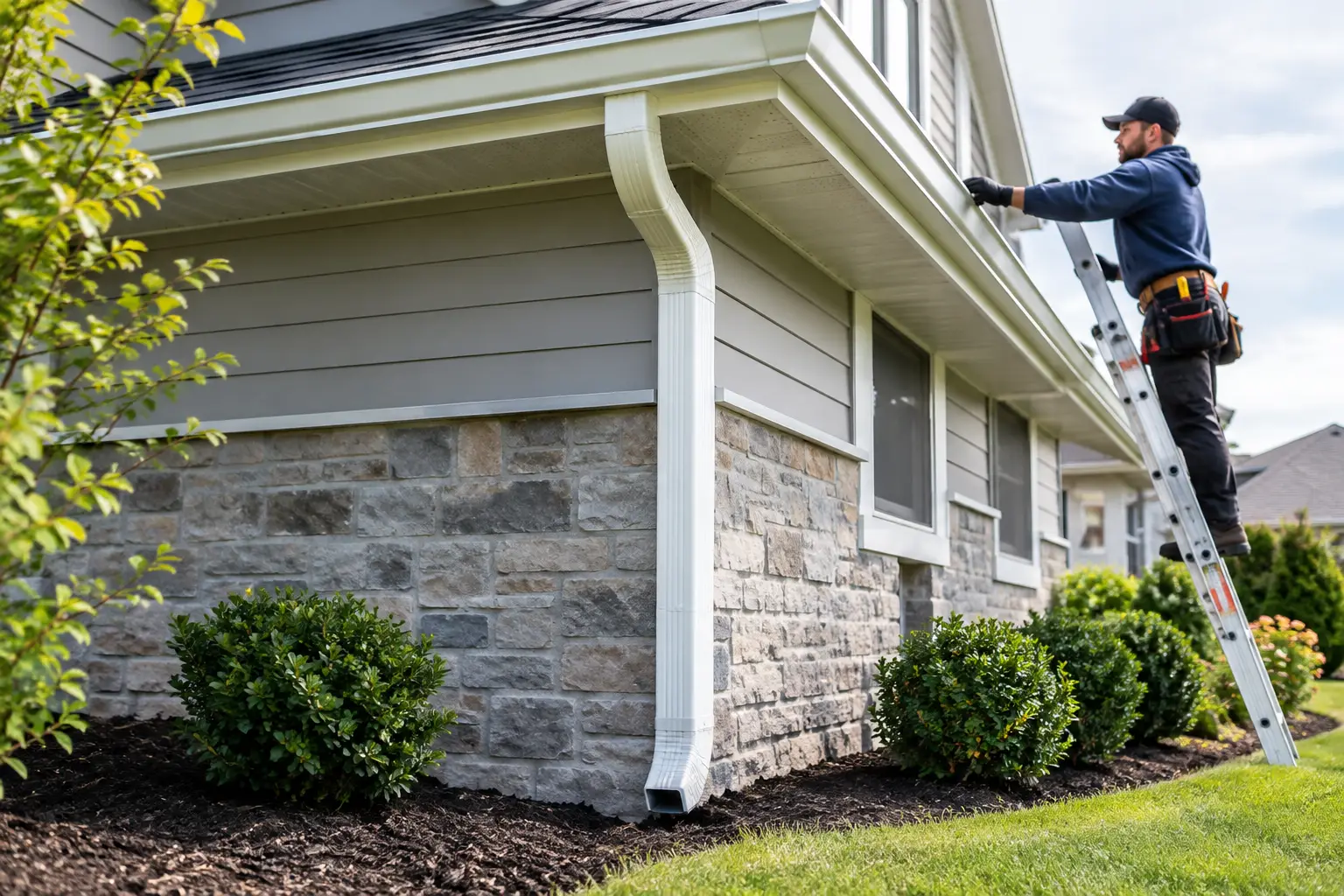
How Gutters Protect Foundations From Water Damage
A heavy rainstorm can send hundreds of gallons of water off a roof in a short time. Without a working gutter system to control that runoff, water repeatedly lands beside the home – exactly where the soil, foundation walls, basement, and masonry are most vulnerable. That is how gutters protect foundations: they collect roof runoff and direct it away before it can saturate the ground around the structure.
For homeowners and property managers, gutters are easy to overlook because they sit at the roofline. But when they clog, sag, leak, or discharge water too close to the building, the results often appear lower down: damp basement walls, soil erosion, cracked walkways, staining on siding, and moisture problems that become more expensive over time.
How Gutters Protect Foundations During Rain
A gutter system has one basic job: capture water at the roof edge, move it through the troughs and downspouts, and release it at a location that drains away from the property. When each part is properly sized, securely installed, and clear of debris, rainwater does not continually soak the soil against the foundation.
This matters because soil changes when it absorbs too much water. Some soils expand as they become saturated, increasing pressure against foundation walls. Others wash away or settle, which can leave areas around the foundation unevenly supported. Neither condition is helpful to a home’s long-term stability.
Proper drainage also limits the cycle of wetting and drying around the foundation. In New Jersey and Staten Island, seasonal rain, snowmelt, and freeze-thaw conditions can make that cycle especially hard on exterior materials. Keeping roof runoff under control helps reduce unnecessary moisture exposure throughout the year.
Water Is Moved Away From the Foundation Perimeter
The most immediate benefit of gutters is distance. A roof without effective gutters drops water from its entire edge onto a narrow strip of ground below. During a storm, that concentrated flow can form trenches, splash mud onto siding, and puddle near the foundation.
Downspouts carry that water down in a controlled path. Extensions or properly planned drainage routing then move the discharge away from the structure. The right distance depends on the grading of the yard, nearby hardscapes, drainage patterns, and the layout of the property. The goal is not simply to move water from the roof to the ground. It is to keep it from returning toward the foundation.
Soil Erosion Is Reduced
Erosion is often gradual, so it may not receive attention until landscaping, mulch beds, or soil levels begin to look uneven. Water falling from a roof edge can displace soil every time it rains. Over months and years, that runoff may expose foundation surfaces, undermine edging, and create low spots where additional water collects.
A functioning gutter system spreads the water-management work across the system instead of allowing it to pound the same areas beside the house. This is particularly valuable around walkways, patios, driveways, and basement entryways, where poor drainage can also create slippery conditions and surface damage.
Basement and Crawl Space Moisture Is Limited
Gutters cannot solve every basement moisture issue. Foundation cracks, failed waterproofing, poor grading, plumbing leaks, and groundwater conditions may also be involved. However, uncontrolled roof runoff is one of the most preventable sources of excess moisture around a home.
When the soil beside a foundation stays saturated, water can find its way through small openings, joints, or porous masonry. Homeowners may notice a musty smell, damp spots, peeling paint, white mineral deposits on walls, or increased humidity in a basement or crawl space. Correcting gutter and downspout problems can be an essential first step before determining whether more extensive foundation drainage or masonry work is needed.
The Gutter Details That Make the Difference
Not every gutter problem is obvious from the ground. A system may look intact but still allow water to overflow or drain incorrectly. The quality of installation, roofline slope, outlet placement, and condition of the fasteners all affect performance.
Gutters need a slight, controlled pitch toward each downspout. If the pitch is off, water can stand in the troughs rather than draining. Standing water adds weight, encourages debris buildup, and can eventually contribute to sagging sections or separated joints. If gutters slope too aggressively, water may move past an outlet during heavy rainfall rather than draining efficiently.
Capacity matters as well. A larger or steeper roof sheds more water, and certain roof designs concentrate runoff into valleys. In those areas, standard gutter sizing may not be enough during intense storms. An experienced exterior contractor can assess the roof’s drainage pattern and recommend a system layout that fits the property instead of treating every roofline the same.
Downspouts are equally important. A gutter can be clean and properly mounted, yet still overflow if there are too few downspouts or if an outlet is restricted. Water should move freely through the full system, without spilling over the front edge, leaking at seams, or collecting at the base of the home.
Common Gutter Problems That Put Foundations at Risk
A clogged gutter is the issue many homeowners recognize first. Leaves, seed pods, roofing granules, and other debris prevent water from reaching the downspout. Once the gutter fills, water spills over the edges and lands directly along the foundation line.
Other problems can be just as damaging. Loose hangers may cause a gutter section to pull away from the fascia. Damaged seams and holes can create a steady stream in one location. A crushed or disconnected downspout can dump water beside the building. Even a well-maintained system may fall short if the yard slopes back toward the house after the water exits the downspout.
Watch for these signs after or during rainfall:
- Water pouring over gutter edges or behind the gutter
- Puddles, muddy areas, or eroded soil near the foundation
- Gutters that appear bowed, tilted, loose, or separated at joints
- Downspouts releasing water next to the wall or onto a walkway
- Basement dampness, musty odors, or recurring moisture marks
These warning signs do not always mean foundation damage has occurred. They do mean the drainage system deserves prompt attention before repeated water exposure creates a larger exterior problem.
Maintenance Protects the Entire Exterior System
Gutters perform best when they are treated as part of the home’s complete exterior, not as an isolated accessory. Roof debris, damaged shingles, failing fascia boards, loose siding, chimney runoff, and deteriorated masonry can all affect how water moves around the structure.
Regular professional inspection and cleaning can identify blockages, loose connections, and drainage concerns before a major storm reveals them. This is especially useful after periods of high winds, heavy leaf fall, or winter weather. A contractor can also check whether the gutter system is securely attached and whether water is being directed safely away from the building.
For aging homes, a repair may be the practical answer when the problem is limited to a few sections, seams, or downspouts. When gutters are extensively corroded, repeatedly pulling away, improperly sized, or damaged across multiple runs, replacement may provide a more dependable long-term solution. The right decision depends on the condition of the existing system and the water demands of the roof.
When to Schedule a Professional Gutter Inspection
It is wise to schedule an inspection when water is regularly overflowing, the ground near the foundation stays wet long after rain, or you see moisture entering a basement or lower-level space. An inspection is also worthwhile before selling a property, after significant storm damage, or when planning roof, siding, or masonry work.
At Top Pros Construction, gutter evaluations focus on the source of the problem, including roof runoff patterns, mounting condition, drainage direction, and related exterior damage. A clear assessment helps property owners address the water path before it affects more of the home.
A gutter system may not be the most visible feature of a property, but it works every time it rains. Keeping that system functional is one practical way to protect the soil, masonry, and foundation your home depends on.