Siding Moisture Damage: Signs, Causes, and Repairs
A warped siding panel or a dark stain near a window may look like a minor exterior issue, but siding moisture damage can point to water getting where it does not belong. When moisture reaches the wall system behind the siding, it can affect insulation, sheathing, trim, and framing long before the problem becomes visible indoors. A timely inspection helps identify the source and prevent a smaller repair from turning into widespread exterior deterioration.
New Jersey and Staten Island properties face heavy rain, wind-driven storms, snow, freeze-thaw cycles, and humid summer conditions. Those conditions do not automatically cause a siding failure. They do, however, expose weaknesses in caulking, flashing, gutters, roof edges, and aging siding materials. The key is finding the pathway water is using, not simply covering the visible symptom.
Common Signs of Siding Moisture Damage
Water behind siding is not always obvious. In many cases, the exterior still looks acceptable from the curb while the wall behind it is holding moisture. Homeowners and property managers should pay attention to changes around windows, doors, roof-to-wall intersections, chimneys, and areas below gutter lines.
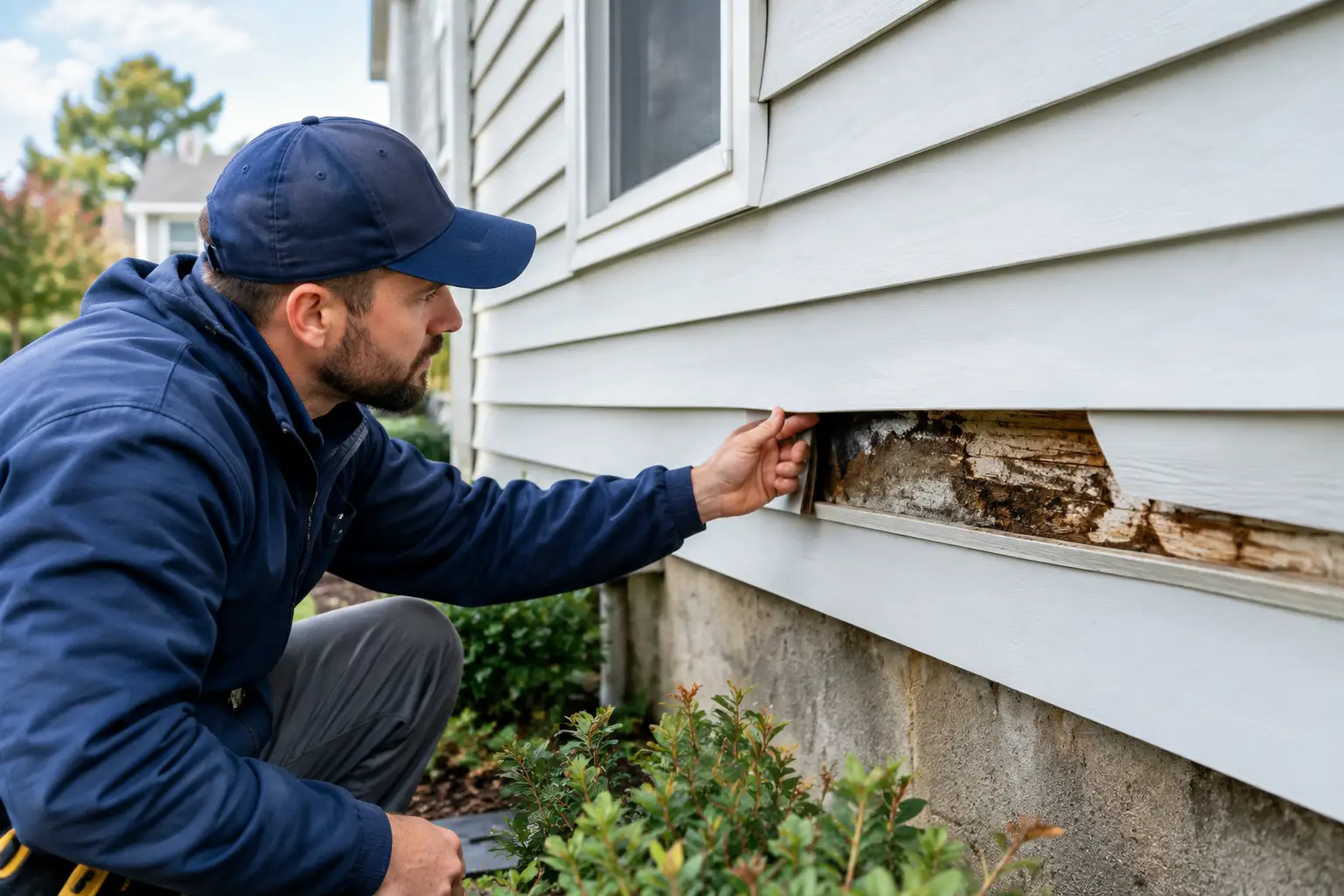
Visible warning signs include siding that is swollen, buckled, cracked, loose, or separating at seams. Wood siding may soften, split, peel, or show rot near the bottom edges. Vinyl siding can warp or pull away when the materials behind it have been affected by repeated moisture. Fiber cement can show staining, softened trim, or deteriorated caulk at joints if water is entering the wall assembly.
Discoloration is another concern. Dark streaks, green growth, white mineral deposits, or recurring stains may indicate that water is running across or behind the siding. A single surface stain is not always serious, especially after a storm. Repeated staining in the same location deserves closer attention because it often reflects a drainage or flashing issue.
Inside the property, damp drywall, peeling paint, musty odors, or staining around windows can also be connected to exterior water intrusion. These symptoms do not prove that siding is the only source. Roof leaks, failed window seals, masonry cracks, and plumbing issues can create similar conditions. A professional evaluation should look at the entire affected area rather than assuming the siding alone is responsible.
What Causes Moisture Behind Siding?
Siding is part of a larger water-management system. It works with house wrap, flashing, trim, caulking, roofing, gutters, and drainage details to direct water away from the building. When one part of that system fails, water can move behind the visible exterior finish.
Failed Flashing Around Openings
Flashing is installed around windows, doors, rooflines, wall penetrations, and other transitions where water is most likely to enter. If flashing is missing, damaged, poorly integrated, or covered by a previous repair, rain can work behind siding during wind-driven storms. Water may travel down the wall before it becomes visible, so the stain or damaged panel is not always directly above the actual entry point.
Gutter and Roof Drainage Problems
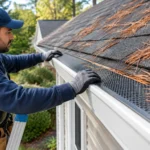
Overflowing gutters, loose downspouts, clogged gutter runs, and roof runoff can repeatedly soak siding and trim. Water spilling over the gutter edge may saturate the wall below, particularly near corners and entryways. Ice buildup and freeze-thaw conditions can make these problems worse during winter.
This is why siding concerns should not be evaluated separately from the roof and gutter system. Correcting a damaged siding section without addressing water overflow can lead to the same problem returning after the next period of heavy rain.
Worn Caulk, Trim, and Siding Joints
Caulk around trim and exterior openings does not last forever. As it ages, it can shrink, crack, separate, or lose adhesion. Gaps around penetrations, trim boards, and siding transitions allow water to reach areas that should remain protected.
Repairing caulk alone may be appropriate when the surrounding materials are sound and the issue is limited. If trim is soft, siding has deteriorated, or moisture has reached the sheathing, a more complete repair may be needed. The right scope depends on what is found behind the exterior surface.
Storm Damage and Material Wear
High winds can loosen panels, create openings at seams, and damage corner pieces or trim. Hail and flying debris may crack certain siding materials. Even without a single major storm, years of sun exposure, seasonal movement, and normal wear can reduce the siding’s ability to shed water effectively.
Older repairs can also be a factor. A panel that was installed without proper overlap, flashing, or fastening may look acceptable initially but create an opening over time. This is one reason experienced workmanship matters when replacing or repairing exterior materials.
Why Prompt Repairs Matter
Moisture rarely stays in one place. Once water gets behind siding, it can wet the house wrap, insulation, wall sheathing, and wood framing. Repeated wetting can lead to rot, mold-like growth, reduced insulation performance, and damage to interior finishes. The longer the source remains active, the more difficult it can be to isolate and repair affected materials.
There is also a property-protection issue. Damaged siding and trim can reduce curb appeal, but the larger concern is preserving the structure beneath them. For landlords, property managers, and owners of multifamily buildings, unresolved water intrusion can affect multiple units or common areas. Early attention can reduce disruption and help keep the repair scope focused.
That said, not every siding stain calls for full replacement. A reliable contractor should explain whether the concern is surface-level, limited to a repair area, or part of a broader exterior failure. Clear findings and a detailed scope allow property owners to make a practical decision based on the condition of the building.
How a Professional Siding Inspection Helps
A thorough inspection starts with the exterior pattern of the damage. A contractor may assess siding joints, trim, caulking, flashing details, roof edges, gutters, downspouts, window and door transitions, and nearby masonry. The goal is to trace water movement from the likely source to the damaged location.
When conditions suggest hidden damage, selected siding sections may need to be removed for a closer look at the wall components. This step can reveal damp or deteriorated sheathing, compromised house wrap, damaged flashing, or rot that cannot be confirmed from the surface alone. It also prevents a cosmetic repair from concealing an ongoing problem.
The recommended work may include replacing damaged siding and trim, repairing wall materials, installing or correcting flashing, improving gutter drainage, or addressing adjacent roof or masonry defects. Some projects require a focused repair, while others make more sense as a larger replacement because of age, widespread deterioration, or matching concerns with existing materials.
For homes and commercial properties throughout New Jersey and Staten Island, Top Pros Construction approaches exterior issues by looking for the source of water intrusion before recommending the repair. That coordinated approach is especially valuable when siding, roofing, gutters, and masonry details overlap.
Protecting Siding From Future Moisture Issues
Regular exterior observation can catch changes before they become major damage. After severe storms, look for loose siding, displaced trim, overflowing gutters, or new stains near windows and rooflines. During routine property maintenance, keep gutters and downspouts functioning so water moves away from the siding and foundation rather than over the wall face.
It is also wise to schedule an inspection when paint begins peeling repeatedly, caulk separates around openings, or a particular wall remains damp after rain. These are not issues to ignore until an interior leak develops. Exterior water management works best when small openings are corrected early.
Avoid relying on paint, sealant, or a single replacement panel as a permanent answer without identifying why moisture appeared in the first place. Those measures can be part of a proper repair, but only when the underlying drainage, flashing, and material conditions are addressed as well.
If you notice recurring staining, warped panels, soft trim, or water near an exterior wall, arrange a professional inspection before the next storm tests the area again. A clear assessment of the cause can help protect the siding, the wall behind it, and the property you depend on.