
Brick Patio Maintenance: Keep Pavers Stable
A brick patio should feel solid underfoot, drain water away from the home, and complement the rest of your exterior masonry. When bricks begin to rock, joints wash out, or water remains on the surface after rain, brick patio maintenance can prevent a small issue from becoming a larger repair. In New Jersey and Staten Island, repeated freezing and thawing, heavy rainfall, and seasonal leaf buildup can all take a toll on outdoor brickwork.
The right approach depends on what you see. A few weeds between otherwise stable bricks may call for routine cleaning and joint maintenance. Widespread settling, standing water, or deteriorating edges can point to a problem below the surface that needs professional attention.
What Brick Patio Maintenance Protects
A brick patio is more than the visible brick surface. Most patios rely on a compacted base, a bedding layer, edge restraints, and joints filled with sand or mortar, depending on how the patio was built. Each part helps distribute weight and keep the surface aligned.
Routine care protects the joints and helps you spot changes early. It also keeps organic debris from holding moisture against the brick. Over time, trapped moisture can contribute to staining, surface wear, and winter damage when absorbed water freezes.
Patio maintenance also matters for the house itself. Water that runs toward the foundation, collects beside masonry steps, or spills from a clogged gutter onto the patio can weaken the surrounding ground. A patio problem may be isolated, but it can also be connected to roof runoff, downspout placement, grading, or nearby chimney and wall masonry.
Warning Signs Your Brick Patio Needs Attention
Some wear is normal, especially on a patio that gets regular foot traffic, outdoor furniture, and winter weather. The concern is not every minor color variation or small gap. It is a visible change in stability, drainage, or the condition of the brick.
Look for bricks that move when stepped on, low spots that collect water, or raised areas that create a trip hazard. Cracked bricks, crumbling edges, and joints that are empty or repeatedly losing sand deserve a closer look. A patio that has shifted away from a step, retaining edge, or the home should also be assessed before the movement spreads.
White, chalky marks on brick are often called efflorescence. They occur when moisture moves through masonry and leaves mineral salts behind as it evaporates. Light efflorescence can sometimes be a cosmetic issue, but recurring deposits may suggest that excess water is moving through the patio or nearby masonry.
Pay attention to drainage after a steady rain. Water should not sit for long periods or flow toward the house. If puddling appears in the same spot, the cause could be a settled base, compacted soil below the patio, a blocked drainage path, or water discharged too close to the area. The exact cause needs to be determined on site.
A Practical Brick Patio Maintenance Routine
Regular care does not need to be complicated. Start by sweeping leaves, soil, mulch, and other debris from the surface, particularly in spring and fall. Debris retains moisture and encourages weeds and moss in the joints. Avoid piling snow, landscaping materials, or heavy planters in one area for extended periods when possible, since concentrated weight and moisture can expose weak spots.
For ordinary dirt, use a gentle cleaning method suited to the brick and joint material. Harsh chemicals and aggressive pressure washing can damage older brick faces, dislodge joint material, and force water into vulnerable areas. This is especially true for aging patios, historic brick, and patios with mortar joints rather than sand-filled joints.
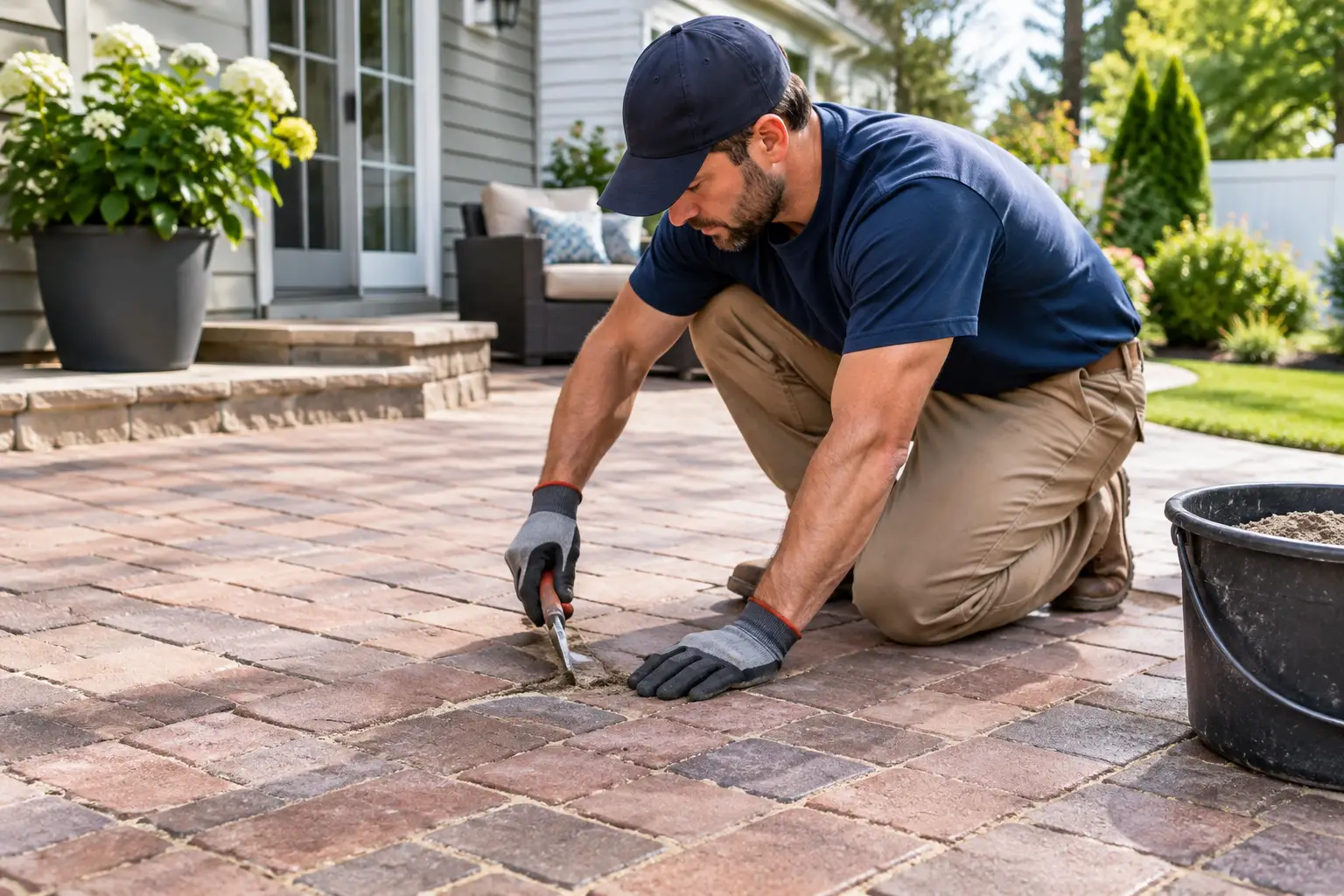
If weeds appear, remove them before their roots widen the joints. Then inspect the joint material. Interlocking brick patios commonly need joint sand replenished over time, while mortared brick patios may need localized repointing. Repointing means removing failed mortar to an appropriate depth and placing new mortar that is compatible with the existing masonry. Using mortar that is too hard for older brick can cause the brick itself to deteriorate, so material selection matters.
Keep an eye on nearby gutters and downspouts as part of patio care. Roof water should be collected and directed away from the patio and foundation. Overflowing gutters or a downspout that empties directly onto brick can wash out joint sand and undermine the base. Addressing the water source is often as important as repairing the damaged patio section.
Seasonal checks make problems easier to catch
In spring, inspect for movement, cracks, and joint loss after winter freeze-thaw cycles. Clear leaves and check whether spring rain drains correctly. Summer is a good time to notice weed growth, faded joint material, and stains under planters or outdoor cooking areas.
In fall, remove leaves promptly and make sure gutter systems are not directing runoff across the patio. Before winter, note any loose bricks or raised edges that could become more hazardous when covered by snow or ice. Avoid using deicing products that are not intended for masonry, as some salts can contribute to surface damage and scaling.
When Cleaning Is Not Enough
Cleaning improves appearance, but it does not correct a failed base or ongoing water problem. If several bricks are loose, a section has sunk, or the patio slopes toward the house, surface-level maintenance is unlikely to last. The affected area may need to be carefully lifted so the base, bedding material, drainage, and edge restraint can be evaluated and corrected before the bricks are reset.
A patio with widespread cracking or extensive brick deterioration may need partial rebuilding rather than repeated spot repairs. This does not always mean replacing the entire patio. The best scope depends on how much of the base has shifted, whether matching brick is available, the condition of the surrounding areas, and the source of the moisture.
Edges deserve particular attention. Patio borders can loosen when edge restraints fail, soil erodes, or nearby landscaping changes the grade. Once an edge begins to spread, bricks closer to the center can gradually lose their interlock. Repairing the perimeter early may limit the amount of resetting needed later.
Drainage Is Often the Deciding Factor
A stable brick patio begins with water management. Even quality brickwork can settle when roof runoff, poor grading, or drainage problems keep the base saturated. This is why a masonry assessment should look beyond the patio surface.
For example, a homeowner may notice that bricks near the back door are sinking. The visible symptom is the low spot, but the contributing cause could be a downspout discharging nearby, a leaking gutter joint, or soil that slopes toward the patio. Correcting only the brick without addressing the water path can lead to the same issue again.
At Top Pros Construction LLC, we look at the relationship between masonry, gutters, roof drainage, and the surrounding exterior when evaluating patio concerns. That broader view helps identify practical repair options rather than treating every loose brick as a separate problem.
Repair or Rebuild: What Affects the Decision
A localized repair can make sense when most of the patio remains level and stable, the damaged area has a clear cause, and the existing brick can be reused or matched. Resetting a small settled section, repairing edge restraint, restoring joints, or replacing a limited number of damaged bricks may be enough.
A larger rebuild is more appropriate when movement affects multiple areas, the patio has a persistent drainage issue, or the base is no longer supporting the surface consistently. For planned work, consider how you use the space. Expanding a patio, changing its shape, adding masonry steps, or improving drainage may be more efficient to address during a larger restoration than as separate future projects.
Project cost is influenced by the size of the affected area, accessibility, demolition and disposal needs, the condition of the base, drainage corrections, brick matching, and the amount of detailed cutting or border work required. A clear site evaluation can distinguish maintenance needs from structural repair needs and help define a sensible scope.
When to Arrange a Professional Masonry Inspection
Arrange an inspection when bricks are rocking or creating a trip hazard, water is pooling near the home, joints keep washing out, or you see broad settling across the patio. It is also wise to call when patio movement appears near masonry steps, foundation walls, or areas receiving heavy roof runoff.
You do not need to wait for major damage to ask questions. A professional review can help you understand whether the patio needs cleaning and joint maintenance, targeted brick repair, drainage improvements, or more extensive rebuilding. For homeowners in New Jersey and Staten Island, Top Pros Construction LLC can discuss the condition of your brick patio and recommend a practical next step that respects your property and long-term maintenance needs.