Flat Roofing Repair and Replacement Decisions
A flat roof leak rarely begins as a dramatic ceiling stain. More often, it starts with standing water after rain, a split at a seam, cracked material around a vent, or flashing that has pulled away from a wall. Flat roofing can protect a home, multifamily property, or commercial building very effectively, but it depends on details that move water off the surface and keep every transition sealed.
For property owners in New Jersey and Staten Island, weather can put those details under steady pressure. Heavy rain, snow, freeze-thaw cycles, summer heat, and wind-driven debris all affect a low-slope roof over time. A timely inspection can separate a localized repair from a larger replacement decision before moisture reaches insulation, decking, walls, or interior finishes.
What Flat Roofing Means for Your Property
Despite the name, a flat roof is not truly flat. It has a slight slope that directs water toward drains, scuppers, gutters, or other drainage points. This low slope is why drainage matters so much. Unlike a steep shingle roof, water does not quickly run off the surface. It must travel gradually to a planned exit point.
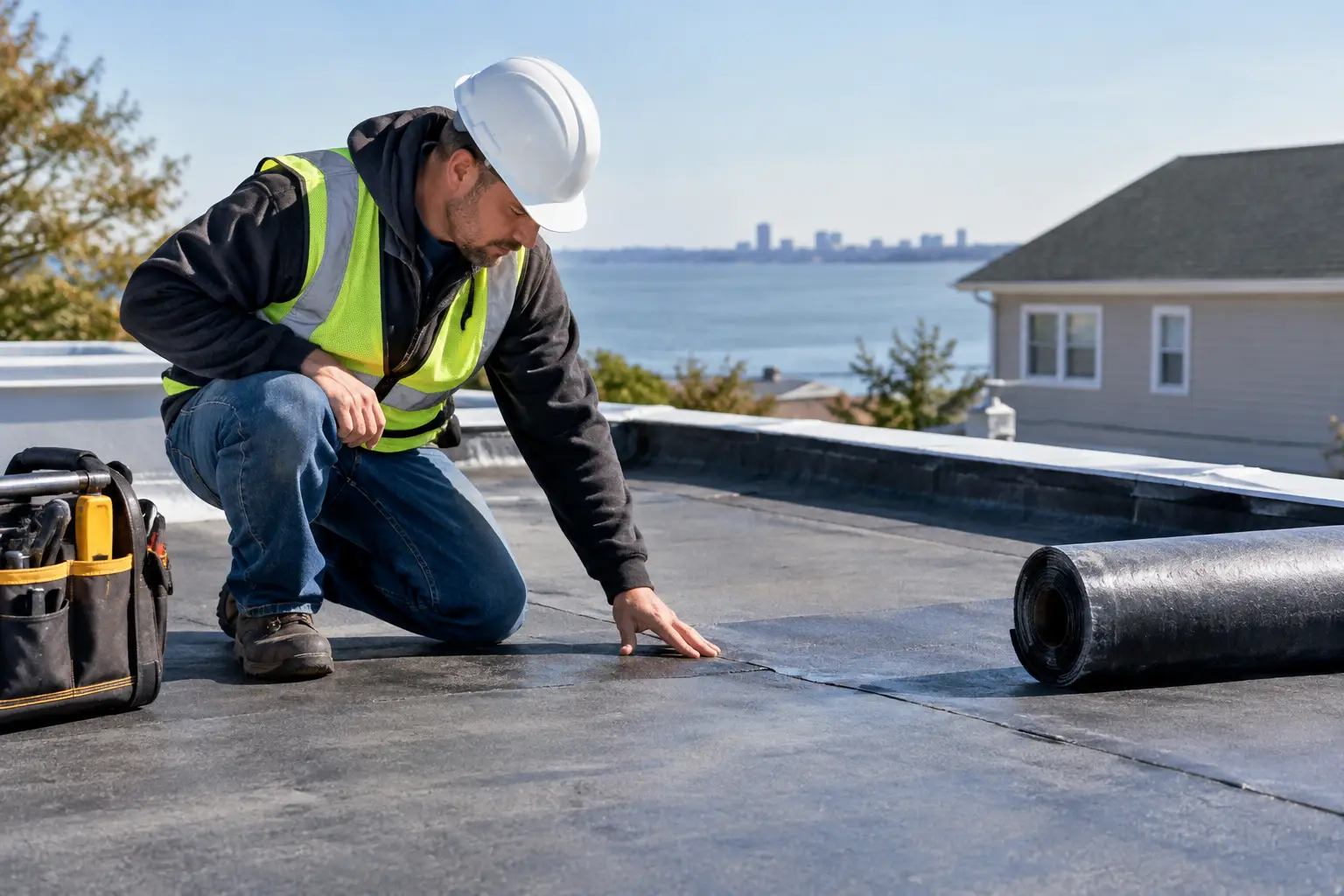
Flat and low-slope roofs are common on commercial buildings, apartment buildings, garages, additions, porches, and some contemporary homes. The roof system may use a single-ply membrane, modified bitumen, built-up roofing, or another material selected for the building’s design and existing roof structure.
The material matters, but the surrounding details often determine how well a roof performs. Seams, edges, drains, penetrations, skylights, parapet walls, and flashing all need to work together. A small failure in one of these areas can allow water beneath the visible roof surface.
Warning Signs a Flat Roof Needs Attention
An active interior leak deserves prompt attention, especially if water is near electrical fixtures or spreading across a ceiling. Still, not every roofing concern is visible indoors. Regularly looking for changes from the ground and after major storms can help you spot issues earlier.
Watch for ponding water that remains on the roof long after rain has stopped. Some temporary moisture may be normal after a storm, but persistent puddles can speed up material wear and point to drainage concerns. Blisters, wrinkles, open seams, cracked coating, loose edge metal, and damaged flashing also warrant a professional look.
Inside the building, water stains, peeling paint, damp odors, bubbling drywall, or mold-like discoloration can indicate moisture intrusion. These signs do not identify the exact source on their own. Water can travel along decking or framing before it appears inside, so the stain is not always directly below the roof opening.
For commercial and multifamily properties, pay attention to roof drains and scuppers after storms. Overflowing drains may result from leaves and debris, but they can also relate to a drainage layout issue, a blocked downspout, or a problem beyond the roof itself. An inspection should consider the full path water takes off the building.
Why Flat Roof Leaks Can Be Difficult to Trace
A roof leak is not always caused by a hole in the middle of the roof. Flashing at a chimney, wall, vent pipe, rooftop unit, or skylight is a frequent trouble spot because these areas join different materials and surfaces. Movement from temperature changes can gradually weaken sealants and seams.
Poor drainage can compound a small defect. When water lingers near a seam or flashing detail, it has more opportunity to find a path below the membrane. Debris can also trap moisture against the roof surface, while overhanging branches can rub or puncture roofing material during windy weather.
Adjacent exterior components deserve attention as well. A failing gutter, loose downspout, cracked masonry joint, or deteriorated chimney crown can create water problems that resemble a roof leak. That is why a careful evaluation should look at the roof perimeter, drainage system, masonry transitions, siding connections, and chimney areas rather than assuming the visible symptom has one obvious cause.
Flat Roofing Repair or Replacement: How to Decide
Repair is often a sensible option when the roof issue is limited and the larger system remains in serviceable condition. For example, a contained seam separation, damaged flashing section, or isolated puncture may be repairable when the surrounding membrane is stable and drainage is functioning properly.
Replacement becomes more practical when leaks keep returning in different areas, the roof material has widespread cracking or deterioration, moisture has affected underlying layers, or prior patches now cover much of the surface. A roof near the end of its useful life may continue to need repairs, but repeated spot work can become less efficient than planning a complete system replacement.
The right choice depends on confirmed conditions, not just the age of the roof. During an inspection, we look at the roof surface, seams, penetrations, flashings, drainage points, visible signs of trapped moisture, and the condition of connected components. For a property manager or building owner, the assessment should also consider access, occupant coordination, equipment on the roof, and how the work can be scheduled with minimal disruption.
Cost is understandably part of the decision. The scope can be affected by roof size, material type, accessibility, the number of penetrations, drainage corrections, deck repairs, removal of existing layers, and related work such as gutter, chimney, siding, or masonry repairs. A clear estimate should explain what is being addressed and why, so you can compare repair and replacement options based on the actual condition of your building.
Drainage Is Part of the Roofing System
A sound roof membrane cannot compensate forever for water that has nowhere to go. Flat-roof drainage may include internal drains, scuppers that pass through a parapet wall, gutters, and downspouts. Each component needs to remain open, securely connected, and directed away from the structure.
Homeowners can safely monitor drainage from the ground by checking whether gutters overflow, downspouts discharge near the foundation, or water repeatedly pours over an edge during rain. Avoid walking on a flat roof unless it was designed for regular access and conditions are safe. Wet membranes can be slippery, and unnecessary foot traffic can damage vulnerable areas.
If drainage problems are present, the solution may include clearing obstructions, repairing gutters or downspouts, correcting damaged edge details, or addressing low areas that hold water. The appropriate fix depends on the roof design and the cause of the water buildup. It should not be assumed that a new membrane alone will solve a slope or drainage issue.
What to Expect During a Professional Roof Inspection
A professional flat-roof inspection begins with the concerns you have noticed: where water appeared, when it happens, whether it follows heavy rain or snowmelt, and whether repairs were attempted previously. We then evaluate accessible roof areas and related exterior conditions to identify likely sources and visible deficiencies.
The goal is to provide a practical path forward. That may mean a targeted roof repair, maintenance work around drains and flashing, a broader restoration approach, or planning for replacement. If a roof concern is connected to failing masonry at a parapet, a chimney leak, loose siding, or ineffective gutters, those findings should be explained clearly because leaving the related issue unaddressed can lead to recurring water intrusion.
For commercial buildings and multifamily properties, planning also matters. Access routes, tenant communication, rooftop equipment, debris control, and protection of surrounding surfaces should be considered before work begins. Careful preparation helps keep the project organized and protects the property while repairs or replacement are underway.
Maintaining a Flat Roof Between Inspections
Routine attention can extend the life of a low-slope roof and help you catch developing concerns. Keep nearby trees trimmed back when possible, remove loose debris from gutters, and watch for drainage changes after severe weather. If you notice an interior stain or visible roof damage, document when it appeared and whether it worsens during rain. That information can help narrow the investigation.
Avoid applying random coatings, caulk, or patch products over a suspected leak without understanding the roof material and source of the problem. A temporary surface patch can sometimes trap moisture, interfere with future repairs, or hide a worsening condition. A qualified roofer can determine whether a repair is compatible with the existing roof system.
When you need help evaluating a leak, aging roof, drainage concern, or recurring flashing problem, Top Pros Construction LLC can inspect the condition and explain the options in straightforward terms. A conversation early in the process can help you protect your property and plan the right next step without pressure.