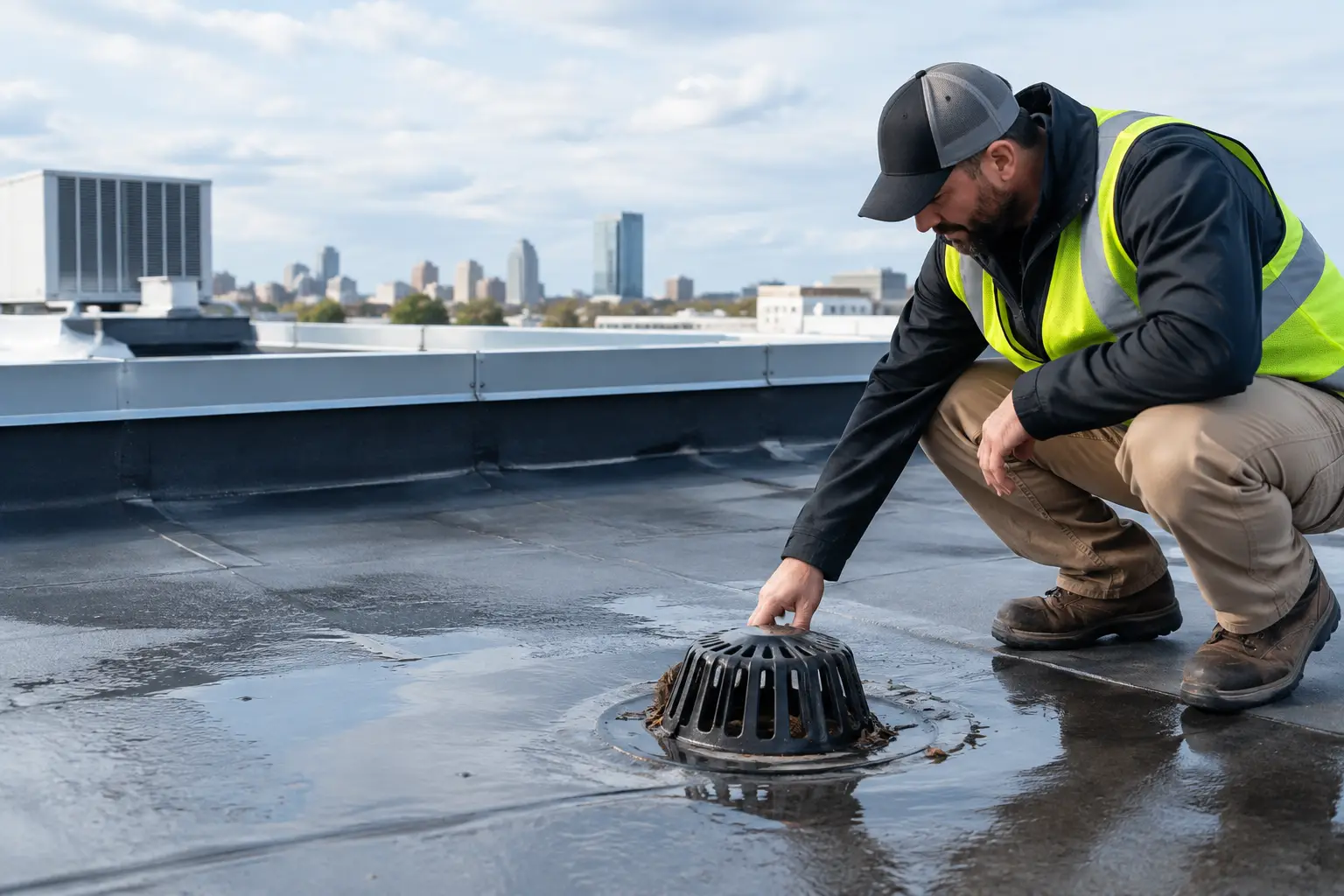
Commercial Roof Drainage Problems to Address
A commercial roof can look sound from the ground while water is quietly collecting across its surface. Effective commercial roof drainage moves rainwater and melting snow off the roof before it can stress seams, saturate insulation, enter the building, or add unnecessary weight to the structure. For property owners and managers, drainage is not a minor accessory to a flat-roof system. It is a major part of protecting the building beneath it.
On commercial properties throughout New Jersey and Staten Island, drainage systems face heavy rain, windblown debris, freeze-thaw cycles, and seasonal leaf buildup. When water has no dependable path off the roof, a small maintenance issue can turn into an interior leak, damaged ceiling materials, disrupted tenants, and more extensive roofing work. Identifying drainage concerns early gives owners more control over the repair process and helps prevent avoidable damage.
Why Commercial Roof Drainage Matters
Most commercial roofs have a low slope rather than a steep pitch. They are designed to direct water toward drains, scuppers, gutters, or perimeter edges, but that process depends on the roof surface, drainage components, and outlets all working together. If one part fails, water can begin to pond in areas where it should not remain.
Standing water does not always mean a roof is leaking at that moment. However, water that remains for more than a day or two after dry weather deserves attention. It can accelerate membrane wear, expose weaknesses at seams and flashing, and place added stress on areas that may already have minor deterioration. During winter, trapped water can freeze and expand around drains, edges, and penetrations.
Drainage problems also affect more than the roof membrane. Overflowing scuppers and clogged gutters can send water down exterior walls, around window openings, or toward foundations. For multifamily buildings, retail locations, warehouses, and other occupied properties, this can create water-intrusion issues far beyond the roof itself.
The Main Parts of a Commercial Drainage System
Commercial drainage design varies by roof size, layout, height, local conditions, and roofing material. A professional inspection should look at the full route water takes from the roof surface to a safe discharge point.
Interior Roof Drains
Interior drains are common on larger flat roofs. Water is directed toward drain bowls set at low points in the roof, then carried through internal piping. Strainers or domes help keep leaves and debris from entering the drain line.
These systems can be effective and visually unobtrusive, but they require regular attention. A blocked strainer can cause fast ponding during a heavy storm. If the internal piping is compromised, the issue may not be visible until water appears inside the building.
Scuppers and Downspouts
Scuppers are openings through a parapet wall that allow roof water to exit into conductor heads, downspouts, or exterior drainage paths. They are often used on low-slope roofs with perimeter walls.
Scuppers must remain clear, properly flashed, and sized for the roof area they serve. Debris can collect at the opening, while deteriorated sealant or flashing around the scupper can create a direct route for water into the wall assembly. Downspouts also need a clear outlet so water does not back up onto the roof or spill against the building.
Gutters, Edge Details, and Tapered Insulation
Some commercial roofs drain to gutters along the perimeter. These gutters need the right slope, secure hangers, clear outlets, and enough capacity to handle runoff. Rust, separated joints, loose sections, and debris buildup can all interfere with proper flow.
The roof itself also plays a central role. Tapered insulation, sloped decking, crickets, and properly formed low points guide water toward its intended drains or scuppers. If a roof has settled, if insulation has deteriorated, or if a previous repair changed the roof surface improperly, water may bypass the drainage points altogether.
Signs Your Commercial Roof May Have a Drainage Problem
The clearest sign is ponding water that remains after a storm has passed and the weather has been dry. Property managers may also notice water stains on ceilings near exterior walls, recurring leaks in the same area, bubbling roof material, or visible debris around drains and scuppers.
Other warning signs can be less obvious. Gutters that overflow during ordinary rainfall, downspouts that discharge too close to the building, streaking on siding or masonry, and deteriorated parapet-wall areas may all point to a drainage issue. On a roof with a gravel or coating surface, low areas can be difficult to judge from ground level, which is why scheduled roof inspections are valuable.
Do not assume a leak directly below a ponded area identifies the exact failure point. Water can travel beneath a roof membrane or along structural components before becoming visible indoors. The goal of an inspection is to find both the entry point and the condition that allowed water to collect there.
Common Causes of Poor Roof Drainage
Clogged drains and scuppers are common, especially after leaves, branches, and windblown debris accumulate. But cleaning debris alone may not solve every drainage concern. A roof can have clear drains and still hold water because the surface no longer slopes correctly toward them.
Aging roof materials can also contribute. Membranes may shrink, seams may weaken, and flashing can deteriorate around drain assemblies. Previous patchwork repairs sometimes create raised edges that interrupt water flow. On older buildings, undersized drainage components or changes to the roof layout may leave the system less prepared for heavy rainfall.
In some cases, the right solution is a focused repair, such as restoring a drain detail, replacing damaged flashing, correcting a localized low area, or repairing a gutter section. In other cases, widespread ponding and repeated leaks may indicate that the roof system needs more comprehensive drainage improvements as part of a restoration or replacement project. The appropriate scope depends on the roof’s age, material condition, drainage design, and history of water intrusion.
Maintenance That Helps Prevent Drainage Failures
Commercial roof drainage works best when it is maintained before a severe storm exposes a weak point. Roof drains, scuppers, gutters, and downspouts should be checked routinely, with added attention after major wind events and during fall leaf season. Building owners should also arrange an inspection after an interior leak, even if the leak appears to stop.
A practical maintenance program focuses on keeping drainage paths clear, checking strainers and drain bowls, reviewing flashing around penetrations and outlets, and looking for recurring ponding areas. It should also include an examination of parapet walls, coping, gutter joints, and discharge points. Water needs to leave the roof, but it also needs to be directed away from the exterior walls and foundation areas.
Maintenance intervals depend on the property. A building surrounded by mature trees may need more frequent clearing than an open-site warehouse. A roof with several mechanical units, complex transitions, or multiple drainage zones may also need closer monitoring. Regular documentation of roof conditions can help property managers spot patterns and plan repairs before water damage spreads.
What a Professional Drainage Inspection Should Identify
A thorough commercial roof inspection goes beyond confirming that drains are open. It evaluates whether water is reaching those drains as intended and whether the drainage components are properly integrated with the roof system.
The inspection should assess ponding areas, membrane condition, seams, flashing, drain details, scuppers, gutters, downspouts, parapet walls, and signs of moisture intrusion. It should also consider whether surface slope has changed and whether repairs can correct isolated issues without disturbing sound roofing areas.
For occupied commercial properties, clear communication matters as much as the technical findings. Property owners need a straightforward explanation of what is causing the drainage issue, what work is recommended, and how that work will affect the building and its occupants. A detailed scope helps prevent temporary patches from being mistaken for a long-term solution.
Top Pros Construction helps commercial property owners evaluate roof leaks, flat-roof conditions, and drainage-related exterior problems with practical recommendations based on the condition of the property. Addressing drainage concerns early can protect the roof, reduce the chance of interior damage, and keep a manageable repair from becoming a disruptive building issue.
If water is lingering on your roof, overflowing at the edges, or appearing inside the building after storms, treat it as a reason to schedule a professional evaluation. The right drainage correction begins with understanding where the water is going – and where it should be going instead.