Chimney Masonry Repair Guide for Lasting Protection
A few loose bricks or a thin crack near the chimney may look like a minor cosmetic issue. On a New Jersey or Staten Island home, however, water can enter those openings, freeze, expand, and steadily weaken the chimney structure. This chimney masonry repair guide explains what to watch for, how common repairs work, and when it makes sense to have a professional inspect the problem before it spreads.
Why Chimney Masonry Fails
Your chimney is exposed above the roofline year-round. Rain, snow, wind, summer heat, and freeze-thaw cycles all affect the brick, mortar joints, crown, flashing, and cap. Unlike the protected walls of your home, the chimney receives direct weather exposure from nearly every direction.
Water is usually the main reason masonry begins to deteriorate. Brick is durable, but it can absorb moisture over time. Mortar joints are often the first component to wear away because they are intentionally softer than the brick they hold together. Once joints become cracked, missing, or deeply recessed, more water can reach the chimney interior.
Roof and gutter conditions can add to the problem. Damaged flashing where the chimney meets the roof can allow water into the attic or upper walls. Overflowing gutters can keep nearby masonry wet, while missing shingles or roof damage may be mistaken for a chimney leak. A careful inspection should consider the entire area rather than assuming one visible issue is the only cause.
Warning Signs That Need Attention
A chimney does not need to be leaning or missing large sections of brick to need repair. Early attention can often limit the scope of work and help prevent water damage inside the home.
Look for crumbling, cracked, or missing mortar between bricks. This is commonly called mortar joint deterioration. You may also see loose bricks, gaps around the top courses of masonry, or small pieces of brick and mortar collecting on the roof, ground, or chimney ledge.
White, chalky staining on brick is another sign worth noting. Known as efflorescence, it occurs when water carries salts through masonry and leaves them behind as it evaporates. It does not confirm a structural issue by itself, but it suggests the masonry has been repeatedly exposed to moisture.
Inside the home, watch for water stains on ceilings or walls near the chimney, peeling paint, a musty odor, or dampness in the attic around the chimney opening. These symptoms may come from failed chimney flashing, a damaged crown, a missing cap, roof issues, or masonry deterioration. An inspection helps identify the actual entry point.
Chimney Masonry Repair Guide: Common Solutions
The right repair depends on the chimney’s condition, the source of water, and the extent of deterioration. A reliable contractor should explain what is visible, what needs closer evaluation, and why a specific scope is recommended.
Tuckpointing and repointing
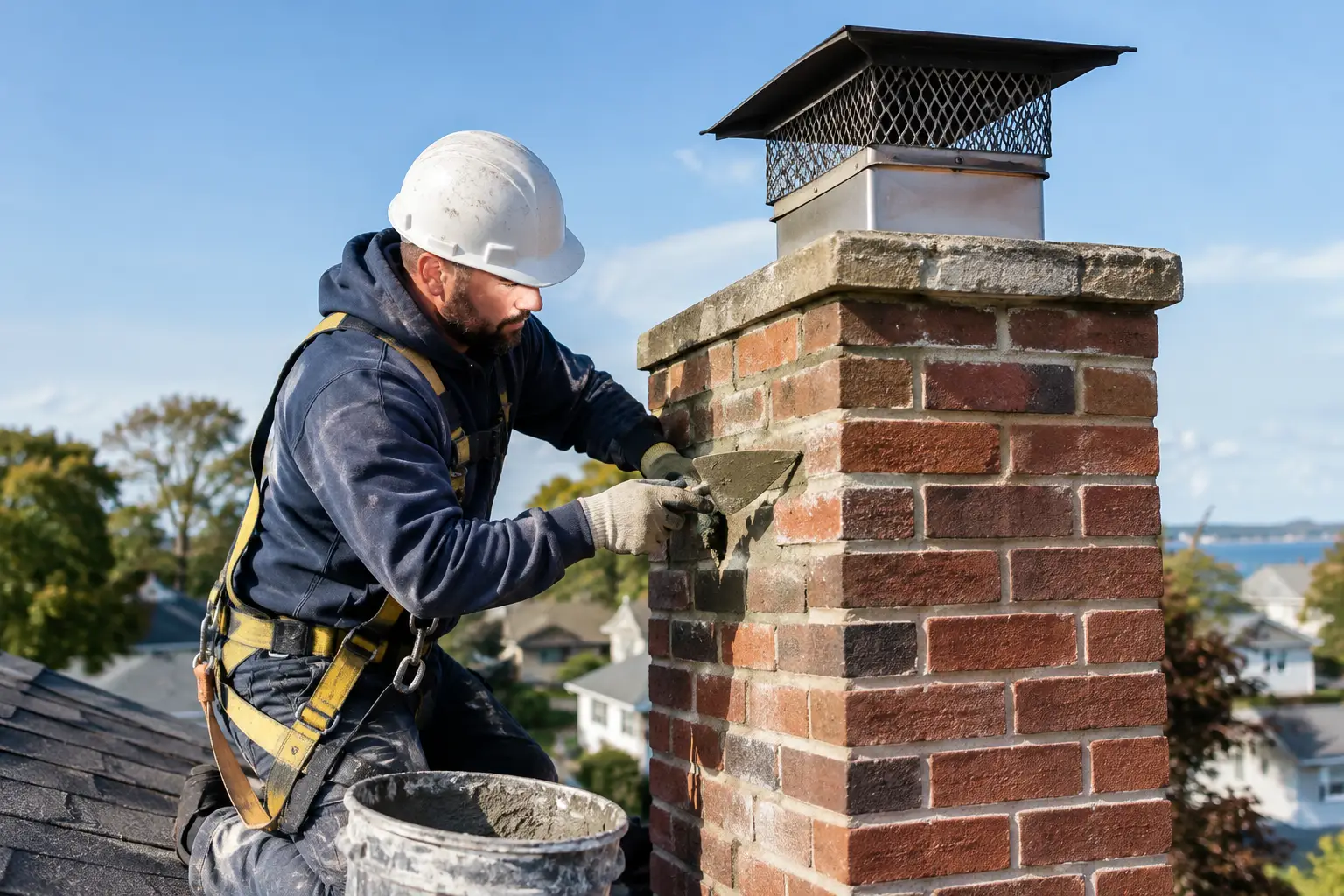
Repointing is the process of removing deteriorated mortar from the joints and replacing it with new mortar. Tuckpointing is often used conversationally for the same type of work, though it can also describe a more decorative technique that creates the appearance of fine joints.
For most residential chimneys, repointing is appropriate when bricks remain sound but the mortar has cracked, eroded, or fallen out. The old mortar needs to be removed carefully to a proper depth so the new material can bond correctly. Simply smearing mortar over damaged joints may look better briefly, but it often fails because the weakened material remains underneath.
Matching the mortar matters. Mortar that is too hard for older brick can contribute to brick damage over time, while poorly matched color can leave an obvious patchwork appearance. The best approach depends on the chimney’s age, brick type, and existing masonry.
Brick replacement
A cracked, spalled, or loose brick generally needs more than fresh mortar. Spalling describes brick faces that flake, chip, or break apart after moisture enters and freeze-thaw pressure develops. Replacing individual damaged bricks can restore stability and prevent the surrounding masonry from loosening.
If multiple bricks are deteriorated in one area, the repair may involve rebuilding that section rather than replacing one brick at a time. This is especially common near the top of the chimney, where weather exposure is most severe.
Chimney crown repair or replacement
The crown is the cement-like slab at the top of the chimney that slopes outward to shed water. It should not be confused with the chimney cap, which is the metal cover installed above the flue opening.
Cracks in a crown can let water into the masonry below. Small, isolated cracks may be addressed with an appropriate repair material when the crown is otherwise sound. A crown that is badly cracked, crumbling, thin, or improperly shaped may need replacement. A properly built crown directs water away from the chimney rather than allowing it to sit on the top courses of brick.
Flashing and chimney cap work
Not every chimney leak is a masonry problem. Flashing is the material that seals the intersection between the chimney and roof. When flashing pulls away, rusts, cracks, or was installed incorrectly, water can enter around the chimney even if the brickwork looks acceptable.
A chimney cap helps keep rain, debris, and animals out of the flue. It can also reduce moisture exposure at the chimney opening. If water staining appears near the fireplace or upper interior walls, it is wise to evaluate the cap, crown, flashing, roof covering, and masonry together.
Partial or full chimney rebuilding
When a chimney has widespread brick failure, deep movement, major leaning, or extensive deterioration above the roofline, rebuilding may be safer and more durable than repeated spot repairs. In some cases, only the exposed upper section needs rebuilding. In others, deterioration extends farther down and requires a larger scope.
Replacement is not automatically the answer just because a chimney looks old. A sound chimney with localized mortar failure may respond well to repointing and brick replacement. Conversely, repeated repairs may not be a good investment when the structure has broad instability. The condition of the full chimney determines the practical path forward.
What Affects the Scope and Cost of Repairs
Chimney repair costs vary because no two chimneys have the same access, height, material condition, or water-related damage. A single loose brick at an easily accessible location is a very different project from rebuilding a tall chimney above a steep roof.
Important cost factors include the height and size of the chimney, the amount of deteriorated mortar, the number of bricks needing replacement, roof pitch, access requirements, and whether crown or flashing work is needed. Matching older brick or addressing hidden damage found after deteriorated materials are removed can also affect the final scope.
For multifamily and commercial properties, access coordination and protecting walkways or occupied areas may be part of the planning. Clear estimates should describe the repair area, materials involved, and any related roof or flashing work that is recommended.
Safe Maintenance Between Inspections
You do not need to climb onto the roof to keep an eye on your chimney. From the ground, look periodically for missing mortar, visible cracks, rusted caps, leaning sections, or debris below the chimney. After a heavy storm, check the attic and upper rooms for new staining or moisture near the chimney.
Keep gutters and downspouts functioning so water is directed away from the roof edge and exterior walls. If you notice vegetation growing from mortar joints, do not pull it aggressively from a high or unstable chimney. The roots may be holding already-loose material in place, and the condition should be evaluated safely.
Avoid coating masonry with paint or applying a surface sealant as a quick fix for active deterioration. Some products can trap moisture in the brick if they are not suitable for the masonry and moisture conditions. Addressing failed mortar, bricks, crowns, and flashing first is usually the more durable approach.
When to Arrange a Professional Inspection
Arrange an inspection if you see loose brick, missing mortar, active interior water stains, a cracked crown, visible separation between the chimney and roof, or signs of storm damage. Prompt attention is also sensible before a planned roof replacement. Roof and chimney work often overlap at the flashing, and addressing known masonry concerns before new roofing is installed can prevent avoidable disruption later.
At Top Pros Construction LLC, we help property owners assess chimney masonry, flashing, roof-adjacent leaks, and related exterior conditions. If your chimney is showing signs of wear, contact our team to discuss the issue and arrange an inspection or estimate that fits your property’s needs.