Chimney Crown Repair NJ for Lasting Protection
A chimney can look solid from the ground while water is already working its way through the top. For homeowners seeking chimney crown repair NJ, the crown is often the first place a contractor should inspect when there are leaks, cracked masonry, flaking brick, or moisture around the fireplace. This small concrete cap has one important job: direct rain, snow, and melting ice away from the chimney structure.
When it cracks, slopes the wrong way, or pulls away from the flue, water can enter the masonry instead of shedding off it. In New Jersey, freeze-thaw cycles can turn a minor crown defect into a much larger chimney repair. Addressing the issue early helps protect the brickwork, mortar joints, flashing, roof structure, and interior of the home.
What a Chimney Crown Does
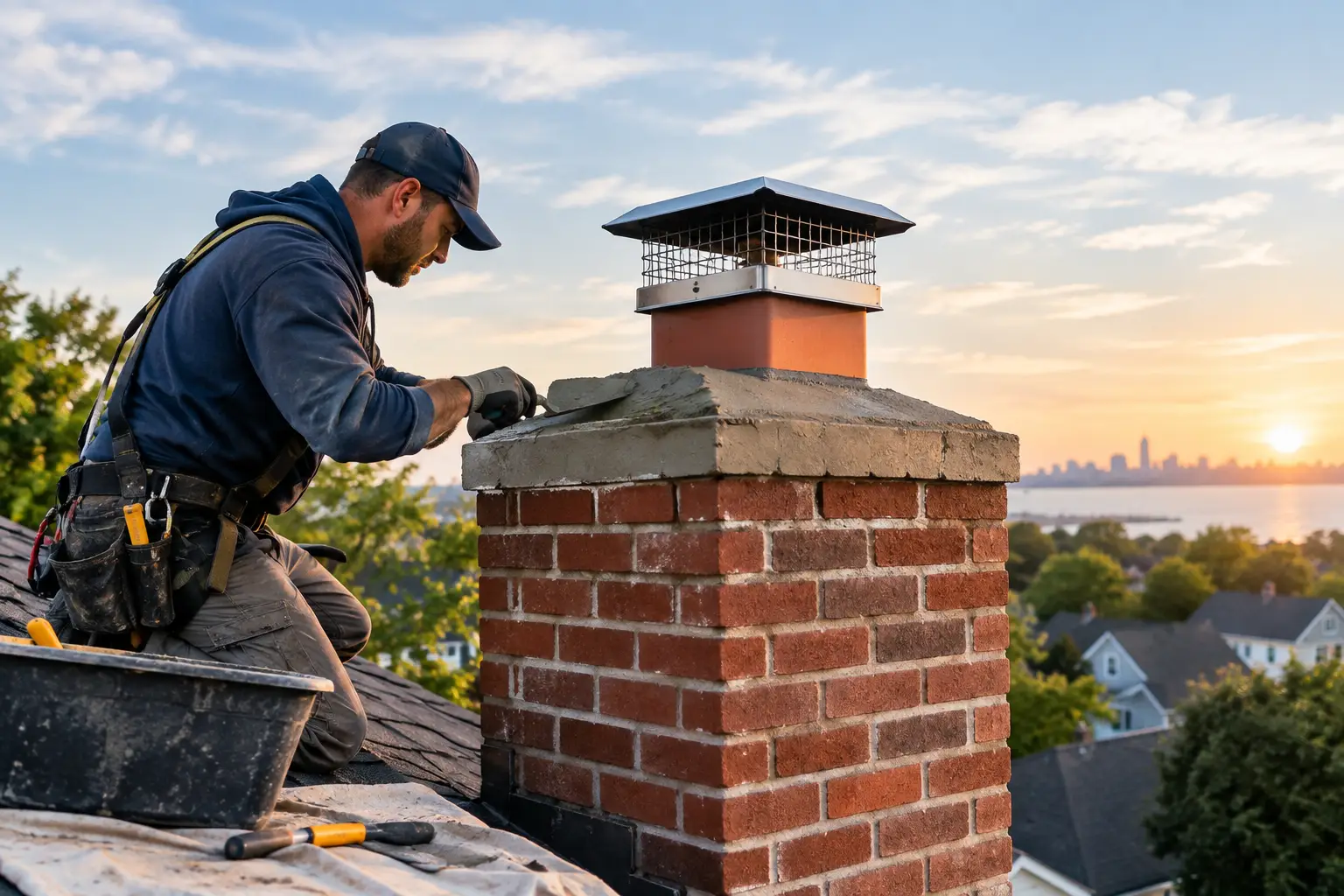
The chimney crown is the concrete or masonry cap at the very top of a chimney. It surrounds the flue tile and should extend beyond the chimney walls with a slight downward slope. That overhang and slope are not decorative details. They keep water from running down the sides of the chimney and soaking into the brick and mortar.
A properly built crown should be made from durable, weather-resistant material and designed to move water away from the flue opening. It should also have a properly sealed joint around the flue tile. If the crown is flat, too thin, undersized, or made with ordinary mortar, it may deteriorate sooner than it should.
The crown is different from a chimney cap. A cap sits above the flue opening to help keep out rain, animals, leaves, and debris. The crown supports water management across the top of the entire chimney. Both matter, but a cap cannot correct a failed crown.
Signs You May Need Chimney Crown Repair in NJ
Water damage often shows up below the crown, not directly on it. Because the chimney top is difficult to see from the ground, homeowners may first notice symptoms farther down the structure.
Look for cracked or missing mortar joints, loose bricks, white powdery staining on masonry, rust around the damper or firebox, water marks near the chimney, or dampness in the attic around the chimney chase. Pieces of concrete on the roof or ground can also point to a deteriorating crown.
Visible cracks deserve attention, especially if they run from the flue tile toward the edge of the crown. Small surface cracks may sometimes be repaired with a professional-grade crown coating or sealant system. Wider cracks, crumbling concrete, exposed reinforcement, or a crown that has separated from the chimney usually call for more substantial work.
A roof leak near a chimney does not automatically mean the crown is at fault. Damaged flashing, worn shingles, failed counterflashing, or masonry defects can create similar symptoms. A complete inspection is the right way to identify the actual entry point before repairs begin.
Why New Jersey Weather Is Hard on Chimney Crowns
Chimneys are exposed on every side, and their crowns take the full impact of rain, snow, wind, sun, and temperature swings. When moisture enters a small crack and temperatures drop below freezing, that water expands. The crack widens, allowing even more water inside during the next storm.
Over time, repeated freeze-thaw movement can break down the concrete and weaken nearby mortar joints. Heavy rain can saturate porous masonry, while summer heat and direct sun add expansion and contraction. Older chimneys may also have crowns that were installed without enough overhang or slope, making water damage more likely from the start.
This is why waiting for an active interior leak is rarely a good strategy. By then, the chimney may need repointing, brick replacement, flashing work, or roof repairs in addition to crown restoration.
Repair or Replacement: What Is the Right Solution?
The right approach depends on the crown’s condition, the chimney’s construction, and whether water has already affected surrounding materials. A reliable contractor should explain what is damaged, what can be preserved, and what will provide lasting protection.
When a Crown Repair May Be Enough
Repair can be appropriate when the crown remains structurally sound and the damage is limited to small cracks, shallow surface deterioration, or minor gaps at the flue. The process may include cleaning the crown, repairing cracks with compatible materials, restoring the joint around the flue, and applying a flexible waterproof coating designed for chimney crowns.
A quality coating can help bridge hairline cracking and create a water-resistant surface. It is not a shortcut for severely broken concrete. Applying sealant over loose, crumbling, or poorly sloped material may hide the problem temporarily without stopping water intrusion.
When Crown Replacement Is the Better Investment
Replacement is usually recommended when the crown is badly cracked, spalling, loose, too thin, or missing the proper slope and overhang. It may also be necessary if prior patching has failed or if the existing crown is made of deteriorated mortar rather than a durable crown mix.
During replacement, the damaged material is removed and a new crown is formed to provide adequate thickness, a positive slope, and an edge that projects beyond the chimney walls. The flue tile joint should be properly sealed to allow for normal movement between materials. Done correctly, this work helps reduce water exposure across the rest of the chimney.
Replacement costs more than a minor repair, but it can be the more practical choice when the crown’s basic design has failed. Repeated patching can add up while water continues to damage the masonry beneath it.
What Professional Chimney Crown Work Should Include
A sound repair starts with a close inspection of the chimney top, flue tile, brickwork, mortar joints, flashing, and nearby roof materials. The goal is to find every condition contributing to water entry, not simply cover the most visible crack.
The work area should be protected, loose material should be removed, and repairs should use materials suited to exterior masonry exposure. For a replacement, proper slope and overhang are essential. The contractor should also check whether a chimney cap is present and in good condition, since an open flue can bring additional moisture into the system.
Clear communication matters just as much as the repair itself. Property owners should receive a straightforward explanation of the problem, the recommended scope of work, and whether related masonry or flashing repairs are needed. This helps avoid surprises and supports better long-term decisions for the property.
Avoid These Common Mistakes
The most common mistake is treating a cracked crown as a cosmetic issue. Even a narrow crack can allow water into the chimney, particularly during winter. Another mistake is using standard caulk, roofing cement, or an indoor concrete patch as a permanent fix. These products may not handle masonry movement, ultraviolet exposure, and seasonal weather changes.
It is also risky to apply a waterproof coating without correcting loose material, major cracks, or drainage problems first. A coating works best as part of a proper repair, not as a cover for structural deterioration. Finally, do not assume all chimney leaks come from the roof. Chimneys need their own evaluation because crowns, mortar, flue joints, caps, and flashing can all contribute to the problem.
Protect the Rest of Your Exterior
A damaged crown can affect more than the chimney. Water traveling through masonry can stain siding, damage roofing near the chimney, corrode metal flashing, and contribute to leaks inside the home. For multifamily properties and investment buildings, small chimney defects can become more costly when delayed because moisture may spread into shared walls or upper-floor units.
Top Pros Construction LLC evaluates chimney crowns as part of the larger exterior system. That means looking at the masonry and roof connection together, then recommending practical repairs based on the actual condition of the property. Whether the solution is a targeted crown repair, repointing, flashing work, or crown replacement, the priority is stopping water at its source.
If your chimney crown is cracked, deteriorating, or suspected of causing a leak, scheduling an inspection before the next stretch of severe weather can help protect the repairs that are still manageable today.