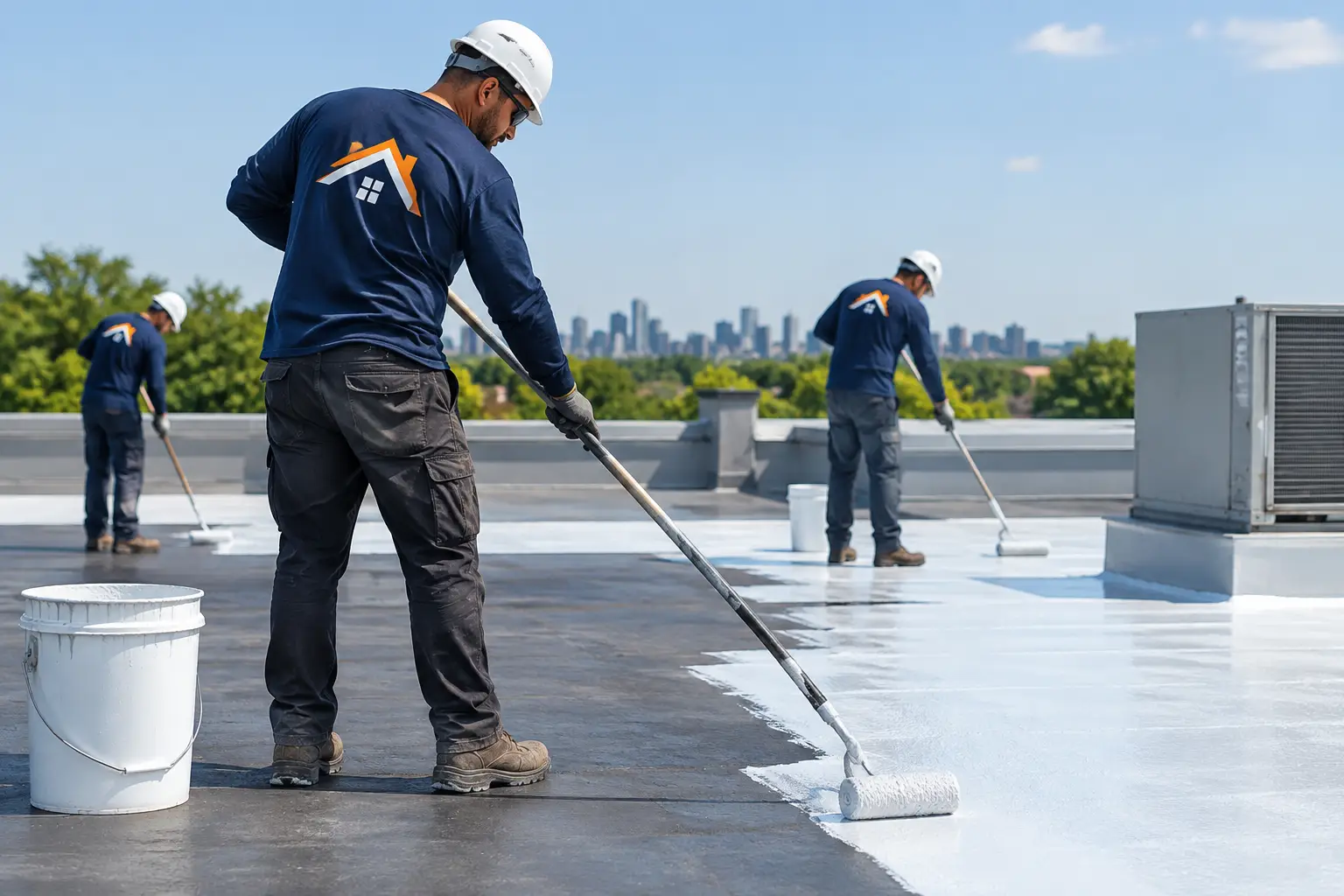
Roof Coating Options for Flat Roof Protection
A puddle that remains on a flat roof long after rain has stopped is more than an eyesore. It can expose weak seams, worn flashing, and aging roof surfaces to repeated moisture. For property owners comparing roof coating options, the right choice depends on the existing roof system, drainage, sun exposure, foot traffic, and whether the roof is a sound candidate for restoration in the first place.
A roof coating is a fluid-applied material that cures into a continuous protective membrane. It can help extend the service life of certain low-slope and flat roofs by sealing minor surface imperfections, reflecting sunlight, and reducing the impact of weather. It is not a shortcut for a roof with saturated insulation, widespread membrane failure, serious structural issues, or unresolved drainage problems. A professional inspection should come before a coating recommendation.
When Roof Coating Options Make Sense
Coatings are most useful when a roof is aging but still fundamentally stable. The existing membrane should be properly attached, the deck should be sound, and leaks should be identified and repaired before the coating work begins. Surface preparation is where much of the long-term performance is decided. Dirt, loose material, ponding water, open seams, damaged penetrations, and failing flashing need attention before a new coating is applied.
For commercial buildings, multifamily properties, garages, and homes with low-slope roof areas, a coating may be considered when the roof shows surface weathering, fading, minor cracking, or reduced reflectivity without widespread failure. It can also be a practical option when a full replacement would create unnecessary disruption and the roof still has useful life left.
The condition beneath the membrane matters just as much as the visible surface. If water has entered the insulation or roof deck, applying a coating over the top can trap the underlying problem instead of correcting it. This is why leak investigation, moisture assessment, and repair planning should be part of the process.
Common Roof Coating Options
Different coatings perform differently in wet conditions, intense sunlight, high-traffic areas, and changing temperatures. The best material is not always the most popular one. It is the one that matches the roof’s condition and the building’s exposure.
Acrylic Coatings
Acrylic roof coatings are water-based and commonly used for their bright, reflective finish. They can help lower roof-surface temperatures during hot weather and are often a good fit for roofs with positive drainage. Their flexibility helps them accommodate normal expansion and contraction as temperatures change.
The trade-off is that acrylic coatings are generally less suited to areas where water regularly ponds. Standing water can affect performance over time, especially if drainage concerns are not corrected first. On a properly sloped low-slope roof that dries after rain, acrylic can be a practical restoration material. On a roof with persistent puddling around drains or scuppers, another system may be more appropriate.
Silicone Coatings
Silicone coatings are widely considered for roofs exposed to frequent rain and ponding water. They maintain their resistance to moisture after curing and can perform well in the wet, variable weather common across New Jersey and Staten Island. Silicone also resists ultraviolet exposure, making it a strong option for roofs with little shade.
One consideration is surface cleanliness. Silicone can attract dirt over time, which may reduce the visual brightness of a white roof. It can also require specific preparation if a future coating is needed. Those factors do not rule it out, but they should be part of the maintenance discussion before a property owner selects a system.
Polyurethane Coatings
Polyurethane coatings are known for durability and resistance to impact and foot traffic. They are often considered for roofs near HVAC equipment, service paths, or other areas where maintenance personnel need regular access. Some polyurethane systems use a base layer for strength and a top layer that provides added weather and UV resistance.
Because these coatings can be more demanding to install, the condition of the existing roof and the details around penetrations matter greatly. A roofing professional should evaluate whether the roof needs reinforcement fabric, seam treatment, or repairs before the coating is applied. This helps create a continuous system rather than a surface layer that fails at its weakest detail.
Asphalt-Based Coatings
Asphalt-based coatings have long been used on certain roofing systems, particularly built-up roofs and modified bitumen surfaces. They can offer protection and maintenance value when selected for a compatible roof assembly. Aluminum-finished asphalt coatings may also help reflect sunlight, depending on the product and application.
These products are not one-size-fits-all. Compatibility with the existing membrane, the roof’s movement, and the desired finish should be reviewed carefully. In some cases, a different coating technology may offer better flexibility or moisture resistance. The right decision starts with identifying the roof material already in place.
The Details That Determine Coating Performance
A quality coating system is more than material spread across the field of the roof. Seams, penetrations, drains, parapet walls, scuppers, curbs, and flashing are common leak locations. These details often need repair, reinforcement, or specialty treatment before the main coating is installed.
Cleaning is equally important. Roofs collect debris, oils, biological growth, and loose granules that can interfere with adhesion. A properly prepared surface gives the coating a stable foundation. Skipping preparation may save time at the beginning, but it can lead to peeling, premature wear, or continued leaks later.
Weather conditions during installation also matter. The roof must be dry enough for the system being used, and temperature and humidity can affect curing. A professional contractor plans the work around the roof condition and the product requirements rather than treating every roof as the same.
Coating Versus Roof Replacement
A coating can be an effective restoration strategy, but it should not be presented as the answer to every roof problem. If a roof has widespread leaks, deteriorated decking, extensive blistering, failed insulation, or a membrane that is no longer securely attached, replacement may provide the more dependable long-term solution.
There are also cases where partial repairs make sense before a larger decision is made. For example, a localized leak around a vent, drain, or flashing detail may be repairable without coating or replacing the whole roof. The practical approach is to address the source of water intrusion, evaluate the remaining roof life, and recommend the scope of work that protects the property.
Property managers should also consider building operations. Roofs with frequent equipment access, complicated drainage, multiple additions, or recurring leak history may need a more detailed maintenance plan. Documenting repairs and inspecting the roof after major storms can make it easier to catch small concerns before they affect interior spaces.
Choosing the Right Coating for Your Property
The strongest recommendation comes from a roof inspection, not from selecting a material by color or appearance. A contractor should identify the existing roof type, inspect drains and flashing, look for signs of trapped moisture, review past repairs, and determine how water moves across the surface. This information helps narrow the appropriate roof coating options and avoids applying a system that does not match the roof’s needs.
For owners of homes, multifamily buildings, and commercial properties, clear communication matters. You should understand what preparation is required, which areas need repair first, how the coating will be applied around details, and what maintenance the roof may need afterward. A detailed scope makes it easier to compare practical solutions and protect your investment.
If your flat or low-slope roof is weathered, leaking, or holding water after storms, have it evaluated before the damage spreads. Top Pros Construction can help property owners assess the roof condition and determine whether repair, coating, or replacement is the soundest path forward.