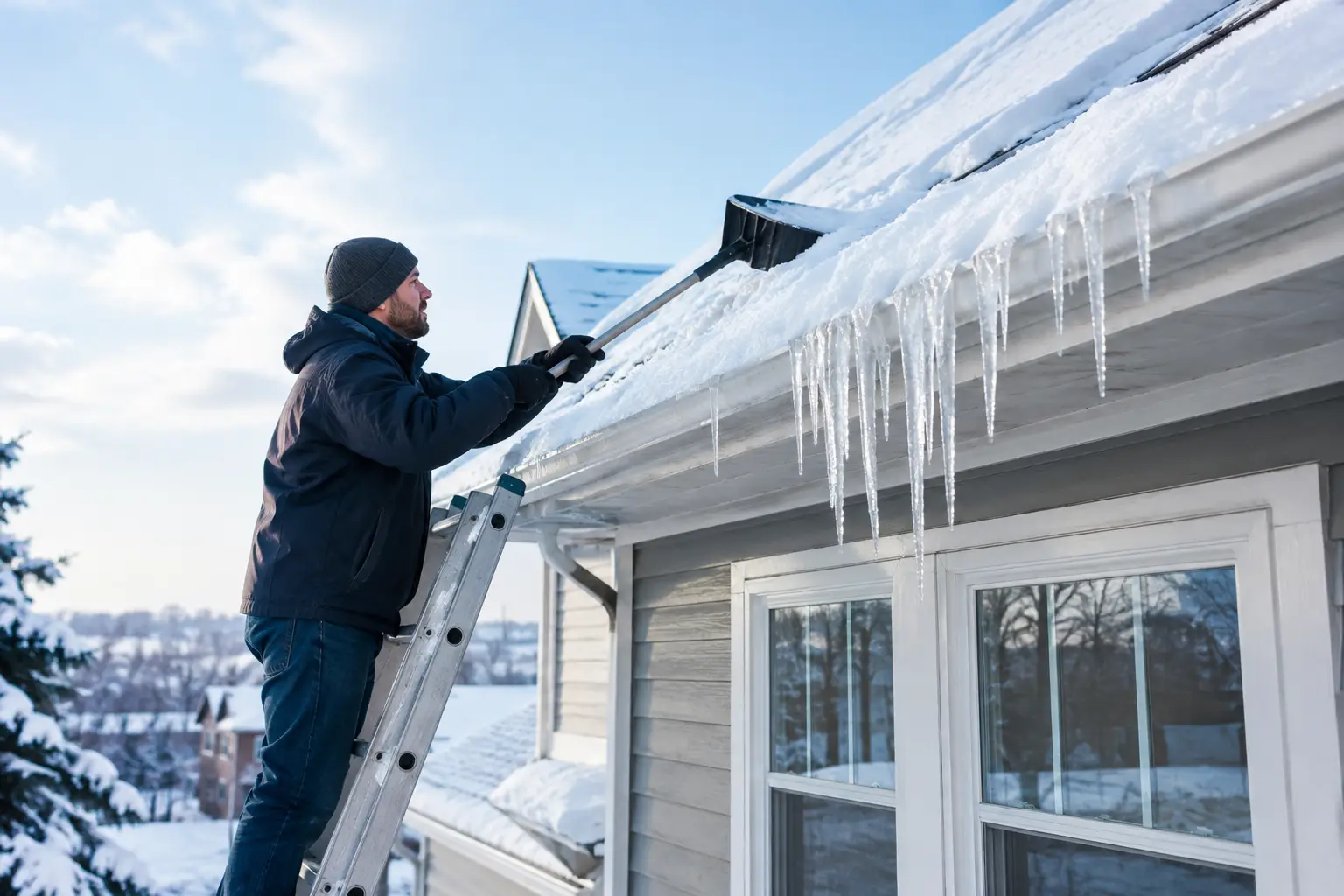
How to Prevent Ice Dams on Your New Jersey Roof
A thick ridge of ice along the eaves may look like a winter nuisance, but it can force water under shingles, soak insulation, stain ceilings, and damage walls. Knowing how to prevent ice dams starts with understanding that the problem is usually not the ice itself. It is uneven heat escaping through the attic and warming the roof from below.
For New Jersey homeowners, repeated freeze-thaw weather makes this a common concern. A roof can look sound from the ground while hidden heat loss, weak ventilation, clogged gutters, or aging flashing create the conditions for winter leaks. The right fix protects more than the roof. It protects the full exterior envelope of your home.
What Causes Ice Dams?
Ice dams form when snow on the upper portion of a roof melts, usually because heat from the living space rises into the attic. The meltwater runs downward until it reaches the colder roof edge over the eaves. There, it refreezes and builds a ridge of ice.
As that ridge grows, new meltwater has nowhere to drain. Water can back up beneath the shingles and enter the roof deck, attic, exterior walls, or interior ceiling. This is why an ice dam can cause a leak even when there is no obvious hole in the roof.
The underlying cause is often a combination of attic air leaks, insufficient insulation, poor airflow, and roof details that need repair. Large icicles may be a warning sign, but they do not always mean an ice dam is causing damage. The concern is standing water trapped behind ice at the roof edge.
How to Prevent Ice Dams Before Winter Arrives
The most dependable approach is to keep the roof deck as close to the outdoor temperature as possible. That reduces snowmelt in the first place. It is a whole-system job, not simply a gutter-cleaning task.
Seal air leaks from the house into the attic
Warm air does not only rise through the ceiling evenly. It finds openings around recessed lights, attic hatches, plumbing stacks, ductwork, wiring penetrations, chimneys, and exhaust fan housings. These small gaps can release enough heat to create hot spots on the roof.
Air sealing should be completed before adding more insulation. Otherwise, insulation can hide the pathways while warm, moist air continues moving into the attic. A qualified contractor can identify common leakage areas and make sure materials used near chimneys, vents, and electrical components are appropriate for the application.
Pay particular attention to the attic access opening. An uninsulated or poorly sealed hatch can act like an open window in the ceiling during winter. Weatherstripping and a properly insulated cover can make a meaningful difference.
Add or improve attic insulation
After air leaks are sealed, insulation helps keep conditioned indoor heat where it belongs. Many older homes have uneven, compressed, or insufficient insulation, especially around attic edges and above additions. Those thin spots can create the same uneven roof temperatures that lead to ice formation.
The ideal insulation level depends on the home, its construction, and the existing material. Adding insulation is not a one-size-fits-all project. Blocking soffit vents with insulation, for example, can reduce needed airflow and make the problem worse. Proper baffles or ventilation chutes keep insulation in place while maintaining an open path from the soffits into the attic.
Maintain balanced attic ventilation
Attic ventilation removes excess heat and moisture that can collect beneath the roof. In a typical sloped-roof system, cool air enters through soffit vents and exits through ridge vents or other high-level exhaust vents. This continuous flow helps keep the underside of the roof colder and drier.
Ventilation only works when intake and exhaust are balanced and unobstructed. A ridge vent without adequate soffit intake may not perform as intended. Likewise, powered attic fans are not automatically the answer. In some homes, they can pull conditioned air from the living space into the attic if ceiling leaks have not been sealed.
A roof and attic inspection can determine whether the existing ventilation layout suits your roof design. Complex roofs, cathedral ceilings, finished attics, and older homes often need a more tailored solution.
Keep gutters and roof drainage clear
Clean gutters do not eliminate an ice dam caused by attic heat, but they still matter. Leaves, shingle grit, and debris can trap water at the eaves and slow drainage after a thaw. Downspouts should also carry water safely away from the foundation.
Schedule gutter cleaning in late fall after most leaves have dropped, then inspect again after major wind events. Look for loose gutters, sagging sections, disconnected downspouts, and damaged drip edge. Water should move freely off the roof, through the gutter system, and away from the property.
Gutter guards can reduce debris buildup in some situations, but they are not a cure for ice dams. In fact, certain guard designs can hold snow and ice at the roof edge. The right choice depends on surrounding trees, roof pitch, gutter condition, and how the system handles winter weather.
Repair roofing defects before snow arrives
Ice dams exploit weak points. Missing or lifted shingles, deteriorated pipe boots, damaged flashing, worn sealant, and loose chimney counterflashing may let backed-up water enter much faster than a sound roof system would.
Before winter, inspect the roof from the ground for visible concerns and have a professional assess anything questionable. Roof repairs should address the actual source of vulnerability, not cover it with a temporary patch. This is particularly important around chimneys, skylights, valleys, and roof-to-wall transitions, where water management details are more complex.
For a roof replacement, ask about ice and water barrier installation at eaves and other vulnerable areas. This self-adhering underlayment provides an added layer of protection if water backs up beneath shingles. It is a valuable safeguard, but it does not replace proper insulation, air sealing, ventilation, or quality flashing work.
What to Do When Ice Is Already Building Up
Safety comes first. Do not climb onto an icy roof, chop at the ice with a shovel or axe, or pull large icicles down from a ladder. These actions can crack shingles, damage gutters, injure someone below, or create a fall hazard.
If snow is deep and conditions are safe from the ground, use a roof rake with a long extension handle to remove snow from the lower few feet of the roof. Work carefully and avoid scraping directly against shingles. Reducing the snow load near the eaves can limit the water available to feed a growing dam.
For an active interior leak, move belongings away from the area, place containers beneath drips, and document visible damage. If a ceiling is sagging from trapped water, stay clear of it. A heavily saturated ceiling can fail without warning. Prompt professional help is the safest path when water is entering the home.
Temporary ice-dam relief methods may be appropriate in some emergencies, but they should be handled carefully. Heated cables can help in limited applications, yet they are generally a management tool rather than a permanent correction. Improper installation can create electrical concerns or leave homeowners relying on a system that does not address attic heat loss.
Warning Signs That Deserve an Inspection
Not every winter roof issue is visible as a dramatic ice ridge. Watch for recurring icicles in the same areas, uneven snow melt patterns, frosty attic sheathing, damp insulation, peeling paint near exterior walls, or water stains on ceilings after a snowstorm.
A musty attic smell or visible mold is also a reason to act. Moisture from air leaks and poor ventilation can affect framing and indoor air quality long before a major roof leak becomes obvious. Early inspection is usually simpler and less costly than restoring water-damaged ceilings, insulation, and framing later.
Top Pros Construction LLC can evaluate roofing, gutters, flashing, chimney details, and other connected exterior components so homeowners are not left coordinating multiple trades during a winter repair.
Protect the Roof by Treating the Whole System
An ice dam is rarely solved by one product or one quick fix. The lasting solution may involve attic air sealing and insulation, ventilation corrections, gutter maintenance, and targeted roof repair. The exact scope depends on the age of the home, roof shape, snow exposure, and the condition of the exterior systems already in place.
If you notice recurring ice buildup or signs of water intrusion, arrange an inspection before the next hard freeze turns a manageable issue into interior damage. A clear assessment and durable repair plan will do more for your home than waiting for the spring thaw.