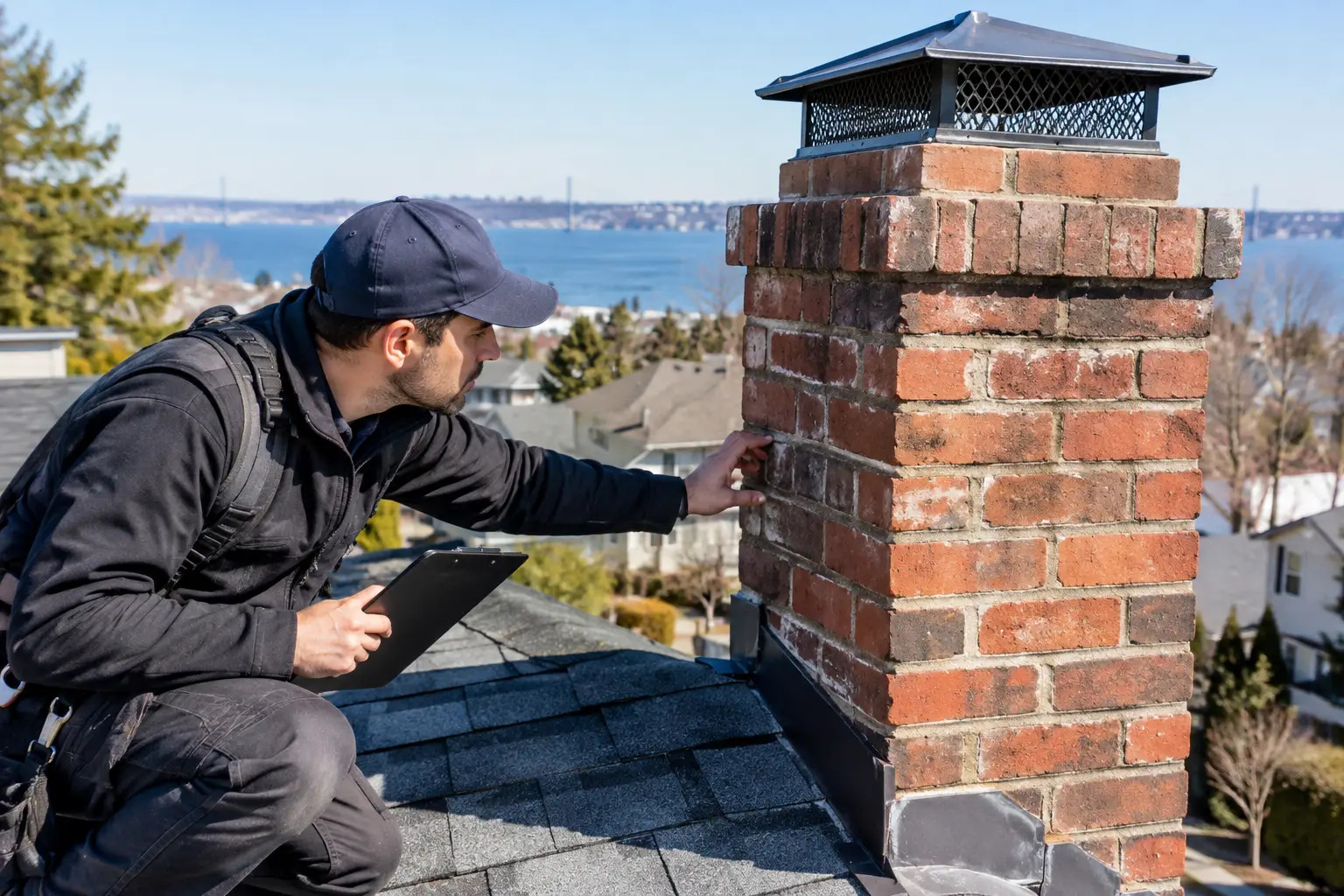
Chimney Inspection Guide for New Jersey Homes
A chimney can look solid from the yard while moisture is working its way through cracked mortar, a failed crown, or damaged flashing at the roofline. This chimney inspection guide explains what property owners should watch for, what a professional inspection can reveal, and why small chimney concerns should not be ignored until they become an interior leak or a larger masonry repair.
Why chimney inspections matter
Your chimney is exposed to nearly every condition that affects an exterior structure: heavy rain, wind, freeze-thaw cycles, heat, snow, and shifting temperatures. In New Jersey and Staten Island, water can enter small openings in mortar joints or concrete, freeze during cold weather, and gradually widen the damage.
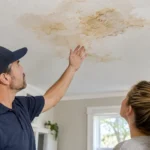
A chimney also connects directly to your roofing system. The flashing where the chimney meets the roof is designed to direct water away from this vulnerable intersection. If flashing loosens, cracks, or separates from the masonry, water may travel behind roofing materials and appear as a ceiling stain far from the chimney itself.
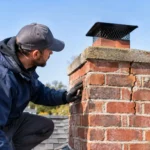
Regular inspections help separate a minor maintenance need from a more involved repair. They can also identify conditions that are not easy to see from ground level, including deteriorated mortar near the top of the stack, a cracked chimney crown, loose bricks, or worn sealant around flashing.
When to schedule a chimney inspection
For a chimney that serves a fireplace, wood stove, or other fuel-burning appliance, an annual professional inspection is a sensible starting point. The inspection can assess the chimney structure and venting path, while cleaning needs depend on how the appliance is used and what the technician finds.
An inspection is also wise after a severe storm, a chimney leak, a nearby tree impact, or a roofing project. If you are buying an older home, planning to use a fireplace that has been inactive, or noticing new masonry damage, it is better to understand the condition before making assumptions.
You do not need to wait for an emergency. A planned inspection is especially useful when you are deciding whether your chimney needs targeted repointing, crown repair, new flashing, or more extensive rebuilding.
Warning signs homeowners can spot safely
A ground-level look around your home can tell you when it is time to call a professional. Do not climb onto the roof or lean ladders against a chimney to investigate. Chimney masonry and roof surfaces can be unstable, particularly after rain or during colder months.
Look for these signs from a safe distance:
- Missing, cracked, flaking, or spalling brick, meaning the brick face is breaking away
- Mortar joints that are recessed, cracked, crumbling, or missing between bricks
- White, chalky staining on masonry, called efflorescence, which can point to moisture movement
- A chimney that appears to lean, bulge, or have loose pieces near the top
- Cracks in the concrete crown, the cap-like surface that slopes water away from the flue
- Rusted, lifted, or separated metal flashing where the chimney meets the roof
- Water stains, peeling paint, damp odors, or discoloration in rooms near the chimney
- Pieces of brick, mortar, or tile around the chimney base or in the fireplace
None of these symptoms confirms the exact cause on its own. For example, a ceiling stain near a chimney could come from flashing, the chimney crown, damaged shingles, a roof penetration, or another nearby roofing issue. A careful inspection is what turns a visible concern into a defined repair scope.
What a professional chimney inspection should assess
A useful inspection looks at the chimney as a complete system rather than focusing only on the brickwork. At Top Pros Construction LLC, we evaluate the accessible exterior components and explain the findings in clear terms, including where water may be entering and which repairs are most appropriate.
Masonry, mortar, and structural condition
Brick masonry relies on mortar joints to keep the assembly stable and resist water penetration. When mortar wears away, repointing may restore the joints without replacing every brick. Repointing involves removing deteriorated mortar to an appropriate depth and installing new mortar that is suited to the existing masonry.
Individual damaged bricks may need replacement. If broad sections are loose, heavily deteriorated, or structurally compromised, rebuilding part or all of the chimney may be the better long-term option. The right choice depends on how widespread the damage is, whether the chimney is stable, and whether water has affected areas below the visible surface.
The crown, cap, and flue opening
The chimney crown is often overlooked because it sits at the top of the stack. Its job is to shed water away from the masonry below. Hairline cracks can become larger cracks after repeated freezing and thawing, allowing water into the brickwork.
The inspection should also consider the condition of the chimney cap and the exposed flue opening. A properly functioning cap can help limit rain entry and keep out leaves and animals. However, a cap does not fix a cracked crown or failing mortar underneath it.
Flashing and nearby roofing materials
Chimney flashing is one of the most common sources of chimney-area leaks. It typically includes metal pieces integrated with the roofing material and secured at the masonry. Failed caulk alone is not always the whole issue. Water can get behind the flashing if its seams, counterflashing, surrounding shingles, or roof underlayment have deteriorated.
This is why chimney inspections and roof inspections often overlap. A repair that addresses only the visible stain without examining the roof-to-chimney connection may leave the actual water path unresolved.
Interior fireplace and venting observations
Where accessible and appropriate, an inspection can include visible conditions inside the firebox, damper area, and flue. Cracked liners, obstructions, excess buildup, or damaged components may require attention from the appropriate chimney professional before the fireplace is used.
If you smell smoke indoors, see debris falling into the firebox, notice drafting problems, or suspect a venting concern, stop using the fireplace until it has been evaluated. Water damage and venting safety are different issues, but both deserve prompt attention.
Chimney leak or roof leak? Why the distinction matters
A leak around a chimney is not automatically a chimney masonry problem. Rain can enter through deteriorated flashing, cracked crowns, open mortar joints, damaged roofing, or even clogged gutters that overflow near the roofline. More than one condition can exist at once on an aging exterior.
The timing of the leak offers clues. A stain that worsens after wind-driven rain may suggest a flashing or roof-related opening. Moisture that appears after snow melts or after long periods of rain may point to water being absorbed through masonry. These are clues, not a diagnosis.
A thorough assessment should follow the likely path of water from the roof surface and chimney top to the interior area where the damage appears. That approach helps avoid patching the most visible spot while leaving the entry point in place.
Repair, rebuilding, or replacement: how to decide
Minor mortar deterioration may be addressed with repointing. A cracked crown may be repaired or replaced depending on its condition. Flashing can often be repaired or replaced when the surrounding roof materials are still in serviceable condition.
More extensive work may make sense when brick faces are failing across large areas, the chimney has shifted, sections are unstable, or repeated repairs have not controlled water entry. If a roof replacement is already planned, it can also be practical to coordinate chimney flashing work at the same time so the connection is rebuilt correctly with the new roofing system.
Cost depends on access, chimney height, extent of masonry damage, roof pitch, material needs, and whether work is limited to a small repair or involves rebuilding. A clear inspection and written scope allow you to compare repair options based on the actual condition rather than a guess from the ground.
Maintenance between inspections
You can help protect your chimney by keeping gutters and downspouts working properly so water is directed away from the roof edge and foundation. Trim branches that rub against the roof or chimney, and watch for changes after major storms.
Avoid coating damaged masonry with an unverified product or filling larger cracks with household caulk. Some treatments can trap moisture or hide deterioration without correcting it. Chimney repairs should allow the masonry to perform as intended while addressing the route water is taking into the system.
If you see crumbling mortar, a new roofline stain, damaged flashing, or visible chimney cracking, arrange an inspection before the next stretch of wet weather. Top Pros Construction LLC can assess chimney masonry, crowns, flashing, and related roofing conditions to help you choose a practical repair path for your property.