When Chimney Chase Cover Replacement Is Needed
A rusted metal top on a chimney can let water into places you cannot see until staining, peeling paint, or an indoor leak appears. Chimney chase cover replacement addresses that exposed top piece before moisture damages the wood framing, flue area, siding, or roof system around it. If the cover is corroded, bent, loose, or holding water, it is worth having the chimney and nearby roof details inspected.
For homeowners in New Jersey and Staten Island, repeated rain, snow, freeze-thaw cycles, and wind-driven storms can be hard on every exterior opening. A chase cover may be a small part of the chimney, but it has a large job: keeping water out of a wood-framed chimney chase.
What a chimney chase cover does
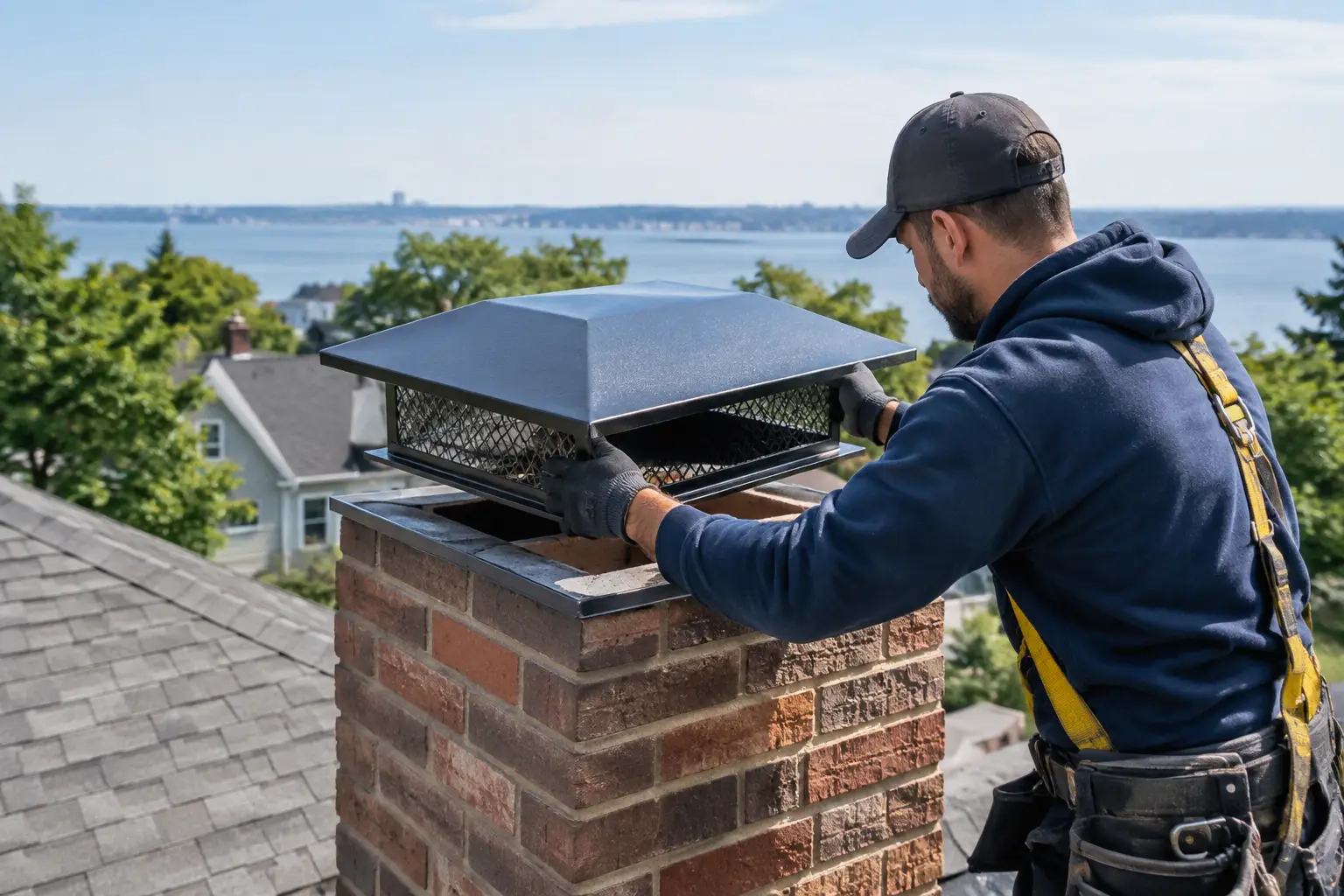
A chimney chase is the box-like structure that surrounds a factory-built or prefabricated fireplace chimney. Unlike a masonry chimney, which usually has a concrete or mortar crown at the top, a chase is typically finished with a fitted metal cover. The cover slopes or channels water away from the opening around the flue pipe and toward its edges.
The chase cover is not the same as a chimney cap. A cap sits over the flue opening and helps keep out rain, animals, and debris while allowing smoke or exhaust to exit. The chase cover is the larger sheet-metal component that protects the entire top of the chase. Both parts need to work together, but a new cap alone will not correct a rusted-through or improperly fitted cover.
When water gets past the cover, it can soak the chase framing and sheathing. Over time, that moisture may lead to soft wood, damaged insulation, corrosion around metal components, or leaks that travel into ceilings and walls. The visible drip may occur several feet away from the actual entry point, which is why a careful exterior inspection matters.
Signs chimney chase cover replacement may be needed
Rust is the most common warning sign, especially along seams, corners, and around the flue opening. Surface discoloration does not always mean the cover has failed, but flaking metal, pinholes, bubbling paint, or visible deterioration deserve attention.
You may also notice water stains on a ceiling near the fireplace, dampness in the firebox, streaks running down exterior siding, or a musty odor after heavy rain. These symptoms can come from a chase cover, but they can also be caused by roof flashing, worn shingles, damaged siding, masonry joints, or a leak farther up the roof. A professional should confirm the source rather than treating the nearest visible symptom.
Other signs include a cover that appears flat or sunken, loose fasteners, gaps around the flue, or standing water on top. A properly made cover should shed water, not collect it. Wind damage and falling branches can also bend the metal enough to open seams or change the slope.
Why chimney leaks often overlap with roofing problems
The chimney penetrates the roof, so roof details are part of the diagnosis. Flashing is the metal system that directs water around the base of a chimney and onto the roofing surface. If flashing is loose, improperly integrated with shingles, or damaged by age and weather, rain can enter at the roofline even when the chase cover looks worn.
At Top Pros Construction LLC, we look at the full exterior area instead of assuming one component is responsible. That means checking the chase cover, flue opening, chimney siding or cladding, roof flashing, adjacent shingles, and nearby roof penetrations. On a low-slope or commercial roof, the connection between the chimney structure and the roof membrane also needs close attention.
This broader approach helps prevent a frustrating cycle: replacing one visible piece while a separate roof leak remains. It also lets you understand whether a focused repair is reasonable or whether several connected exterior details need work at the same time.
Repair or replacement: what makes sense?
A minor issue around a sound cover may be repairable. For example, a limited fastener problem or a small gap at a properly formed cover can sometimes be corrected as part of a larger chimney or roofing repair. The condition of the metal, its seams, its slope, and the framing below it all affect that decision.
Replacement is usually the more practical option when metal is rusted through, the cover is extensively corroded, seams are failing, the cover has been patched repeatedly, or water has been pooling on its surface. A cover that is the wrong size or was cut poorly around the flue may also need replacement because sealant alone is not a durable substitute for a correctly fitted component.
Material selection involves trade-offs. Galvanized steel can be a familiar option, but its protective coating can wear over time. Aluminum resists rust, while stainless steel is often selected where long-term corrosion resistance is a priority. The right choice depends on the chimney design, exposure to weather, budget, and how the new cover will integrate with the flue and cap. The goal is a cover made to fit the chase, not a generic piece forced into place.
What careful replacement work should address
A lasting chimney chase cover replacement starts with confirming the condition beneath the old metal. Removing a failed cover can reveal deteriorated wood, damaged sheathing, or moisture marks that were not visible from the ground. If those materials have been affected, they should be evaluated before the new cover is installed.
The new cover needs appropriate slope, formed edges, and a secure fit around the chase and flue. Its openings should be properly detailed so water is directed away rather than trapped at the penetration. The flue cap, storm collar where applicable, and surrounding roof flashing should also be checked as part of the work.
Cleanup and communication matter here as much as the metalwork. You should know what was found, what is included in the scope, and whether related roof or chimney repairs are recommended. If exterior damage extends beyond the cover, we explain the condition and options clearly so you can make an informed decision.
Do not overlook siding, gutters, and masonry
A chimney chase often has siding or other exterior cladding on its sides. When water enters from the top, it may cause warped siding, open trim joints, peeling finishes, or rot around the chase corners. Repairing the cover without addressing damaged siding or trim can leave the structure exposed.
Gutters can contribute to the problem, too. An overflowing gutter near the chimney may saturate the roof edge, siding, and wall below, making it harder to identify where water is entering. Proper gutter and downspout function helps move roof runoff away from vulnerable exterior areas.
For brick chimneys, the issue is different. Masonry chimneys generally rely on crowns, mortar joints, flashing, and caps rather than chase covers. Cracked crowns, missing mortar, and deteriorated brick can all allow water in. Masonry repair, repointing, or crown work may be more appropriate than a chase cover replacement when the chimney is brick or stone.
Cost factors to consider
The cost of this work depends on more than the cover itself. Chimney height and roof pitch affect access. The chase dimensions, cover material, number of flues, cap condition, custom fabrication needs, roof flashing repairs, and any concealed wood damage can also change the scope.
A detailed estimate should separate the identified repair needs from possible additional work that can only be confirmed after removal. That clarity is particularly helpful for landlords and property managers coordinating maintenance across multiple units or planning work around occupants.
When to arrange an inspection
Arrange an inspection if you see active leaking near a fireplace, major rust on the chimney top, a cover that has lifted after a storm, or staining that returns after prior repairs. If water is entering the home, temporary steps to protect interior belongings are sensible, but the exterior source still needs to be located and corrected.
For a planned repair, do not wait for a visible ceiling stain. A chimney top that is aging, rusting, or holding water is easier to address before moisture reaches the framing and roof assembly. We can inspect the cover along with the roofing, siding, gutters, and masonry details that may affect the result, then provide a clear scope suited to your property.
If you are concerned about a chimney leak or a failing metal cover, contact Top Pros Construction LLC to discuss the signs you are seeing and arrange an exterior inspection. A clear assessment can help you address the right source of the problem without guessing.