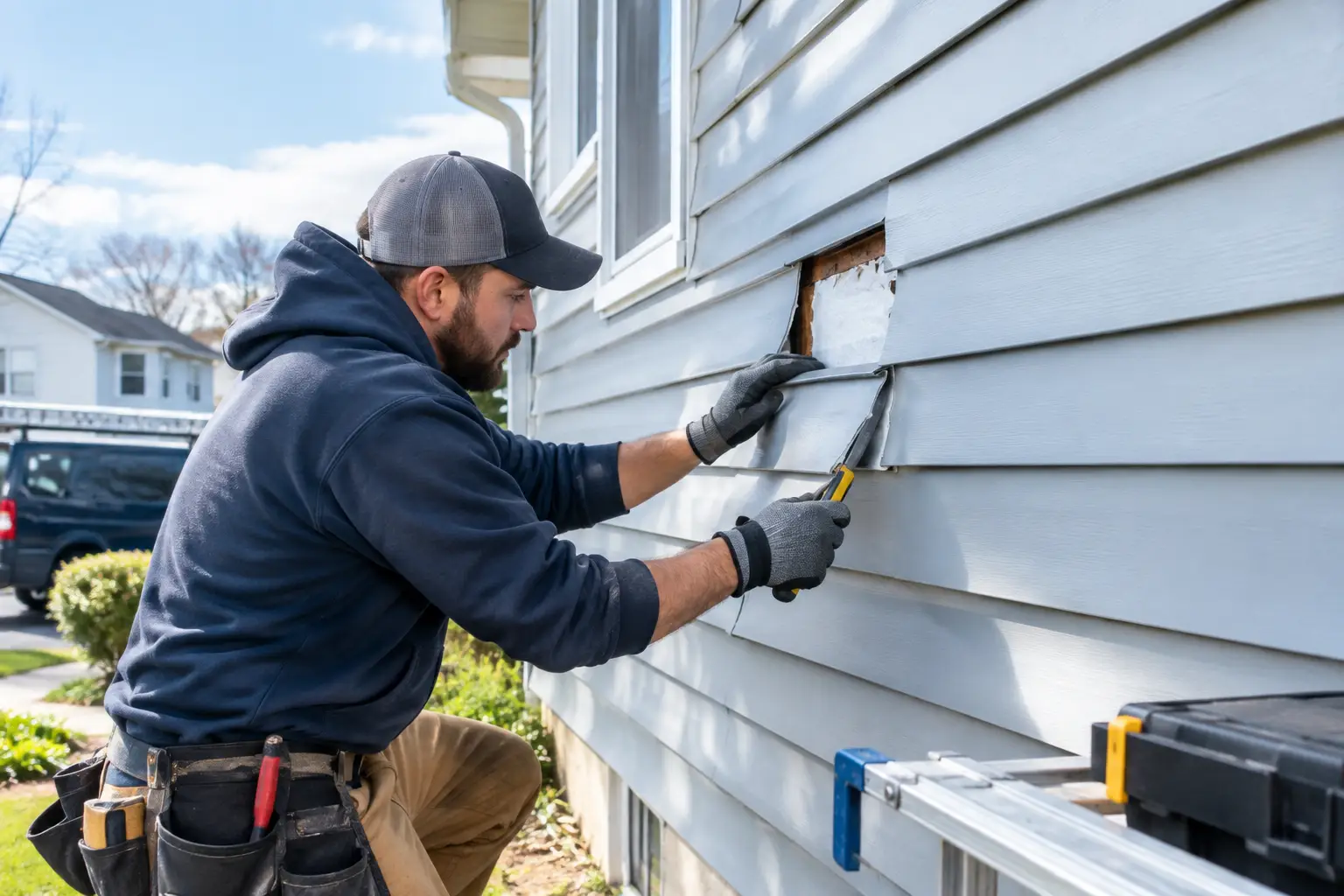
How to Repair Damaged Vinyl Siding Safely
A cracked panel beside a window, a loose course after high winds, or a hole from a lawn tool can look like a small cosmetic issue. But when you repair damaged vinyl siding promptly, you are also protecting the wall behind it from wind-driven rain, insects, and hidden moisture damage. In New Jersey, where winter freezes, summer heat, and coastal or storm-season winds all put pressure on exterior materials, small siding problems deserve a careful look.
Vinyl siding is durable, low-maintenance, and designed to shed water. It is not a waterproof wall system by itself. The housewrap, flashing, sheathing, and framing behind the siding do the deeper protective work. A repair that simply covers visible damage without addressing what caused it can leave a bigger problem waiting inside the wall.
Start by Identifying the Type of Siding Damage
Not every damaged panel requires a full siding replacement. A qualified inspection should determine whether the issue is isolated to one or two pieces, whether the siding has reached the end of its service life, and whether moisture has entered the wall assembly.
Cracks and punctures are common around busy areas of the home. A baseball, mower debris, ladder impact, or falling branch can break vinyl, particularly in cold weather when it becomes more brittle. A small hole may be repairable, but a split panel often needs replacement because sealants rarely restore the panel’s strength or clean appearance for long.
Loose or missing panels usually point to wind damage, improper fastening, or a failed locking edge. Vinyl panels are installed to move as temperatures change. If nails were driven too tightly, the panels cannot expand and contract normally. They may buckle, pull free, or crack around the nail slots.
Warping, rippling, and melting require more investigation. Warping can result from overly tight installation, but heat reflection from low-E windows, grills, fire pits, or nearby equipment can deform siding as well. If reflected sunlight caused the damage, replacing the affected panel without resolving the heat source may lead to the same problem again.
Fading is different from physical damage. It does not always create an immediate water-intrusion concern, but it can make a spot repair stand out. Vinyl colors change over time from sun exposure, so an exact match may be difficult even when the original manufacturer and color are known.
When a Simple Vinyl Siding Repair Makes Sense
A targeted repair is often the practical choice when the surrounding siding is in good condition and the damage is limited. Replacing a single cracked panel, reconnecting a loose course, or repairing damaged trim can restore protection without turning a small issue into a major exterior project.
The best repair candidate is a relatively new or well-maintained siding system with no signs of widespread brittleness, repeated wind loss, severe fading, or moisture-related deterioration behind the panels. Matching material from the original installation is ideal. Homeowners who keep leftover panels after a siding project have a major advantage, especially when a discontinued color is involved.
A professional also checks the pieces that make the repair work. J-channel around windows and doors, utility trim, corner posts, starter strips, and flashing all guide water away from vulnerable areas. If one of these components is loose or improperly installed, replacing only the visible panel may not solve the underlying issue.
How to Repair Damaged Vinyl Siding Without Creating New Problems
For a small, accessible repair, the work is more precise than it may appear. Vinyl siding panels interlock from bottom to top, and forcing them apart can break neighboring pieces. Proper repair begins by safely releasing the course above the damaged panel with a siding removal tool, often called a zip tool.
The damaged section is then unlocked, its fasteners are removed, and the panel is slid out of the channels. Before installing a replacement, inspect the wall surface for wet sheathing, staining, soft wood, insect activity, or damaged housewrap. If the wall has been exposed to rain, the repair should not be closed until moisture concerns are addressed.
When installing the replacement panel, fasteners should be placed in the center of the nail slots and left slightly loose. The panel must be able to move horizontally with seasonal temperature changes. Nails driven tight against the siding can create buckling in hot weather and cracking in cold weather.
The replacement should also have enough clearance at trim channels and corner posts. Cutting a panel too tightly may look neat on installation day but can cause distortion when temperatures rise. Once the panel is secured, it is reconnected to the course below and locked back into the course above.
For homeowners considering a do-it-yourself repair, the basic tools may include a zip tool, tin snips, a tape measure, a hammer, and corrosion-resistant fasteners. The challenge is not owning the tools. It is recognizing when the damage involves flashing, hidden water entry, difficult access, brittle older panels, or an installation problem that affects more than one course.
Do Not Ignore Damage Around Windows, Rooflines, and Gutters
The location of siding damage matters as much as its size. A crack in an open wall area is one thing. A loose panel beside a window, beneath a roof edge, near a chimney, or behind a gutter can signal a water-management issue that reaches beyond siding.
For example, overflowing gutters can repeatedly soak the upper wall and force water behind siding edges. A roof leak or poorly directed kickout flashing may send concentrated runoff onto the siding near a roof-to-wall intersection. Damaged caulk around a window, failing trim, or missing flashing can also allow water to travel behind the exterior finish.
These connected conditions are why a complete exterior assessment can be more valuable than a quick patch. The visible siding damage may be the first sign, not the only problem. Addressing the roof, gutter, window trim, masonry, or flashing issue at the same time helps prevent repeat repairs and protects the structure behind the wall.
When Vinyl Siding Replacement Is the Better Investment
There is a point where repeated spot repairs stop being cost-effective. If panels are brittle throughout the home, multiple sections have come loose, colors are badly faded, or storm damage extends across several elevations, replacement may offer better long-term value.
Full replacement also creates an opportunity to inspect the sheathing and moisture barrier, improve flashing details, replace failing trim, and correct installation mistakes from an earlier project. For homes with aging exterior systems, coordinating siding with roof, gutter, chimney, or masonry repairs can reduce disruption and provide a more consistent finished appearance.
Replacement does not always mean every exterior surface needs to be changed. Sometimes one elevation receives the most sun or wind damage while other areas remain sound. A contractor can explain whether a partial replacement will look acceptable, match properly, and provide reliable protection, or whether broader work is the smarter choice.
Protect Your Repair From Future Damage
After the repair, a few practical habits can extend the life of vinyl siding. Keep grills, fire pits, and heat-producing equipment well away from the wall. Aim downspouts away from siding and foundations, and clean gutters so water does not spill over onto trim and wall surfaces. Use care when placing ladders and operating mowers or trimmers near the home.
It also helps to walk around the property after major windstorms. Look for lifted edges, missing pieces, new cracks, loose shutters, damaged soffits, and gutters pulling away from the fascia. Taking photos soon after a storm can be useful if an insurance claim becomes necessary.
A repair should leave your home looking better, but its real purpose is protection. If you see cracked, loose, warped, or missing siding, get the wall checked before the next heavy rain finds its way behind the panels. Top Pros Construction LLC can assess the siding and the connected exterior systems, provide a clear estimate, and complete the repair with the attention your property deserves.