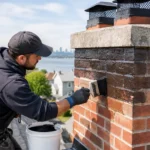
Why Is My Chimney Leaking? Causes and Repairs
A water stain near the fireplace, a damp smell in the living room, or moisture on the firebox floor can make any property owner ask: why is my chimney leaking? The answer is not always obvious. Water can enter at the top of the chimney, through damaged flashing at the roofline, or directly through aging masonry. Because water often travels before it becomes visible indoors, the stain you see may not be directly below the actual problem.
For homes in New Jersey and Staten Island, freeze-thaw weather, wind-driven rain, snow, and aging exterior materials can all contribute to chimney leaks. A prompt professional inspection helps identify the entry point before a small repair turns into damaged framing, interior finishes, or major masonry deterioration.
Why Is My Chimney Leaking? Common Causes
A chimney is not one solid, watertight unit. It is a system of masonry, metal, mortar, roofing materials, and protective components. When one part fails, water can find its way into the home.
Damaged or Missing Chimney Cap
The chimney cap sits at the top of the flue and helps keep rain, snow, leaves, and animals out. If it is missing, loose, rusted through, or improperly fitted, water can run directly down the flue. This may lead to a wet damper, moisture in the firebox, rusted metal components, and staining around the fireplace.
A chimney cap leak is often more noticeable after a heavy rain. However, not every leak at the fireplace comes from the cap. A thorough inspection should also consider the crown, flashing, and surrounding roof materials.
Cracked or Deteriorated Chimney Crown
The chimney crown is the concrete or mortar surface at the very top of the chimney that slopes water away from the flue and masonry. Cracks in the crown can allow water to seep into the chimney structure. Once moisture gets inside, cold-weather freezing can widen those cracks and accelerate damage.
A properly built crown should direct water away from the chimney rather than letting it sit along the brick edges. Minor surface wear may sometimes be repairable, while extensive cracking or crumbling may require rebuilding the crown for lasting protection.
Failing Flashing Where the Chimney Meets the Roof
Flashing is the metal barrier installed where the roof meets the chimney. It is one of the most common sources of chimney-related leaks because this joint handles runoff from both the roof and chimney walls.
Flashing can fail when metal pulls away from the masonry, sealant breaks down, fasteners loosen, or nearby shingles wear out. A leak from failed flashing may appear in the attic, on ceilings near the chimney, or along walls on an upper floor. It can be mistaken for a general roof leak, which is why the roof and chimney should be evaluated together.
Worn Mortar Joints and Damaged Brick
Brick is durable, but it is not completely waterproof. Mortar joints can crack, erode, and separate over time, especially after repeated exposure to rain, ice, and temperature changes. Water enters through those openings, saturates the masonry, and can eventually reach interior areas.
Spalling brick is another warning sign. This happens when the face of the brick flakes, chips, or breaks away, often because water has entered and expanded during freezing conditions. Repointing deteriorated joints and replacing damaged brick can restore the chimney’s ability to shed water and maintain its structural integrity.
Absorbent Masonry and Missing Water Repellent
Older chimney masonry may absorb rainwater even when there are no large cracks. The issue is more likely when brick and mortar have weathered over many years or when a previous coating has failed.
Breathable masonry water repellent can be appropriate after needed repairs are completed. The key word is breathable. A chimney needs to release moisture vapor rather than trapping water inside the brick. Applying a surface coating over unresolved cracks or damaged mortar can hide the problem temporarily while allowing deterioration to continue underneath.
Roof Problems Near the Chimney
Sometimes the chimney is not the source at all. Missing shingles, worn underlayment, damaged step flashing, or poor drainage above the chimney can send water into the same area. Wide chimneys may also require a properly designed cricket, which is a raised ridge that directs water around the back side of the chimney instead of allowing debris and runoff to collect there.
This is why a chimney leak should not be diagnosed by looking at masonry alone. The roof transition and drainage pattern matter just as much.
Signs Your Chimney Leak Needs Attention
A chimney leak may start quietly, but visible symptoms tend to worsen after storms or during winter. Watch for these signs:
- Water stains on ceilings, walls, or the attic near the chimney
- Dampness, rust, or a musty odor around the fireplace or damper
- Cracked mortar, loose brick, spalling brick, or white mineral deposits on masonry
- Damaged flashing, missing cap components, or cracks at the chimney crown
- Bubbling paint, peeling wallpaper, or soft drywall near the chimney breast
White staining on exterior brick, called efflorescence, does not always mean there is an active leak into the home. It does mean moisture has moved through the masonry, so it deserves attention. Likewise, a fireplace that smells damp only after rain may point to water entering through the flue, crown, or cap.
Why Chimney Leaks Often Get Worse in Winter
Water damage to chimneys rarely stays limited to one small area. In cold conditions, water absorbed into brick, mortar, or crown cracks freezes and expands. That expansion can turn hairline cracks into wider openings and loosen mortar from the surrounding brick.
Snow buildup can also expose weaknesses around flashing and chimney crowns. When snow melts during the day and refreezes overnight, moisture repeatedly works into vulnerable areas. The result may be a leak that appears only seasonally at first, then becomes a year-round issue.
Delaying repairs can also affect the roof structure around the chimney. If water enters behind flashing, it may damage sheathing, framing, insulation, and interior finishes before the leak becomes obvious. Early inspection is generally less disruptive than waiting for visible interior damage.
How a Professional Chimney Leak Inspection Works
Finding the source of a chimney leak requires more than adding caulk where water is visible. A qualified exterior contractor should inspect the chimney from top to bottom and assess how it connects to the roof.
The inspection typically includes the chimney cap, flue area, crown, brick, mortar joints, flashing, shingles near the chimney, and signs of moisture on the interior side. The goal is to determine whether one failed component is causing the leak or whether several aging materials need to be addressed together.
For example, replacing a chimney cap may solve a direct flue leak, but it will not stop water entering through cracked mortar or separated flashing. On the other hand, a full masonry restoration may not be necessary if the issue is limited to a flashing failure. The right repair depends on the condition of each component, not on a one-size-fits-all solution.
Common Repairs That Stop Chimney Water Intrusion
The appropriate repair may involve replacing or securing a chimney cap, repairing or rebuilding the crown, repointing mortar joints, replacing damaged brick, installing new flashing, or addressing roof materials around the chimney. In some cases, a breathable water-repellent treatment is added after masonry repairs to reduce future water absorption.
Quality workmanship matters because chimney repairs must account for drainage, expansion, roof integration, and the condition of the underlying structure. Quick surface patches may appear effective after one storm but fail when temperatures change or wind-driven rain reaches the chimney from a different direction.
If water is actively entering your home, place containers beneath drips and protect nearby furnishings if it is safe to do so. Avoid climbing onto the roof or chimney yourself, particularly in wet, icy, or windy conditions. A damaged chimney and roofline can be hazardous to inspect without the proper equipment and experience.
Protect the Chimney Before the Next Storm
A leaking chimney is a property protection issue, not just a cosmetic concern. Whether the cause is deteriorated masonry, failed flashing, a cracked crown, or a roof issue nearby, identifying the actual source is the first step toward a durable repair.
Top Pros Construction helps property owners evaluate chimney, masonry, roofing, and flashing concerns with a clear scope of work and practical recommendations. If you see water stains, crumbling mortar, or moisture around your fireplace, scheduling an inspection before the next major storm can help protect the parts of your home that water reaches first.