Residential Roof Installation Done Right
A residential roof installation is one of the most important investments you can make in your New Jersey home. It is not just a new layer of shingles. A properly installed roof protects the framing, insulation, attic, siding, gutters, and interior spaces from rain, wind, snow, ice, and long-term moisture damage.
When an aging roof begins to fail, homeowners often see the warning signs inside first: a water stain on the ceiling, peeling paint near an exterior wall, or a musty smell in the attic. By that point, the issue may extend beyond a few missing shingles. The right installation process addresses the complete roofing system so your home is protected where it matters most.
When Is a New Roof the Right Answer?
Roof repairs are often the right solution for isolated damage. A few wind-lifted shingles, a leaking pipe boot, or a small flashing problem can usually be repaired without replacing the full roof. But repairs become less practical when the roof is nearing the end of its expected service life or leaks are appearing in multiple areas.
A full replacement may be the better choice when shingles are curling, cracking, bald from granule loss, or repeatedly blowing off during storms. Persistent attic leaks, soft decking, sagging roof lines, and widespread staining are also signs that the system needs closer attention. Homes with roofs that are 20 years old or older should be professionally inspected, especially after severe weather.
Age alone does not make replacement automatic. The condition of the shingles, underlayment, flashing, ventilation, and roof deck all matter. An honest inspection should explain what is still serviceable, what has failed, and why a repair or replacement is being recommended.
What a Complete Residential Roof Installation Includes
Quality roofing work starts before the first shingle is removed. The contractor should inspect the roof’s slope, penetrations, chimney connections, valleys, ventilation, gutters, and visible exterior conditions. This helps identify connected issues that can undermine a new roof if they are left unresolved.
Tear-Off and Deck Inspection
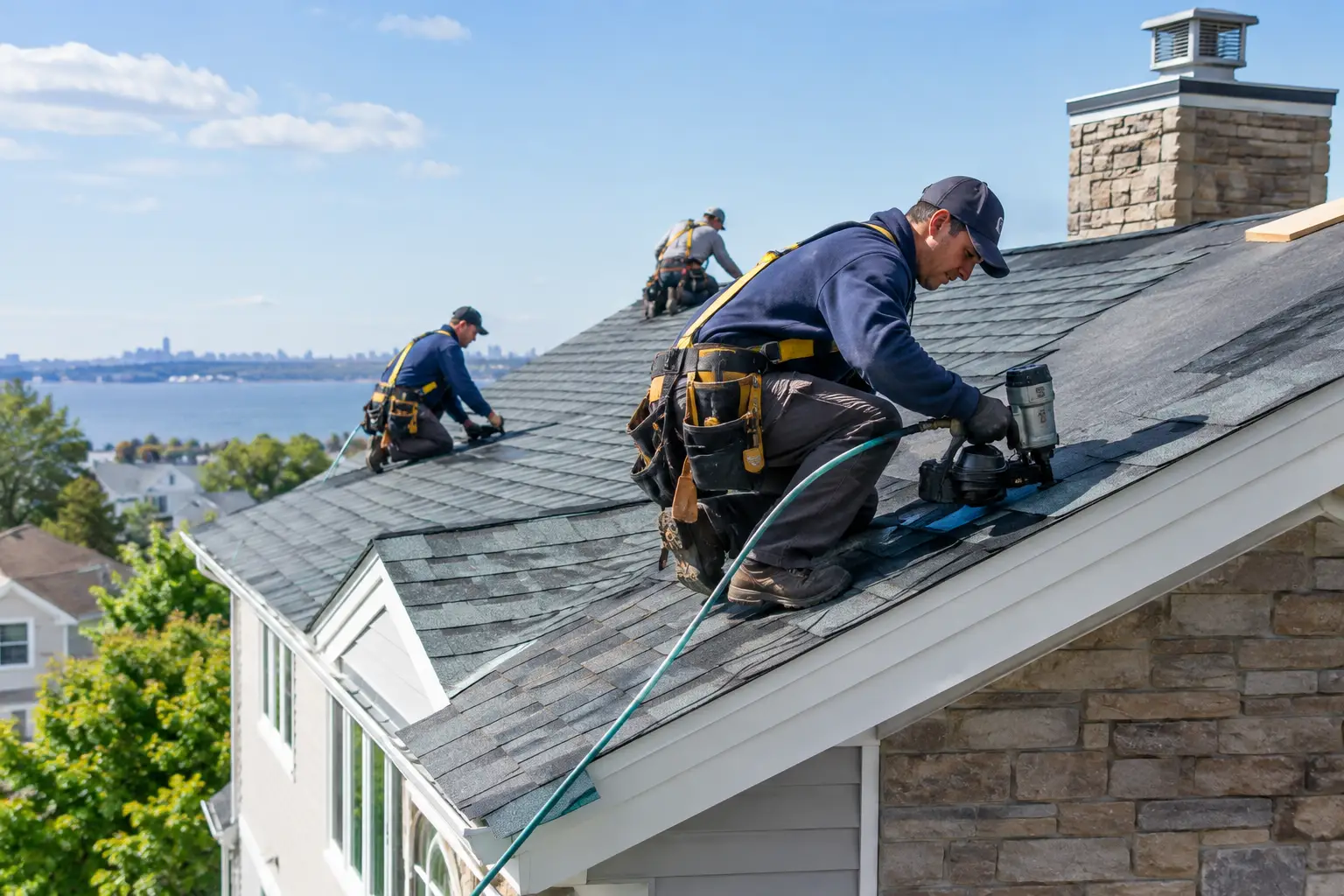
In most cases, installing a new roof begins with removing the old roofing materials. A tear-off allows the installation team to inspect the roof deck directly for rot, water damage, loose sheathing, or soft areas. Covering damaged decking with new shingles may hide the problem temporarily, but it does not restore the structure beneath it.
Any compromised wood should be replaced before the new roofing system is installed. This step is especially important after long-term leaks around chimneys, skylights, valleys, and plumbing vents.
Water Protection Where It Counts
Shingles are the visible part of a roof, but they are only one layer of protection. Underlayment provides a secondary barrier beneath the shingles. Ice and water protection is commonly installed in vulnerable areas, including eaves, valleys, and around roof penetrations, where wind-driven rain or ice dams can force water beneath the outer surface.
Proper flashing is equally important. Flashing directs water away from chimneys, walls, vents, and other transitions. Many roof leaks are not caused by bad shingles. They are caused by failed, poorly installed, or improperly integrated flashing.
Shingles, Ventilation, and Finishing Details
Asphalt shingles remain a popular choice for New Jersey homes because they offer dependable performance, a wide range of colors, and strong value. Architectural shingles are a common upgrade, providing a thicker profile and enhanced dimensional appearance compared with basic three-tab shingles.
The best material depends on the home, roof pitch, budget, and desired lifespan. Premium shingles may offer improved wind resistance and longer manufacturer coverage, but they still need correct installation to perform as intended. A high-quality product cannot make up for shortcuts in nailing, flashing, ventilation, or deck preparation.
Ventilation also deserves attention during every roof replacement. Balanced intake and exhaust ventilation helps manage heat and moisture in the attic. Without it, excessive attic heat can shorten shingle life, while trapped moisture can contribute to mold, wood deterioration, and insulation problems.
Why Installation Quality Matters More Than a Low Bid
Roof estimates can vary widely, and the lowest price is not always the best value. Some bids leave out critical work, such as deck repairs, upgraded underlayment, new flashing, ventilation corrections, or thorough cleanup. Others may be based on a quick measurement rather than a real inspection of the roof’s condition.
A clear estimate should identify the roofing materials, tear-off scope, labor, disposal, flashing work, ventilation components, and any potential wood replacement. Homeowners should also know how unexpected deck damage will be handled if it is discovered after the old roof is removed.
Licensed and insured professionals help reduce risk during a project that involves elevated work, heavy materials, and direct exposure to the structure beneath your roof. Experienced crews also know how to protect landscaping, siding, windows, and driveways while moving materials and removing debris.
For many homeowners, choosing one contractor that understands roofing, gutters, siding, chimneys, and masonry can make the project easier. These systems meet at critical points around the home. A damaged chimney cap, failing gutter drainage, or loose siding near a roof line can allow water to create problems that a roof-only approach may miss.
Preparing Your Home for Roof Installation
Most residential roof installations can be completed efficiently, but roofing is active construction work. Removing old shingles and installing new materials creates noise and vibration. Preparing your property in advance helps the crew work safely and helps protect your belongings.
Move vehicles out of the driveway and away from the work area so materials can be delivered and debris can be removed. Clear patio furniture, grills, potted plants, and decorations from around the house. If you have valuables hanging on walls or shelves inside, secure them because vibrations may shift lightweight items.
Children and pets should remain away from the work zone. If you work from home or have a sensitive pet, plan for the noise during the installation day. A professional crew should communicate the expected schedule, access needs, cleanup process, and weather considerations before work begins.
Questions to Ask Before Choosing a Roofing Contractor
The contractor you hire should make the process clearer, not more confusing. Ask whether the company is licensed and insured, who will perform the installation, and whether the work includes a full tear-off and deck inspection. You should also ask how flashing, ventilation, cleanup, and unforeseen repairs will be addressed.
Request a written estimate that explains the scope in plain language. Be cautious when a contractor pressures you to sign immediately, gives a price without inspecting the roof, or cannot clearly explain the materials being used. A dependable contractor should be prepared to answer direct questions and stand behind the workmanship.
For storm-related concerns, document visible damage and arrange an inspection promptly. Fast action can limit water intrusion before a small exterior problem becomes interior damage. If active leaking is occurring, emergency roofing service may be needed to protect the property until permanent repairs can be completed.
Protect the Investment After Installation
A new roof needs less attention than an aging one, but it should not be ignored. Keep gutters clear so water can drain away from the roof edge and foundation. Trim back branches that scrape the roof or drop excessive debris. After major storms, look for fallen limbs, displaced shingles, damaged gutters, or water marks in the attic.
Regular inspections are a practical way to catch minor concerns before they turn into expensive repairs. This is particularly valuable around chimneys, skylights, valleys, and other areas where multiple materials meet. Top Pros Construction LLC helps New Jersey property owners address those connected exterior issues with straightforward recommendations and skilled workmanship.
Your roof should give you confidence when heavy rain starts, not another reason to check the ceiling for stains. Choose a residential roofing team that inspects the full system, explains the work clearly, and treats your home’s protection as the priority from the first estimate through final cleanup.