Chimney Waterproofing Review for Lasting Masonry
A chimney waterproofing review should focus on more than applying a clear coating to brick. When rain, snow, and freeze-thaw cycles reach a chimney, water can enter through porous masonry, cracked mortar, failed flashing, or a damaged crown. The right solution identifies where moisture is getting in first, then protects the chimney without trapping water inside it.
For homeowners in New Jersey and Staten Island, that distinction matters. Seasonal temperature swings can turn a minor masonry issue into loose brick, crumbling mortar, interior staining, or a roof leak around the chimney. Waterproofing is valuable preventive work, but it performs best when it is part of a complete chimney assessment.
What a Chimney Waterproofing Review Should Cover
A reliable review begins with the chimney’s present condition. Brick and mortar naturally absorb some moisture over time, especially on exposed chimneys above the roofline. That does not mean every chimney needs the same treatment or that a sealer alone will solve the problem.
A professional inspection should look at the chimney from top to bottom, including the masonry joints, crown, cap, flashing, and roof area around the base. The goal is to separate surface absorption from active damage. A chimney may look generally sound from the ground while still having open mortar joints, small crown cracks, or flashing gaps that let water reach vulnerable areas.
The review should also account for signs inside the property. A water spot near a fireplace, damp odor in an upper room, peeling paint, or discoloration on a ceiling can point to chimney-related moisture. However, these symptoms can also come from roofing or ventilation issues. Identifying the actual source prevents unnecessary work and helps protect the surrounding roof system.
Why Brick Chimneys Need Breathable Protection
Masonry is durable, but it is not waterproof by nature. Brick and mortar have tiny pores that can take in rainwater. Once moisture enters, cold weather creates the biggest risk. Water expands as it freezes, placing pressure on the face of the brick and the mortar joints. Repeated cycles can lead to cracking, flaking, and spalling, where the brick surface breaks away.
A quality breathable masonry water repellent is designed to reduce water absorption while allowing moisture vapor already within the chimney to escape. This is different from a thick surface coating that can trap moisture behind it. When moisture cannot escape, the masonry may deteriorate below the visible coating, and the problem can become harder to detect.
The best treatment depends on the chimney’s material, condition, exposure, and prior repairs. A highly exposed chimney on a tall roof may need more attention than a protected chimney with minimal weather exposure. Older masonry also deserves a careful review before any product is applied, particularly if the brick is soft, painted, or showing visible damage.
Waterproofing Is Not a Substitute for Repairs
Waterproofing should not be used to cover failing mortar or cracked brick. If joints are deteriorating, repointing may be needed before applying a water repellent. Repointing removes damaged mortar and replaces it with compatible new mortar, restoring the joints that help hold the chimney together and keep water out.
Likewise, cracked, loose, or spalled brick should be addressed before treatment. Applying water repellent over existing deterioration may slow additional moisture absorption, but it will not restore structural strength or correct openings where water is already entering.
A clear scope of work should explain which repairs come first, what surfaces will be treated, and why each recommendation is necessary. Property owners should be wary of a one-size-fits-all answer, especially when visible masonry damage is present.
The Other Components That Keep Water Out
Even the best masonry treatment cannot compensate for a failed chimney crown or damaged flashing. Chimney waterproofing works as a system, with each component managing water in a different way.
The crown is the sloped concrete or masonry surface at the top of the chimney. Its job is to direct water away from the flue and chimney walls. Small cracks can grow quickly because the crown receives direct sun, rain, snow, and freezing temperatures. Repairing or restoring a damaged crown may be a priority before waterproofing the brick below.
A chimney cap helps keep direct rain, snow, leaves, and animals out of the flue. It does not waterproof the masonry, but it protects an opening where moisture can otherwise enter the chimney system. A properly fitted cap can also help reduce moisture-related damage inside the flue.
Flashing is equally important. It is the metal transition where the chimney meets the roof. If flashing is loose, rusted, improperly sealed, or separated from the surrounding roof material, water can enter near the chimney base and appear as an interior leak. This is often mistaken for a brick absorption issue. A complete inspection should examine both the masonry and the roof connection rather than treating them as separate concerns.
Warning Signs That Waterproofing May Be Needed
Not every chimney problem is visible from inside the house. Exterior warning signs often provide the earliest indication that moisture is affecting the masonry. Pay attention to mortar that looks washed out or recessed, brick faces that are cracking or flaking, white powdery deposits called efflorescence, rust around the cap or damper, and vegetation growing from joints.
Efflorescence deserves context. The white residue itself is not always a major structural problem, but it shows that moisture has moved through the masonry and left minerals behind. A review can determine whether it is an isolated condition or evidence of continuing water intrusion.
Interior symptoms deserve prompt attention as well. Stains near the fireplace, damp drywall around a chimney chase, bubbling paint, or persistent musty odors should not be ignored. The source may be the crown, cap, flashing, masonry, or nearby roofing. Finding the correct cause early is usually far less disruptive than waiting for visible deterioration to spread.
What to Expect From Professional Chimney Waterproofing
The process should begin with a close condition assessment and a straightforward explanation of the findings. Before treatment, the chimney surface needs to be clean enough for the selected water repellent to perform properly. Necessary masonry repairs, crown work, or flashing corrections should be completed first.
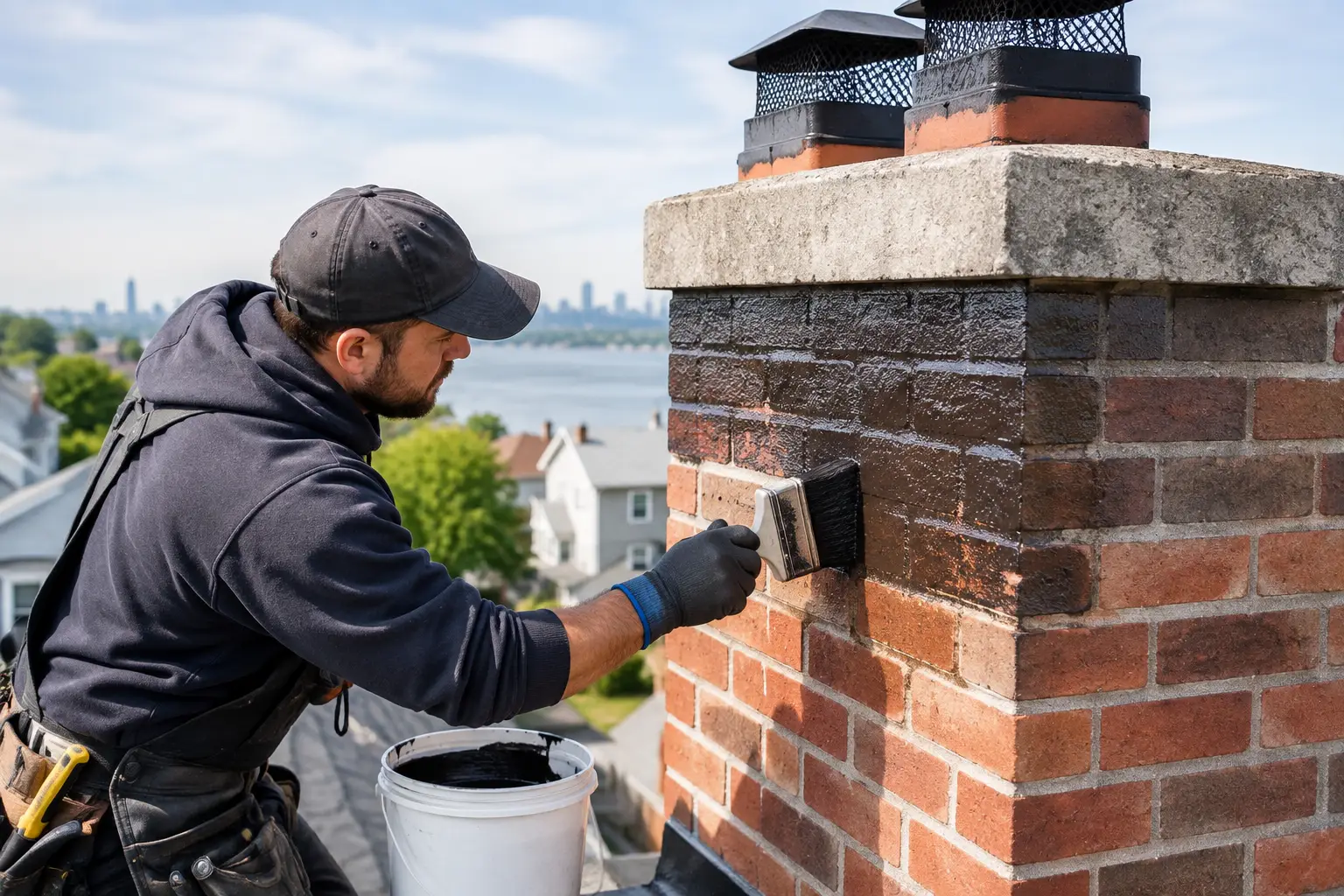
Once the chimney is ready, a professional applies a masonry-specific breathable water repellent evenly across the appropriate exterior surfaces. Application conditions matter. The masonry should be dry enough for the product, and weather should allow the treatment to cure as intended. Rushing application before rain or over damp masonry can reduce the value of the work.
Good workmanship also includes protecting the roof, siding, landscaping, and nearby surfaces during the project. Afterward, the contractor should explain what was repaired, what was treated, and any maintenance concerns to monitor over time. This gives property owners a practical record of the chimney’s condition rather than leaving them with a vague recommendation.
When a Review May Lead to a Larger Repair
Sometimes waterproofing is the right final step after minor maintenance. Other times, an inspection reveals damage that needs more substantial attention. Significant mortar loss, widespread spalling, a severely cracked crown, leaning masonry, or recurring leaks around the roof connection may call for repair work before water-repellent treatment makes sense.
That is not a reason to delay an inspection. It is a reason to get an accurate assessment. Treating a visibly deteriorated chimney as though it only needs sealer can postpone necessary repairs and allow water to continue affecting the structure. A dependable contractor should explain the trade-off clearly: preventive waterproofing can protect sound masonry, while damaged masonry needs restoration first.
For property owners managing older homes, multifamily buildings, or commercial properties, regular exterior reviews can be especially useful. Chimneys are easy to overlook because much of the damage develops above eye level. Checking the chimney after severe weather and as part of routine roof maintenance helps identify changes before they lead to interior moisture problems.
A chimney should shed water, not absorb it. If you notice failing mortar, damaged brick, staining near the fireplace, or a leak around the chimney, a professional inspection can clarify whether waterproofing, masonry repair, flashing work, or a combination of services will provide the right long-term protection.