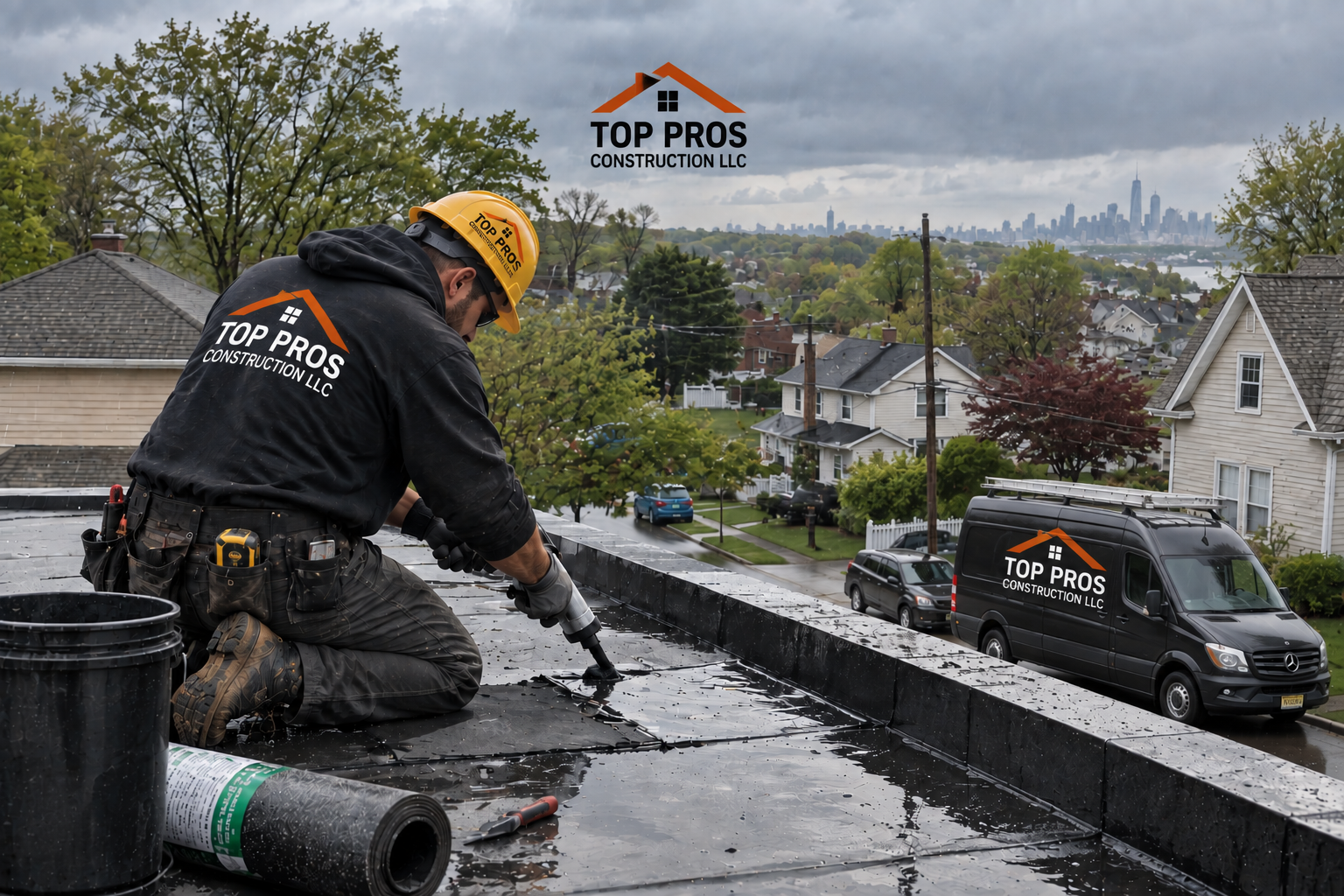
Emergency Flat Roof Leak Repair for NJ Homes
A flat roof leak rarely stays contained. Water can travel beneath the membrane, soak insulation, stain ceilings, weaken decking, and reach walls or electrical components before the visible drip tells the full story. Emergency flat roof leak repair is about protecting the building now while identifying the actual entry point and the condition that allowed it to fail.
For New Jersey property owners, fast action matters after heavy rain, snowmelt, wind-driven storms, or a sudden roof puncture. A temporary dry spot indoors does not necessarily mean the roof is dry or that the leak has stopped. The goal is to limit damage safely, document the issue, and arrange a professional inspection before a small breach becomes a much larger repair.
What to Do When a Flat Roof Starts Leaking
Start inside the building. Move furniture, electronics, inventory, and other valuables away from the affected area. Place containers under active drips and use towels to control spreading water. If the ceiling is bulging, stay clear of it. A water-filled ceiling can collapse without much warning.
If water is near light fixtures, outlets, or electrical panels, do not touch those areas. Shut off power to the affected section only if it is safe to do so, then contact a qualified electrician or emergency contractor as needed. Water and electricity are never a do-it-yourself combination.
Take photos and short videos of ceiling stains, active drips, exterior damage you can safely see from the ground, and any damaged belongings. This documentation can help with insurance claims and gives the roofing professional a clearer picture of when and where the problem appeared.
Avoid climbing onto a wet flat roof. Flat does not mean safe. Standing water can hide soft decking, open seams, skylight edges, and slippery membrane surfaces. High winds, darkness, ice, or storm debris make the risk even greater. A licensed roofing crew has the equipment and experience to inspect the roof without adding an injury or accidental damage to the situation.
Emergency Flat Roof Leak Repair Starts With Finding the Source
The location of an indoor drip is often not the location of the roof failure. Water follows insulation, joists, low spots, pipes, and other hidden paths. That is why a reliable emergency repair begins with investigation rather than simply applying sealant over the spot above the stain.
A professional inspection typically checks the roof membrane for splits, punctures, open seams, failed patches, shrinking material, and blistering. The crew also examines areas where flat roofs commonly leak: drains, scuppers, parapet walls, pipe penetrations, HVAC curbs, skylights, flashing transitions, and roof edges.
Drainage deserves close attention. Ponding water may not cause an immediate leak, but repeated standing water puts stress on seams and aging materials. Clogged roof drains, blocked scuppers, sagging areas, or improperly directed runoff can turn an otherwise repairable problem into a recurring one. In many cases, the leak repair and drainage correction need to happen together.
The right repair depends on the roofing system. Modified bitumen, EPDM rubber, TPO, PVC, built-up roofing, and coated systems require different preparation methods and compatible materials. Using an incompatible coating, adhesive, or patch can create a short-lived fix or make future repairs harder. A contractor should identify the membrane before recommending the repair method.
Temporary Protection Versus a Lasting Repair
During an active weather event, the immediate priority may be temporary protection. Depending on conditions, that can involve securing a compatible patch, sealing a limited opening, clearing a blocked drainage point, or installing a properly fastened tarp system. Temporary work is valuable because it reduces interior exposure while the roof can be fully evaluated under safer, drier conditions.
But a temporary patch is not automatically a permanent repair. If moisture has entered the insulation or roof deck, sealing only the surface can trap water inside the assembly. That moisture may lead to mold concerns, deteriorated decking, reduced insulation performance, and new leaks around the original area.
A lasting repair addresses the damaged section and its surrounding conditions. This can include removing wet material, repairing the deck, replacing compromised insulation, installing compatible membrane patches, reinforcing seams, and correcting flashing or drainage defects. The scope should match the evidence found during inspection, not a one-size-fits-all solution.
Sometimes a targeted repair is the responsible choice. If the roofing system is generally sound and the damage is isolated, a properly completed repair can extend its service life. If leaks are recurring, seams are failing across multiple areas, insulation is saturated, or the roof has reached the end of its expected life, replacement may provide better long-term value. A trustworthy contractor will explain the trade-off clearly and provide an up-front estimate before major work begins.
Common Causes of Flat Roof Leaks in New Jersey
New Jersey roofs face a demanding mix of rain, snow, freeze-thaw cycles, heat, humidity, and wind. Those conditions expose weaknesses that may have developed slowly over time.
Aging membranes can crack, shrink, lose flexibility, or separate at seams. Flashing around walls, vents, skylights, and rooftop equipment can pull away as materials expand and contract. Storm debris may puncture the surface, while foot traffic from equipment maintenance can damage vulnerable paths across the roof.
Poor drainage is another common contributor. Leaves, branches, sediment, and ice can block drains and scuppers. When water remains on the roof for extended periods, it finds weak seams and accelerates material wear. Problems at gutters, siding, masonry, chimneys, and parapet walls can also allow water into the building envelope and resemble a roof leak. Looking at the full exterior system helps prevent missed causes.
Why Quick, Professional Response Matters
The visible leak is only part of the cost. Delayed action can lead to damaged drywall, insulation, framing, flooring, finishes, electrical systems, stored belongings, and business inventory. For commercial properties, water intrusion can disrupt tenants, employees, customers, equipment, and daily operations.
Emergency response should be organized, not rushed. The best approach is to secure the building, assess the roof safely, communicate what was found, and provide a clear path from temporary protection to permanent repair. That includes explaining whether the problem appears isolated or whether there are signs of broader roof-system failure.
Top Pros Construction LLC provides 24/7 emergency roofing response for New Jersey homeowners and property owners who need prompt help protecting their roof and exterior. Licensed and insured professionals can evaluate the leak, recommend practical repair options, and address connected concerns such as drainage, flashing, siding, chimney, or masonry conditions when they contribute to water intrusion.
How to Reduce the Risk of Another Leak
After an emergency repair, schedule regular roof inspections instead of waiting for the next storm. A flat roof should be checked at least seasonally and after major wind, hail, or snow events. Inspections are especially valuable before winter, when drainage issues and small membrane defects can become harder to repair.
Keep drains, scuppers, and roof edges clear of leaves and debris. Monitor ceilings for new stains, peeling paint, damp odors, or bubbling finishes. On the roof, watch for ponding water that remains long after rainfall, loose flashing, exposed seams, or areas where the membrane looks wrinkled or damaged.
Property owners should also be careful about who accesses the roof. HVAC service, satellite work, and other maintenance can create punctures or damage seams if technicians walk across unprotected areas. A simple inspection after rooftop work can catch a problem before the next rainstorm finds it.
A leaking flat roof is stressful, but it does not have to become a major loss. Protect the interior, avoid unsafe roof access, and get a qualified professional involved quickly. The right repair restores more than a dry ceiling – it helps protect the structure, the property inside it, and your confidence when the next storm arrives.