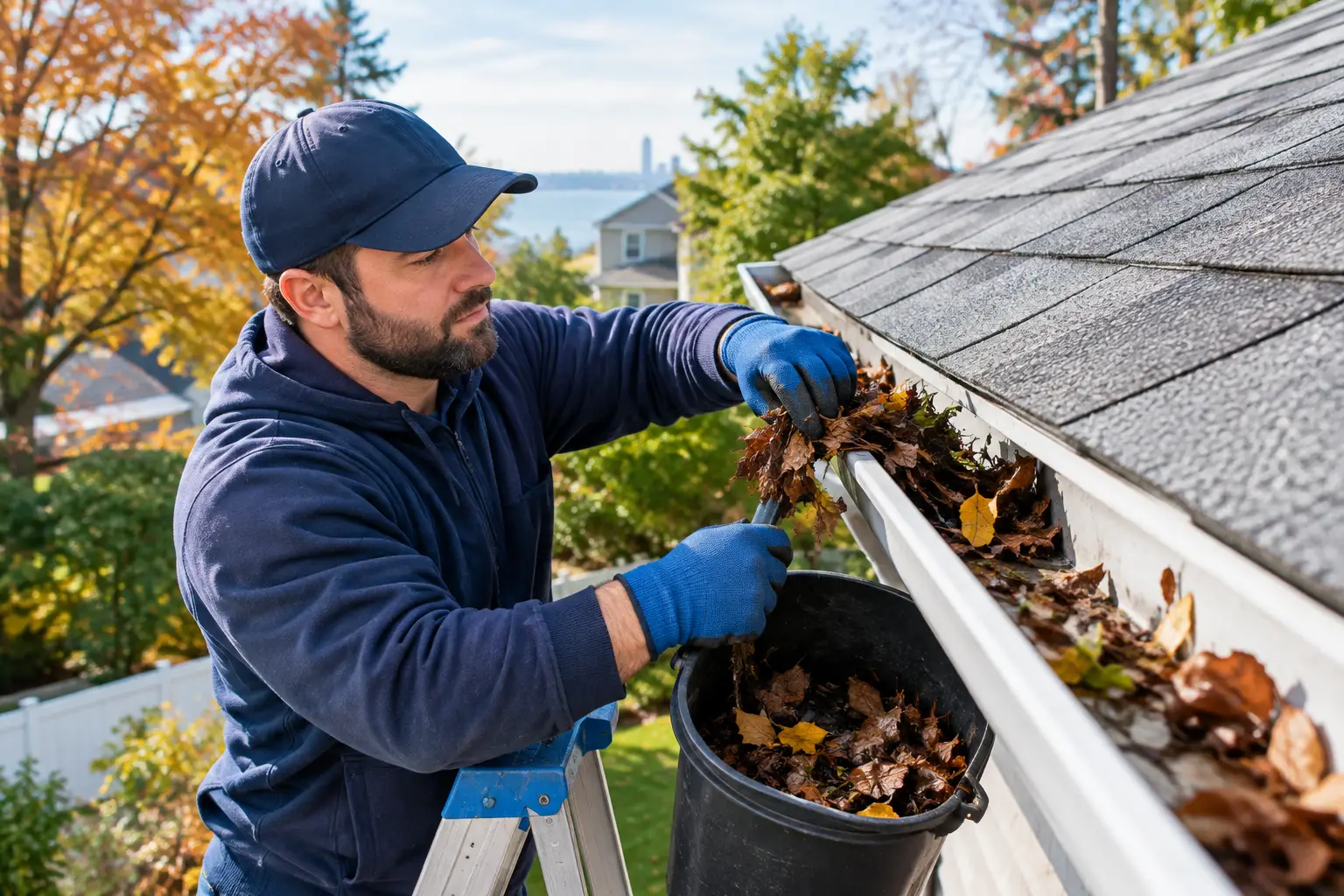
When Should Gutters Be Cleaned? A Seasonal Guide
A gutter can look fine from the ground while holding enough leaves, shingle grit, and standing water to create a drainage problem at the roofline. For homeowners asking when should gutters be cleaned, the most practical answer is usually twice a year – with additional service after major storms or when warning signs appear.
Clean gutters do more than improve curb appeal. They direct rainwater away from the roof, siding, foundation, walkways, and landscaping. When that drainage path is blocked, water can overflow where it does not belong, increasing the chance of leaks, wood deterioration, staining, erosion, and moisture-related damage around the property.
When Should Gutters Be Cleaned During the Year?
For most homes in New Jersey and Staten Island, gutters should be professionally cleaned once in the spring and again in late fall, after most leaves have dropped. This schedule addresses the two periods when debris buildup and heavy rainfall commonly put the most pressure on a gutter system.
Spring cleaning removes leaves, twigs, and sediment left behind by winter weather. It also gives a contractor an opportunity to check for issues caused by snow, ice, wind, or falling branches. A gutter that has pulled away from the fascia, developed a low spot, or become clogged at the downspout may not perform properly during spring rainstorms.
Late fall cleaning is equally important, especially for homes surrounded by mature trees. Leaves can collect quickly in gutters and at downspout openings. If debris remains in place through the winter, melting snow and rain may have nowhere to go except over the gutter edge or back toward the roofline.
The right schedule can vary. A home with few nearby trees may need service only twice per year, while a heavily wooded property, multifamily building, or commercial site may benefit from more frequent inspections and cleaning. Pine needles, seed pods, roof granules, and windblown debris can create problems even when large leaves are not visible.
Signs Your Gutters Need Cleaning Sooner
Seasonal maintenance is the baseline, not a reason to ignore obvious changes. If water is overflowing during ordinary rainfall, the gutter or downspout may already be blocked. Overflow is not always caused by debris alone – it can also point to an improperly pitched gutter, loose section, undersized drainage system, or damaged downspout – but it should be inspected promptly.
Water stains on siding, peeling paint around the eaves, or dark streaks beneath the gutters may also signal repeated overflow. These conditions can allow moisture to reach trim boards and other exterior materials over time. A musty smell near an exterior wall, a new ceiling stain, or water appearing near a window after rain deserves attention as well, since drainage problems can contribute to larger water-intrusion concerns.
Look for sagging sections, gutters pulling away from the house, or visible plant growth in the troughs. A gutter full of wet debris becomes significantly heavier, placing added strain on hangers and fascia boards. Birds, insects, and other pests may also be drawn to standing water and accumulated organic material.
Other signs that warrant a gutter inspection include:
- Water pooling near the foundation after rain
- Soil or mulch washing away beneath the roof edge
- Downspouts that release only a small amount of water during a storm
- Ice forming repeatedly along a gutter edge in winter
- Debris visible above the gutter line or spilling from the downspout outlet
These symptoms do not always mean a full replacement is needed. In many cases, cleaning, resecuring components, correcting drainage, or repairing a damaged section can restore proper performance. The key is identifying the source of the problem before water causes further exterior damage.
Why Clogged Gutters Can Affect More Than the Roof
Gutters are part of the property’s overall water-management system. Their job is simple: collect water from the roof and move it safely away from the structure. When that system fails, the effects can reach several areas at once.
At the roofline, backed-up water can saturate debris and keep the edge of the roof wet longer than it should be. This may affect fascia boards, soffits, roof decking, and nearby shingles. On a low-slope or flat-roof property, clogged drains and scuppers can create similar drainage concerns and should be evaluated by an experienced exterior contractor.
Along the walls, overflowing water can stain siding, damage paint, and expose trim or masonry joints to repeated moisture. Brick, stone, and mortar are durable materials, but persistent water exposure can worsen cracks, deteriorated pointing, or freeze-thaw damage. This is one reason gutter maintenance belongs alongside roof, siding, chimney, and masonry upkeep rather than being treated as an isolated chore.
At ground level, poorly directed water can erode landscaping and collect near the foundation. Not every puddle indicates a serious structural issue, but recurring water around the base of a home should not be ignored. Properly functioning downspouts and extensions help move runoff away from the building where site conditions allow.
How Weather and Trees Change the Cleaning Schedule
The answer to when gutters should be cleaned depends heavily on the property’s surroundings. Homes beneath oak, maple, or sycamore trees often see substantial leaf buildup in fall. Pine trees can create a different challenge because needles shed over a longer period and may pack tightly into gutter outlets and downspouts.
Storms can change the schedule without warning. Strong winds may fill a previously clean gutter with branches and leaves in one afternoon. Heavy rain can expose a partial blockage that was not apparent during dry weather. After a severe storm, a visual inspection from the ground can help identify overflow marks, fallen limbs, detached downspouts, or sections that appear uneven.
Winter conditions deserve special attention in this region. Gutters should be cleared before freezing weather arrives whenever possible. Debris-filled gutters can trap water, and repeated freezing and thawing may add weight and stress to the system. Ice along the roof edge can also be associated with attic insulation, ventilation, and heat-loss issues, so the cause may extend beyond the gutters themselves.
Why Professional Gutter Service Is Often the Safer Choice
Gutter cleaning involves working at roof level, handling wet debris, and checking components that may be loose or damaged. For many property owners, professional service is the safer and more practical option. A trained contractor can clear the system while also assessing gutter alignment, hangers, seams, downspouts, fascia condition, and visible roof-edge concerns.
That broader inspection matters because cleaning alone will not correct a gutter that is improperly pitched or a downspout that drains too close to the building. It also helps distinguish between a simple debris blockage and a more involved exterior repair need. Clear recommendations and a defined scope of work allow property owners to address the actual cause instead of repeatedly dealing with the same overflow.
For larger homes, multifamily properties, and buildings with difficult access, routine maintenance can be especially valuable. Consistent service helps property managers plan ahead, reduce surprise drainage issues, and document the condition of exterior systems over time.
A Practical Maintenance Plan for Your Property
Start with spring and late-fall gutter cleaning, then adjust based on tree coverage, roof design, and weather exposure. Check the property after major storms and pay attention to overflow, standing water, loose gutter sections, or drainage changes around the foundation. If any of these conditions appear, schedule an inspection rather than waiting for the next planned cleaning.
Top Pros Construction helps property owners identify gutter problems in the context of the full exterior system, from roof edges and siding to masonry and drainage components. Timely attention to a clogged or damaged gutter can be a small maintenance decision that helps prevent a much larger water problem later.