Fiber Cement Versus Vinyl Siding Compared
A siding decision becomes more urgent when paint is peeling, panels are cracked, moisture is showing around windows, or a storm has damaged part of the exterior. When comparing fiber cement versus vinyl siding, the better choice is not simply the material with the longest feature list. It is the material that fits your property’s condition, style, exposure to weather, maintenance expectations, and replacement budget.
For homeowners and property managers in New Jersey and Staten Island, siding also has to handle humid summers, wind-driven rain, freeze-thaw cycles, and winter temperature changes. Both fiber cement and vinyl can provide a durable finished exterior when installed correctly. Their performance, appearance, and maintenance needs are very different.
Fiber Cement Versus Vinyl Siding at a Glance
Fiber cement siding is made from a blend of cement, sand, and cellulose fibers. It is a rigid product available in lap boards, panels, shingles, and trim-style profiles. Many homeowners choose it for its substantial appearance and its ability to closely resemble painted wood.
Vinyl siding is a lightweight plastic exterior cladding that comes in many colors, profiles, and panel styles. It has been a popular choice for decades because it is low-maintenance, cost-conscious, and does not need routine painting.
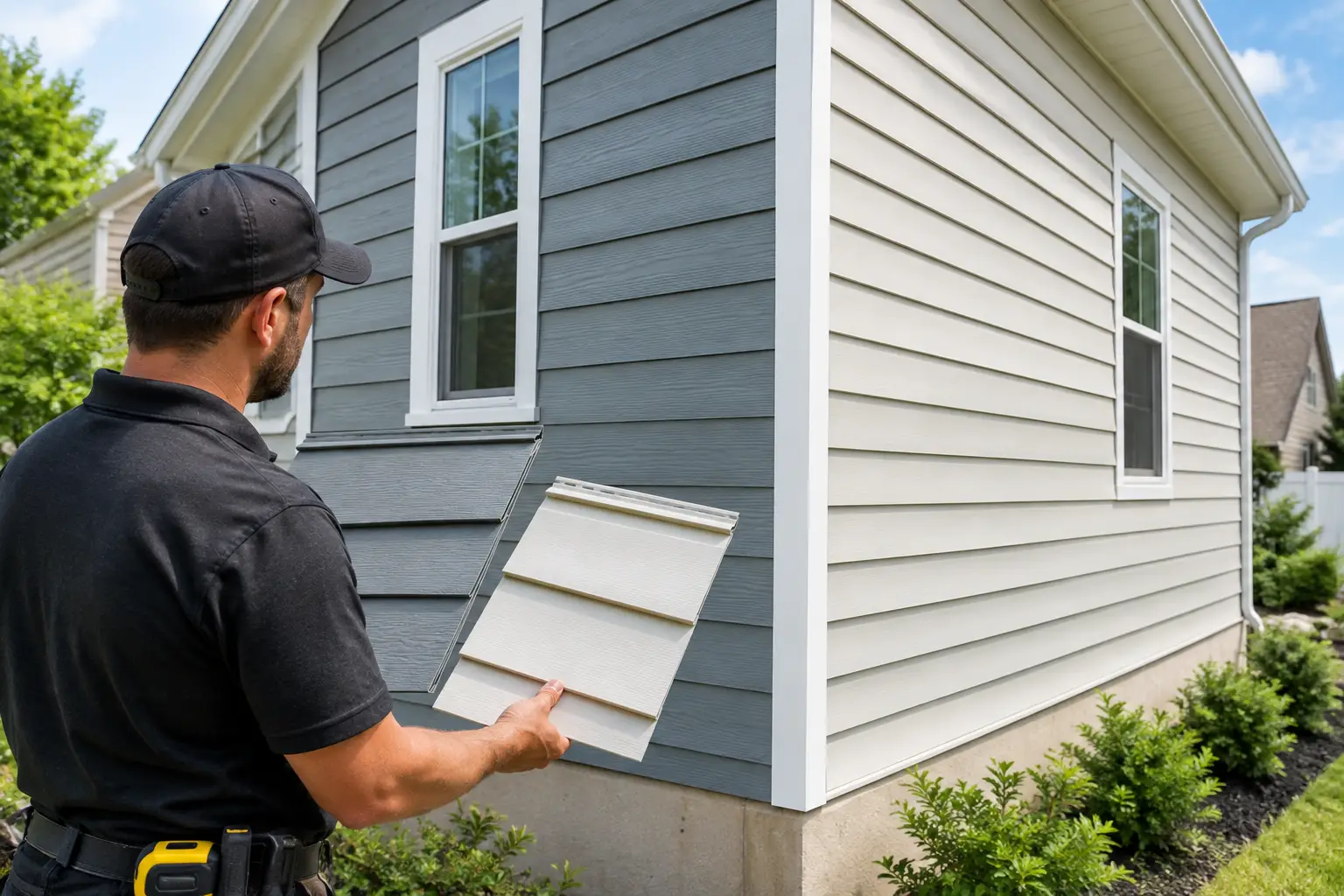
Neither product is automatically right for every home. Fiber cement usually makes sense for owners who prioritize a more traditional painted finish, stronger impact resistance, and long-term design flexibility. Vinyl often suits owners looking for a clean update with less ongoing upkeep and a lower initial investment.
Appearance and Curb Appeal
The visual difference between these materials is often the first factor homeowners notice. Fiber cement has a more solid, wood-like look because the boards are rigid and can be installed with narrower, more defined courses. It can be manufactured with smooth or wood-grain textures and is available in styles that work well on Colonial, Victorian, Craftsman, shore-area, and contemporary homes.
Because fiber cement can be painted, it gives owners more freedom to change exterior colors later. Factory-finished boards are also available, offering a consistent color from the start. The trade-off is that painted fiber cement will eventually need repainting or finish maintenance, particularly on elevations exposed to strong sun and weather.
Vinyl has improved significantly in profile and color selection. It can give a property a neat, uniform appearance, and insulated vinyl options may create a fuller look than standard hollow panels. Still, vinyl generally does not provide the same depth or painted-wood character as fiber cement. If architectural detail and a custom exterior appearance are a major priority, fiber cement may be the stronger fit.
Durability in Changing Weather
A home’s siding is not just decorative. It is part of the exterior system that helps direct water away from the wall assembly and protects the structure behind it. Proper flashing, trim, housewrap, and installation details matter as much as the siding material itself.
Fiber cement is highly resistant to rot, insects, and fire. It also holds up well against minor impacts that might crack or dent lighter materials. Its rigid composition helps it maintain a straight appearance over time. However, it is not maintenance-free. If cut edges, joints, or paint are not properly finished, moisture can affect the material. Professional handling and installation are especially important because fiber cement is heavy and requires specialized cutting methods.
Vinyl does not rot, and it is not vulnerable to insect damage. It can perform reliably through wet weather when it is installed with room for normal expansion and contraction. That movement is essential: vinyl expands in heat and contracts in cold, so panels must not be fastened too tightly.
The main durability concern with vinyl is impact resistance. A hard strike from debris, lawn equipment, or severe weather can crack a panel, especially in colder conditions. It can also warp when exposed to intense heat from reflected sunlight or nearby heat sources. Replacement panels may not perfectly match older siding if the original color has faded over time.
Wind, Rain, and Moisture Management
In areas that experience driving rain and coastal-influenced weather, siding should never be treated as the only barrier against water. Both materials need a properly prepared wall behind them, including weather-resistive protection and correctly installed flashing at windows, doors, roof-to-wall intersections, and transitions.
Vinyl is designed to shed water while allowing the wall system to breathe. Fiber cement is installed as a tighter, more rigid cladding system, but it also depends on carefully detailed moisture protection. If a contractor finds staining, soft sheathing, damaged trim, or recurring leaks during a siding inspection, those underlying conditions should be addressed before new siding is installed.
Maintenance Requirements
Vinyl is the easier option for routine maintenance. Periodic gentle cleaning can remove surface dirt, pollen, and mildew. Because its color is built into the material, there is usually no need to repaint it. Homeowners should still inspect it after storms for loose, cracked, or displaced panels and check that trim and caulking around penetrations remain in good condition.
Fiber cement needs a more active maintenance plan. The surface should be kept clean, and painted finishes should be inspected regularly for peeling, cracking, open joints, and worn caulk. Repainting will be needed eventually, with timing influenced by the product, paint quality, sun exposure, and the condition of the exterior.
That added care is not necessarily a disadvantage. For some property owners, the ability to repaint is a benefit because it keeps future color changes possible. For others, avoiding paint maintenance is reason enough to choose vinyl.
Installation Is a Major Part of the Decision
The best siding product can underperform when it is installed over damaged walls or without proper flashing and trim work. This is one reason a detailed inspection should come before selecting materials.
Fiber cement installation is more labor-intensive. Boards are heavy, cuts must be clean and properly sealed, and spacing must follow manufacturer requirements. The finished result depends on accurate layout, secure fastening, well-finished joints, and careful integration with windows, doors, soffits, gutters, and rooflines.
Vinyl installation is generally faster and less physically demanding, but it still requires skill. Panels need to be level, properly overlapped, and allowed to move with temperature changes. A tightly nailed panel can buckle, while poorly installed starter strips, corners, or J-channels can allow wind-driven rain to reach vulnerable areas.
For either option, a clear project scope should explain whether the work includes removal of existing siding, wall repairs if needed, weather barrier installation, trim, flashing, cleanup, and disposal. Those details affect the durability of the finished exterior far more than a sample board viewed in isolation.
Cost and Long-Term Value
Vinyl siding typically has a lower upfront material and installation cost than fiber cement. That makes it a practical choice for many homes, rental properties, and exterior updates where reliable protection and reduced maintenance are the main goals.
Fiber cement generally requires a higher initial investment because the material is heavier and installation takes more labor. Its value may be strongest for owners who want a premium-looking exterior, greater design flexibility, and a product that can be repainted as styles or preferences change.
Long-term value depends on more than the initial proposal. Consider the expected maintenance, how long you plan to own the property, the home’s architectural style, and whether the exterior has existing water damage that needs correction. A less expensive material is not a savings if it is installed without resolving the conditions causing siding failure. Likewise, a premium product is not the best investment if its maintenance needs do not fit the owner’s plans.
Which Siding Is Right for Your Property?
Choose vinyl siding when you want a low-maintenance exterior, a broad range of built-in colors, and a practical replacement option that can improve curb appeal without adding routine painting to your to-do list. It is often a sensible choice for homeowners who value straightforward upkeep and dependable weather protection.
Choose fiber cement when you prefer a more substantial painted appearance, need stronger resistance to impact and insects, or want the option to refresh your home’s color in the future. It can be an excellent fit for detailed architectural styles and owners willing to maintain the painted finish.
Before making a final selection, look beyond the siding surface. Check for damaged sheathing, deteriorated trim, window leaks, poor gutter drainage, and roof or chimney issues that may be sending water behind the siding. Top Pros Construction can evaluate the exterior as a complete system and explain what should be repaired or replaced before new siding goes on.
A good siding project should leave your property better protected, not simply better covered. Start with a careful inspection, choose a material that matches your maintenance expectations, and make sure the installation plan addresses every place water can enter the exterior.