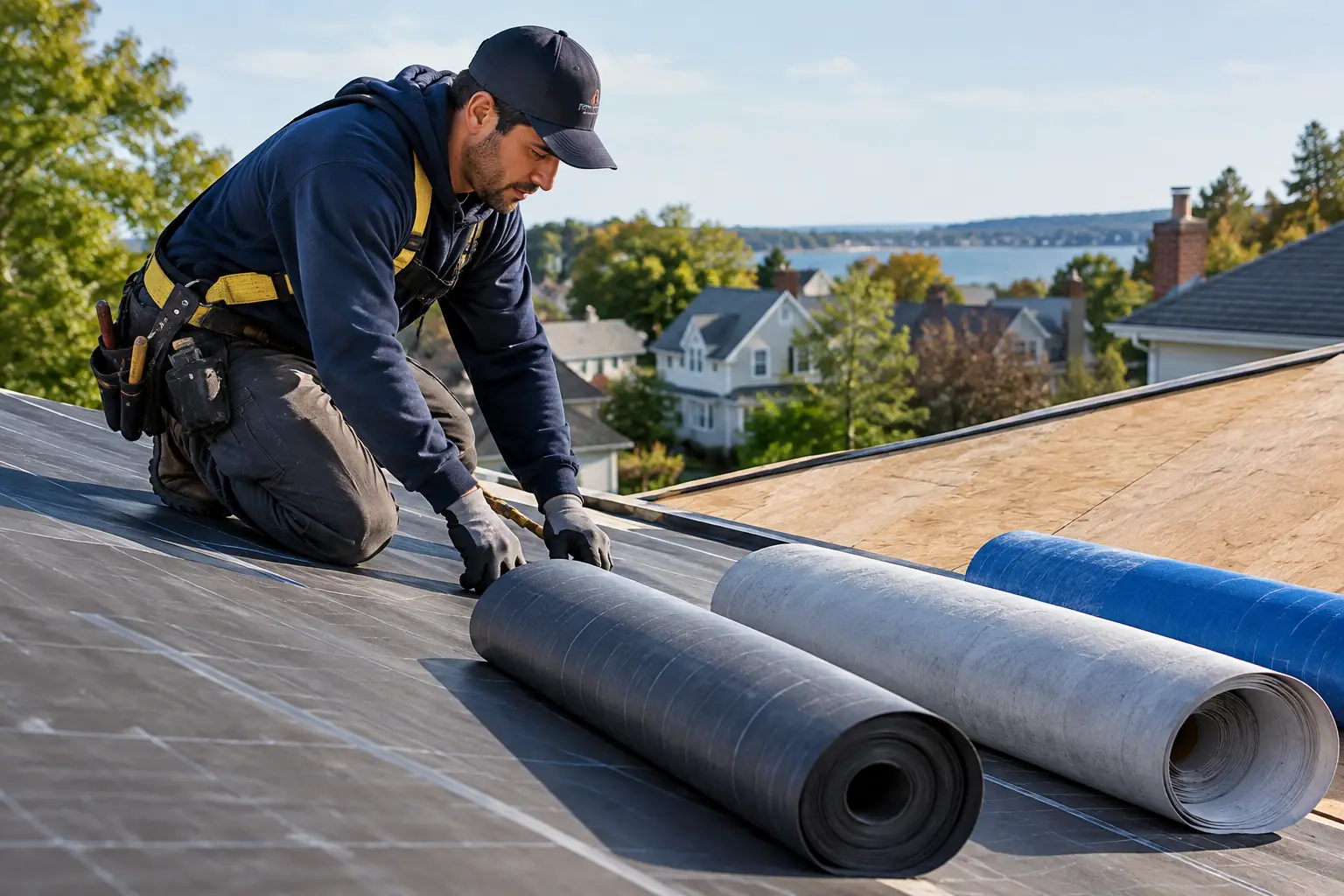
Roofing Underlayment Comparison for Your Roof
A roof can look complete from the street while a critical layer remains hidden beneath the shingles. That layer is underlayment. A careful roofing underlayment comparison matters because it affects how your roof handles wind-driven rain, temporary exposure during installation, condensation concerns, and water that gets past the outer roofing material.
Underlayment is not the primary weather surface of a shingle roof. Shingles, flashing, ventilation details, and drainage all have essential jobs. But when those components are exposed to severe weather or begin to age, the underlayment provides an important secondary layer of protection for the roof deck and the structure below.
The right choice depends on your roof’s slope, covering material, existing deck condition, drainage details, and the weather patterns your property faces. For homeowners in New Jersey and Staten Island, that can mean accounting for heavy rain, snow, wind, ice, and seasonal temperature changes rather than selecting a material based on its name alone.
Roofing Underlayment Comparison: The Main Options
Most residential roofing projects involve one or a combination of three underlayment categories: asphalt-saturated felt, synthetic underlayment, and self-adhered membrane. Each has a proper place, and none is automatically the best fit for every part of every roof.
Asphalt-Saturated Felt
Asphalt-saturated felt, often called roofing felt or felt paper, has been used beneath shingles for generations. It is familiar, widely available, and can provide dependable protection when installed correctly as part of a complete roofing system.
Felt is generally heavier than synthetic products and can be more prone to wrinkling or tearing when exposed to moisture. Those wrinkles can affect how smoothly shingles lie if the material is not allowed to dry or is not installed with appropriate care. It may also become less convenient to work with on steep slopes or in wet conditions.
Still, felt is not an inferior choice by definition. On the right roof, with proper installation and compatible materials, it can perform well. The key is understanding its handling limitations and making sure the installation schedule and weather conditions support a clean, secure application.
Synthetic Underlayment
Synthetic underlayment is made from engineered polymers and has become a common choice for many shingle-roof replacements. It is usually lighter than felt, comes in wider rolls, and often resists tearing better during installation. A lighter product can also help crews cover the roof deck efficiently while reducing the number of seams.
Its durability during installation is one of its practical advantages. If weather changes before the final roof covering is installed, a properly secured synthetic underlayment may handle temporary exposure better than traditional felt. That does not mean it should be treated as a permanent exposed roof surface. Every product has manufacturer-specific exposure limits and installation requirements.
Synthetic products vary considerably. Some have better slip resistance, some offer different vapor characteristics, and some are designed for specific roof coverings or installation methods. A contractor should select a product that works with the roofing system rather than treating all synthetic underlayments as interchangeable.
Self-Adhered Membrane
Self-adhered membrane is commonly used in areas with a higher risk of water backup or wind-driven rain. It adheres directly to the roof deck and forms a tight barrier around properly installed fasteners and roof details. You may hear it called ice and water protection or ice and water shield, although product names and intended uses differ by manufacturer.
This material is especially valuable along eaves, valleys, around chimneys, near skylights, and at other vulnerable transitions where water flow is concentrated. In cold-weather regions, it can provide added protection where melting snow may refreeze near the roof edge and force water beneath shingles.
Self-adhered membrane is not usually necessary across every square foot of a standard sloped roof. Applying it too broadly without considering the roof assembly can create moisture-management concerns in certain situations. It also requires a clean, properly prepared deck and careful installation around penetrations and transitions. Used in the right locations, it is a strong protective component. Used without a plan, it is not a substitute for sound roof design.
Why Roof Details Matter More Than the Label
A material comparison is useful, but the roof’s details often determine whether underlayment delivers the protection you expect. Valleys handle a large volume of runoff. Chimneys interrupt the roof plane. Sidewalls, dormers, vents, and skylights all require precise flashing work. At these locations, water control relies on layers working together in the correct order.
For example, underlayment helps direct water toward the exterior, but it cannot correct missing step flashing or a poorly integrated pipe boot. Likewise, a premium membrane cannot compensate for damaged roof decking, poor attic ventilation, or gutters that allow water to back up at the eaves.
This is why a professional roof inspection should look beyond the shingles. The condition of the deck, the slope of each roof section, the location of penetrations, and signs of prior leaks all affect the recommended underlayment approach.
Choosing Underlayment for an Asphalt-Shingle Roof
Asphalt shingles remain a popular option for homes throughout the region, and they generally pair well with either felt or synthetic underlayment, plus self-adhered membrane in critical areas. The best combination depends on the roof rather than a one-size-fits-all material preference.
A straightforward roof with adequate slope and limited penetrations may be well served by a quality synthetic underlayment with self-adhered protection at eaves and valleys. A roof with multiple valleys, low-slope transitions, chimneys, or a history of ice-related leaks may need more targeted membrane protection and closer attention to flashing design.
Low-slope areas deserve particular care. Shingles are designed to shed water, not hold standing water. When a roof section has a shallow pitch, material selection and installation methods must be evaluated carefully to ensure the roofing system is appropriate for that area.
Questions to Ask During a Roof Replacement Estimate
Clear communication is part of protecting your property. During an estimate, ask what underlayment is being proposed, where self-adhered membrane will be installed, and why those locations were selected. You should also ask how valleys, chimney flashing, vents, and roof-to-wall transitions will be handled.
A dependable contractor should be able to explain the scope in plain language. The answer should connect the material choices to your roof’s layout and condition, not rely on vague claims that one product solves every roofing concern.
It is also reasonable to ask about the existing roof deck. If damaged or deteriorated decking is discovered after old materials are removed, it should be addressed before new underlayment and shingles are installed. Covering a compromised deck can affect fastening, roof appearance, and long-term performance.
Underlayment Is Part of a Complete Water-Management Plan
Underlayment works best when the rest of the exterior directs water where it belongs. Properly installed shingles shed water downhill. Flashing protects transitions. Ridge, soffit, or other ventilation components help manage attic heat and moisture when the roof design calls for them. Gutters and downspouts carry runoff away from the foundation.
When a homeowner reports a roof leak, the visible stain indoors may not identify the entry point. Water can travel along framing or under roof materials before it appears inside. A thorough inspection helps determine whether the issue involves shingles, flashing, penetrations, underlayment, masonry, gutters, or a combination of exterior conditions.
For a full replacement or a leak concern, Top Pros Construction can assess the roof system as a whole and explain which protective layers are needed for the property. The goal is not simply to add material. It is to create a properly integrated roof that protects the deck, manages water, and supports lasting performance.
The best underlayment choice is the one that fits your roof’s design, local weather exposure, and the details that are easiest to overlook from the ground. Before work begins, make sure the proposed system accounts for those details, because the layer you never see can make a meaningful difference when the next storm arrives.