Bergen County Roof Inspection Guide for Homeowners
A roof problem rarely starts with a ceiling stain. By the time water reaches a bedroom, hallway, or attic floor, it may have already moved beneath shingles, around flashing, or through damaged roof decking. This Bergen County roof inspection guide helps property owners understand what to watch for, when to schedule a professional inspection, and why early attention can prevent a much larger exterior repair.
Bergen County homes deal with changing seasons, heavy rain, snow, wind, freezing temperatures, and summer heat. Those conditions can gradually affect shingles, flashing, gutters, chimneys, and the areas where different exterior materials meet. A professional inspection gives you a clear picture of the roof’s condition before a small weakness becomes a leak.
When Your Roof Should Be Inspected
A roof should be inspected after a major storm, when you notice a leak or visible damage, and as part of regular property maintenance. For many homeowners, an annual inspection is a practical way to track wear and address developing issues. Older roofs, flat roofs, homes with large trees nearby, and multifamily properties may benefit from more frequent evaluations.
Storm damage is not always obvious from the ground. Wind can lift or loosen shingles without removing them entirely. Hail can bruise roofing materials, and driven rain can expose a weakness around vents, skylights, chimneys, or roof transitions. If branches have contacted the roof, gutters are overflowing, or you find granules collecting near downspouts, it is reasonable to have the roof checked.
Interior signs also deserve prompt attention. Water spots on ceilings, peeling paint near an exterior wall, damp attic insulation, musty odors, and bubbling drywall can all point to water intrusion. The source is not always directly above the stain, which is why a thorough inspection matters.
What a Bergen County Roof Inspection Should Cover
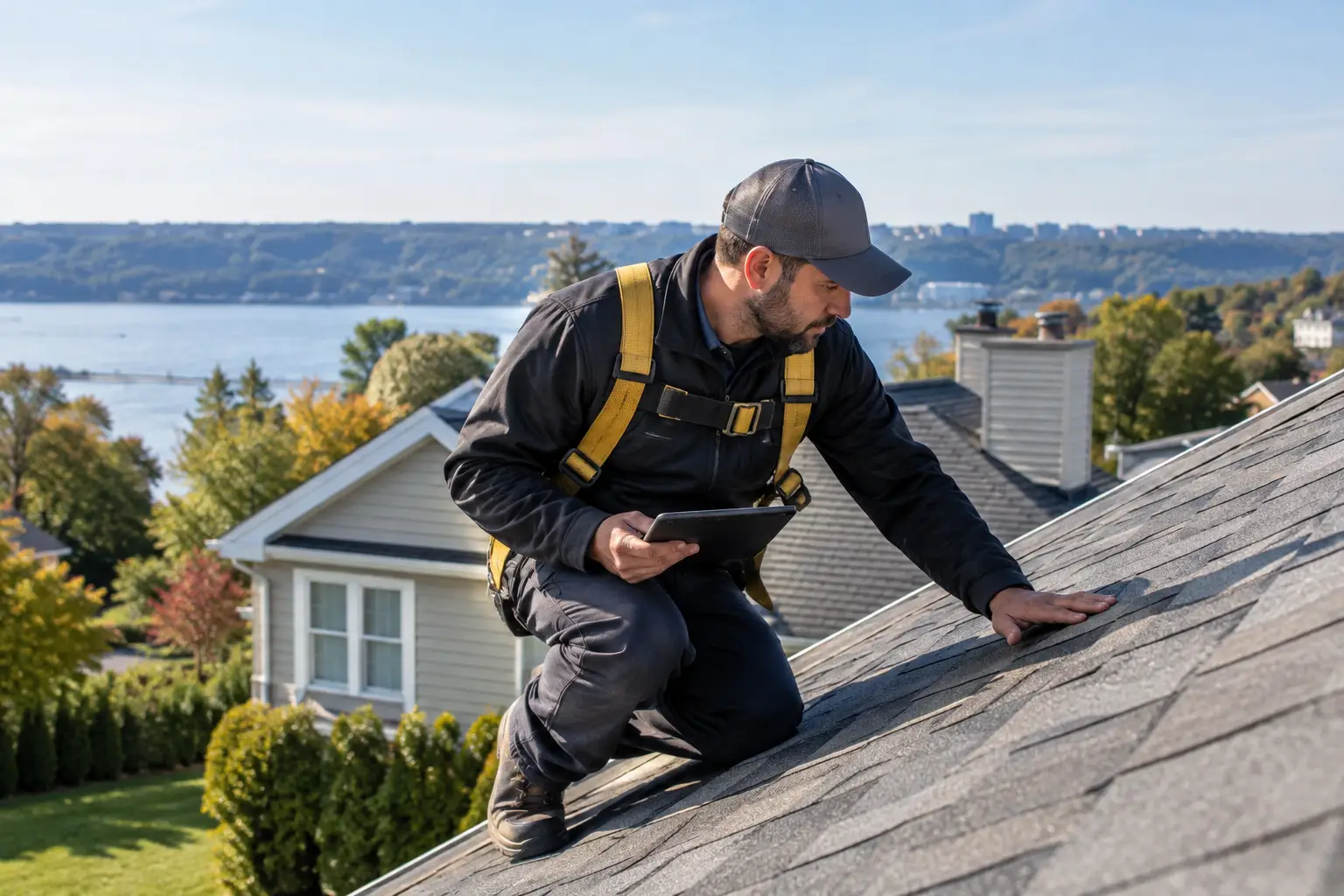
A useful inspection does more than identify missing shingles. It looks at the complete system that directs water away from the building. Roofing materials, flashing, drainage components, penetrations, and adjacent exterior features all play a role in keeping your property dry.
Roofing material and surface condition
An inspector evaluates the condition of shingles or other roofing material for cracking, curling, blistering, granule loss, loose pieces, exposed fasteners, and signs of aging. On a flat or low-slope roof, the focus may include seams, ponding water, membrane condition, edge details, and drains.
Wear does not automatically mean the roof needs replacement. A limited repair may be the appropriate solution when damage is isolated and the surrounding material remains in sound condition. If deterioration is widespread or the roof is near the end of its service life, replacement may offer better long-term protection. The right recommendation depends on the actual condition of the roof, not just its age.
Flashing, vents, and roof penetrations
Many leaks begin where the roof meets another component. Flashing around chimneys, vent pipes, skylights, walls, and valleys must remain secure and properly integrated with the roofing material. Sealants can crack over time, metal flashing can loosen, and poorly directed water can find its way beneath the roof surface.
A detailed inspection should look closely at these areas, especially when a leak appears after wind-driven rain. Chimneys deserve special attention because damaged caps, deteriorated mortar, loose flashing, and masonry cracks can each allow water into the structure.
Gutters and water management
Gutters are not separate from roof performance. When they are clogged, undersized, loose, or improperly pitched, water can back up at the roof edge or spill near the foundation. Ice and snow can add weight and stress during winter, while leaves and debris can block drainage during rainy periods.
An inspection should consider whether gutters are securely attached, moving water toward downspouts, and discharging it away from the building. If fascia boards show rot or paint is peeling along the eaves, drainage issues may be part of the problem.
Attic and interior evidence
When accessible, the attic can provide valuable evidence that is not visible from outside. Damp insulation, dark staining on framing, mold-like growth, rusted nails, and active drips can help narrow down the path of water intrusion. Ventilation is also reviewed because excessive heat and moisture in the attic can shorten roofing material life and contribute to condensation concerns.
A professional should distinguish between a roof leak, condensation, plumbing moisture, and other potential causes. Treating the wrong source can leave the original issue unresolved.
Warning Signs That Deserve a Prompt Call
Some roofing concerns can wait for a scheduled inspection. Others should be addressed quickly to limit water damage. Contact a qualified roofing professional promptly if you see active leaking, a sagging roof area, shingles on the ground, exposed roof decking, a damaged chimney flashing area, or a tree limb resting on the roof.
You should also pay attention to subtler changes. A sudden increase in shingle granules, repeated gutter overflows, stains that grow after rain, or a recurring leak in the same area are signs that an exterior evaluation is needed. Waiting through several storms can turn a manageable repair into damaged insulation, framing, drywall, or interior finishes.
For commercial and multifamily properties, early reporting is especially useful. A small leak can affect multiple units, disrupt tenants, and create moisture issues beyond the original roof area. Clear inspection documentation and a defined repair scope help owners and property managers make informed decisions.
How to Prepare for a Professional Inspection
You do not need to climb onto the roof or attempt a repair before the appointment. In fact, walking on roofing materials can be unsafe and may cause additional damage. Instead, gather useful information for the contractor: when you first noticed the issue, whether it follows heavy rain or wind, the location of interior staining, and any recent storm events or exterior work.
If possible, make sure the inspector can access the attic, garage, or rooms where water damage has appeared. Move vehicles or outdoor items away from the immediate work area when practical. These simple steps help the inspection stay focused and efficient.
A dependable contractor should explain what was found in straightforward terms. You should understand whether the concern is active, what may happen if it is left untreated, and whether repair, maintenance, or replacement is being recommended. A detailed estimate should define the work rather than leaving you to guess what is included.
Why Timing Matters in Bergen County
Roofing issues are often seasonal. Spring rain can reveal damage caused by winter freeze-thaw cycles. Summer heat can expose aging shingles and attic ventilation concerns. Fall leaves can clog gutters, while winter snow and ice can test roof edges, drainage, and flashing details.
That does not mean you should wait for a particular season if you have a concern. A leak is best inspected as soon as possible, regardless of the calendar. However, scheduling preventive maintenance before severe weather is a sensible way to identify weak areas while repair options are usually simpler.
For properties with chimneys, masonry walls, or aging siding, it is also helpful to view the exterior as one connected system. Water entering through failed flashing or damaged masonry can appear to be a roof problem, while overflowing gutters may contribute to siding and foundation moisture. Looking at the full exterior helps identify the actual source instead of repeatedly treating the symptom.
Choosing a Contractor for the Inspection
Look for a contractor that communicates clearly, provides a documented scope of work, and approaches the inspection as a diagnostic process rather than a sales opportunity. The goal is to identify the source of the problem and recommend a practical solution suited to the property.
Ask how the contractor will evaluate roof materials, flashing, drainage, and visible interior evidence. If repairs are recommended, make sure you understand the affected area, the materials involved, and how the work will protect the surrounding property. Responsive communication is particularly valuable after storms or when water is actively entering the building.
Top Pros Construction LLC provides roof inspections and exterior evaluations for homeowners and property owners who need clear answers about leaks, storm damage, aging materials, gutters, chimneys, and related exterior concerns throughout Bergen County.
A roof inspection is most valuable before water has a chance to spread. If you have noticed a change in your roof, attic, gutters, or ceilings, documenting it early and arranging a professional evaluation can help protect the rest of your property.