Best Chimney Waterproofing Methods for Lasting Protection
A chimney can look solid from the ground while water is already working its way through cracked mortar joints, porous brick, failed flashing, or a damaged crown. For property owners, the best chimney waterproofing methods are not simply about applying a coating. They start with identifying where water enters and correcting the conditions that allow moisture to damage the masonry.
That distinction matters in New Jersey and Staten Island, where driving rain, snow, ice, and repeated freeze-thaw cycles can turn a minor chimney defect into a leak, loose bricks, damaged interior walls, or a costly rebuild. A professional inspection helps determine whether your chimney needs targeted repair, a water-repellent treatment, or both.
Why Chimney Waterproofing Requires More Than Sealant
Brick and mortar are durable, but they are not completely waterproof. Masonry can absorb rainwater through its surface and through small openings in deteriorating mortar. When temperatures drop, trapped moisture freezes and expands. Over time, this can cause spalling, which is when brick faces flake or break away, as well as cracking, crumbling joints, and separation around the chimney.
A proper waterproofing plan must allow the chimney to release moisture vapor from inside while stopping rainwater from soaking in from outside. That is why the wrong coating can create problems instead of solving them. A non-breathable surface coating may trap moisture in the masonry, accelerating deterioration beneath a surface that appears protected.
Water also does not always enter through the brick itself. A chimney leak may originate at the roof flashing, crown, cap, liner area, or nearby roofing materials. Treating masonry alone will not correct a leak caused by failed metal flashing or an improperly pitched crown.
Best Chimney Waterproofing Methods for Masonry Protection
The right method depends on the age and condition of the chimney, the type of masonry, and the source of water intrusion. In many cases, the most reliable result comes from completing repairs first and applying the appropriate protective treatment afterward.
Repair and Repoint Deteriorated Mortar Joints
Repointing is one of the most effective chimney waterproofing measures when mortar joints are cracked, missing, soft, or recessed. The damaged mortar is carefully removed to a proper depth and replaced with compatible new mortar. This restores the joints that hold the chimney together and closes direct paths for water entry.
Repointing is not cosmetic work. Mortar has to be selected and installed correctly for the masonry it supports. Mortar that is too hard for older brick can contribute to damage over time, while poorly finished joints can still collect water. Addressing failing mortar before applying a water repellent gives the treatment a sound surface to protect.
Apply a Breathable Penetrating Water Repellent
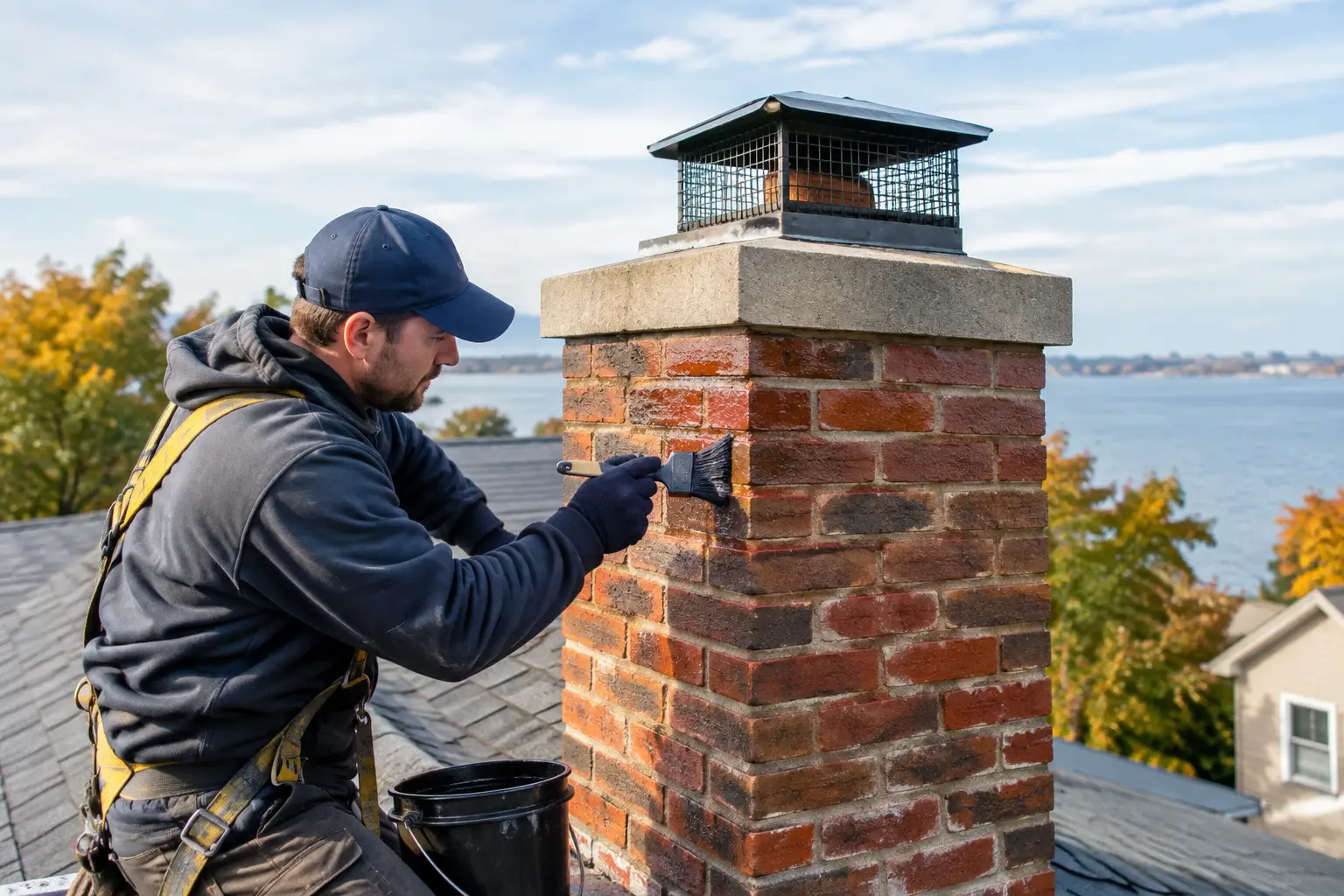
For sound brick and masonry that has been cleaned and repaired, a breathable penetrating water repellent is often the preferred solution. Rather than forming a thick film over the chimney, this type of treatment penetrates the masonry and reduces water absorption while allowing vapor to escape.
A quality masonry water repellent can help limit rain penetration, freeze-thaw damage, staining, and premature mortar deterioration. It should be applied to dry, properly prepared masonry under appropriate weather conditions. If the surface is wet, dirty, painted, or actively deteriorating, the treatment may not adhere or perform as intended.
This method is especially useful for chimneys exposed to heavy weather on open rooflines. Still, it is not a substitute for structural repair. If bricks are loose, mortar is failing, or the chimney is leaning, those issues need professional attention before any protective treatment is applied.
Rebuild or Repair the Chimney Crown
The chimney crown is the cement or masonry top that slopes away from the flue opening. Its job is to shed water away from the chimney stack. A cracked, flat, or deteriorated crown can allow water directly into the chimney structure, often causing hidden damage below the roofline.
Small surface defects may be addressed with an appropriate crown repair system when the underlying crown remains stable. Larger cracks, missing sections, or severely deteriorated crowns often require rebuilding. A properly constructed crown should have a clear slope, extend beyond the chimney walls, and be finished to direct water away from vulnerable masonry.
A crown repair is often more valuable than applying another coat of sealant to the chimney sides because it addresses one of the highest-exposure areas on the structure.
Install or Replace a Chimney Cap
A chimney cap keeps rain, snow, leaves, and animals from entering through the flue opening. It also helps reduce the amount of moisture that reaches the interior of the chimney system. While a cap does not waterproof exterior masonry, it is a basic layer of protection that should be part of a complete chimney maintenance plan.
The cap must be properly sized and securely installed. A loose, rusted, or undersized cap can create its own problems, including noise in high winds, water entry, or restricted venting. A professional can evaluate the cap along with the flue, crown, and surrounding masonry during an inspection.
Repair Roof Flashing at the Chimney Base
Flashing is the metal system that seals the joint where the roof meets the chimney. This area handles significant water flow, especially during heavy rain and snowmelt. When flashing separates, corrodes, is improperly installed, or loses its seal, water may enter the attic or interior walls even if the chimney masonry is in good condition.
Chimney flashing repair may involve replacing step flashing, counterflashing, or damaged roofing materials around the base of the chimney. It requires coordinated roofing and masonry knowledge because the system must direct water onto the roof surface, not behind the siding, shingles, or masonry.
If you see water stains near a fireplace, upper-level wall, or ceiling close to the chimney, flashing should be inspected along with the masonry. Treating only the visible brick may leave the actual leak unresolved.
What Not to Use as a Quick Fix
Paint-like waterproof coatings and heavy surface sealers can be tempting because they provide an immediate change in appearance. However, they are not always appropriate for brick chimneys. A coating that blocks vapor movement can trap moisture, peel, discolor, or hide ongoing masonry damage.
Caulk also has limited use on a chimney. It may be suitable for specific joints or compatible repair details, but it should not be used to cover widespread cracks, deteriorated mortar, or damaged flashing. These temporary-looking repairs often fail when the chimney expands, contracts, and weathers through the seasons.
The most dependable approach is to correct the failed component rather than covering over the symptom. That may mean repointing, crown repair, flashing replacement, brick replacement, or a combination of services before waterproofing is applied.
Signs Your Chimney May Need Waterproofing or Repair
Exterior clues often appear before an interior leak becomes obvious. Watch for cracked or missing mortar, flaking brick faces, white powdery deposits known as efflorescence, rust around the firebox or damper, loose flashing, or water stains near the chimney.
A musty odor near the fireplace, dampness in an attic around the chimney, or recurring leaks after wind-driven rain also deserve attention. Water can travel along framing and masonry, so the visible stain is not always directly below the point of entry.
Regular inspections are particularly useful after severe storms and before winter. Early repairs help preserve the chimney structure and reduce the risk of water reaching roofing materials, insulation, ceilings, and walls.
Choosing the Right Scope of Work
A chimney in otherwise good condition may only need minor mortar repair and a breathable water repellent. A chimney with extensive spalling, failed flashing, crown damage, and missing mortar needs a broader repair plan. The goal is not to sell unnecessary work. It is to identify the source of water intrusion and complete repairs that protect the property over the long term.
Top Pros Construction LLC evaluates chimney masonry, crowns, caps, flashing, and the surrounding roof area to help property owners understand what is needed and why. Clear findings and a detailed scope make it easier to choose repairs that address the actual condition of the chimney.
Water damage rarely stays limited to one small exterior crack. Scheduling an inspection when the first warning signs appear can help keep a chimney repair focused, practical, and manageable before the next stretch of wet weather.