
Modified Bitumen Roofing Review for NJ Properties
A low-slope roof can look fine from the ground while water works its way into seams, flashing, or drains. This modified bitumen roofing review gives New Jersey and Staten Island property owners a practical look at where this roofing system performs well, where it needs attention, and how to make a sound repair-or-replacement decision.
Modified bitumen is a time-tested flat-roof material used on homes, multifamily buildings, garages, additions, and commercial properties. It is not the right answer for every roof, but it remains a dependable option when the roof is designed, installed, and maintained correctly.
What Is Modified Bitumen Roofing?
Modified bitumen is an asphalt-based membrane roofing system. Manufacturers blend asphalt with polymers to improve flexibility and weather resistance. The membrane is commonly reinforced with fiberglass or polyester, then installed in one or more layers over a prepared roof deck and insulation system.
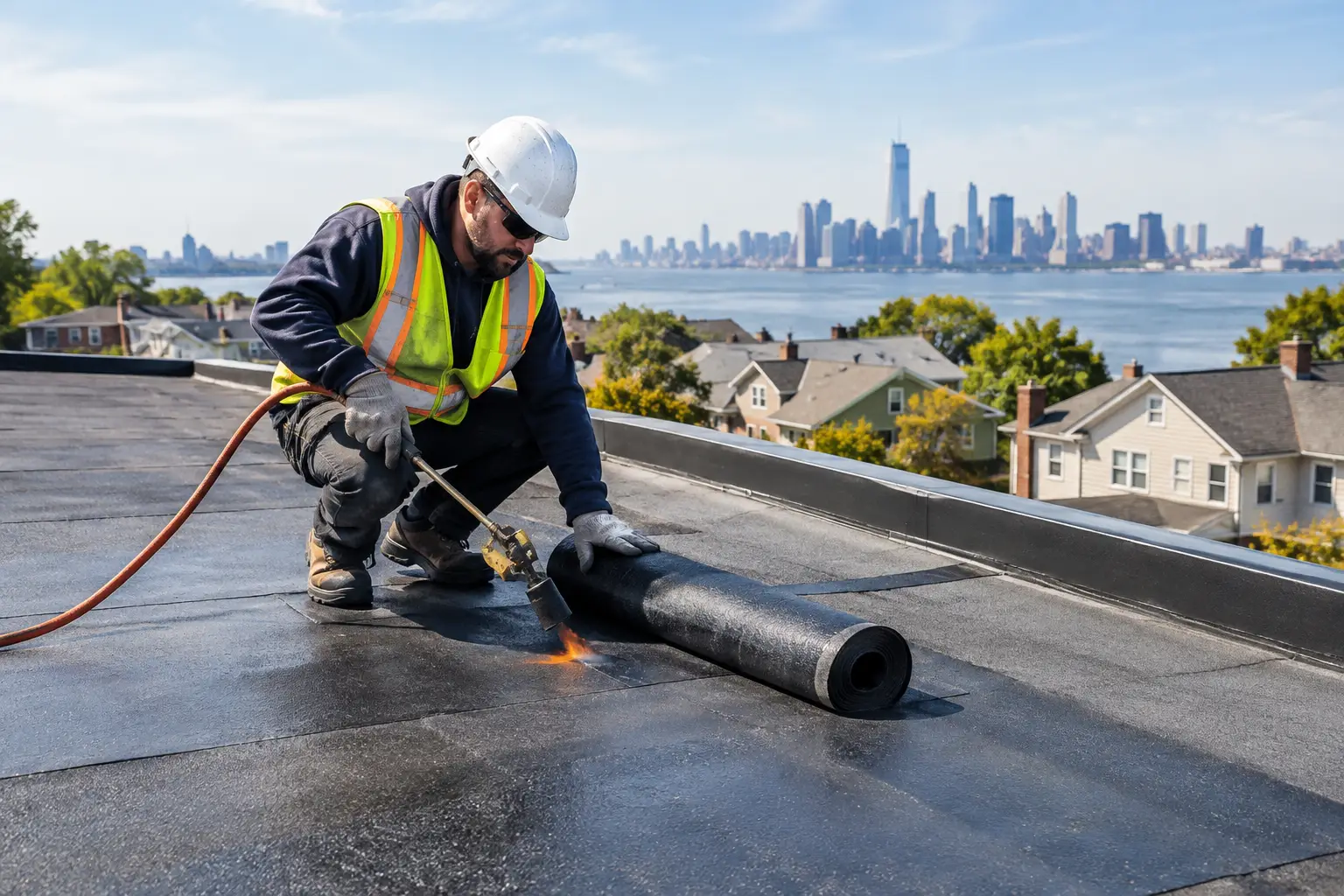
You may hear it described as an APP or SBS system. APP membranes are often heat-welded at the seams, while SBS membranes can be installed with cold adhesive, hot asphalt, or self-adhering methods. The best installation method depends on the roof layout, building use, substrate condition, and surrounding details.
Unlike a steep asphalt-shingle roof, a low-slope roof depends heavily on its seams, perimeter edges, penetrations, and flashing. A membrane may be durable across the open field of the roof, yet still leak around a pipe, parapet wall, skylight, drain, or HVAC curb if those transitions are not handled carefully.
Modified Bitumen Roofing Review: The Main Advantages
The strongest reason to consider modified bitumen is its layered construction. A properly selected multi-ply system provides redundancy. If the outer surface is damaged, the layer beneath may still help resist water entry. That can be valuable on roofs exposed to foot traffic from maintenance workers or equipment servicing.
Modified bitumen also performs well in changing Northeast weather. New Jersey properties see heat, winter cold, rain, wind, and freeze-thaw cycles. The polymer modification helps the membrane remain more flexible than traditional built-up asphalt roofing, reducing the likelihood of cracking from normal movement.
Repairs can also be straightforward when the problem is isolated. A damaged seam, puncture, loose flashing, or worn area may be repairable without replacing the whole roof. That said, a patch is only worthwhile when the surrounding membrane, insulation, drainage, and roof deck remain in serviceable condition.
Many owners appreciate the system’s familiar, proven construction. It can be a sensible choice for a small flat roof over a porch or addition, as well as for larger residential and commercial roof areas. Surface options vary, including mineral-surfaced cap sheets that provide UV protection and a finished appearance.
The Trade-Offs to Consider Before Choosing It
Modified bitumen is not maintenance-free, and material quality alone does not prevent leaks. Installation details matter just as much as the membrane itself. Poorly bonded seams, inadequate flashing height, improperly secured edges, or moisture trapped below the membrane can shorten the roof’s useful life.
Drainage is another deciding factor. Low-slope does not mean no-slope. Water should move toward drains, scuppers, or gutters rather than remain in broad puddles after a storm. Some temporary ponding may occur, but persistent standing water can accelerate wear and point to drainage or structural issues that need evaluation.
The installation method should also fit the building. Heat-applied work requires careful site controls. Adhesive-applied or self-adhered systems may be appropriate in certain situations, but they still require clean, dry, correctly prepared surfaces. We review these conditions before recommending a scope of work instead of assuming one method fits every property.
Appearance can be a consideration for visible roof sections. Modified bitumen is generally selected for performance rather than curb appeal. On a highly visible low-slope section, the finish and edge details should complement the rest of the property as much as possible.
Signs Your Modified Bitumen Roof Needs Attention
An active ceiling stain is a reason to schedule an inspection, but it is not the only warning sign. Water can travel beneath a membrane or along framing before it becomes visible indoors. Early attention may limit damage to insulation, sheathing, interior finishes, and nearby exterior components.
Watch for blistering, open laps, splitting at seams, loose flashing, exposed reinforcement, surface cracks, or areas where the membrane has pulled away at edges. Granule loss on a mineral-surfaced cap sheet, recurring puddles, and soft spots can also deserve professional review. These signs suggest possible causes, not a confirmed diagnosis from the ground.
Inside the building, look for damp drywall, peeling paint, musty odors, or staining near exterior walls and roof transitions. On multifamily and commercial properties, documenting when and where leaks appear can help narrow down patterns. A leak during wind-driven rain may have a different source than water entering after prolonged ponding.
Repair or Replacement Depends on the Whole Roof
A localized repair may be appropriate when damage is limited and the roof system is otherwise sound. For example, a failed pipe flashing or separated seam can sometimes be repaired after the area is cleaned, dried, and properly detailed. The key is confirming that water has not spread beneath the membrane.
Replacement becomes more reasonable when repairs keep recurring, seams are failing in multiple areas, the membrane has widespread deterioration, or moisture has affected insulation or the roof deck. If the roof has poor drainage or inadequate flashing design, simply installing a new surface layer without correcting those conditions can leave the underlying problem in place.
Cost is influenced by roof size, access, tear-off needs, deck repairs, insulation, drainage changes, penetrations, edge metal, and the complexity of wall and chimney flashing. A clear estimate should explain the proposed scope so you can understand what is being repaired or replaced and why.
Details Around the Roof Matter Just as Much
A flat-roof leak is sometimes connected to another exterior issue. Clogged or undersized gutters can allow water to back up at roof edges. Damaged siding or wall flashing can let rain enter where the roof meets a vertical surface. Failing mortar joints, cracked chimney crowns, and deteriorated chimney flashing can create leaks that look like roof failures from inside.
That is why our inspections consider the surrounding exterior when conditions call for it. Top Pros Construction LLC handles roofing along with gutter, siding, masonry, and chimney repairs, allowing us to identify related issues without treating every stain as a membrane problem. The recommended work should match the confirmed condition of your property.
For instance, a roof-edge repair may need gutter correction to manage runoff properly. A flashing repair beside a brick chimney may require repointing if loose mortar is allowing water behind the flashing. Addressing connected components can help prevent a repair from being undermined by the next heavy rain.
What a Professional Roof Inspection Should Clarify
A useful inspection does more than identify a wet spot. It examines the membrane condition, seams, flashing, penetrations, edges, drainage paths, and visible signs of moisture damage. Where accessible, it should also consider the roof deck and interior evidence of leaks.
We explain what we observe in plain language and distinguish between an immediate repair need, a condition to monitor, and work that may be better planned as a replacement. If storm damage or an active leak is involved, protecting the building from further water entry is the first priority. Long-term recommendations can follow once the source and extent of the issue are clearer.
Is Modified Bitumen the Right Choice for Your Property?
Modified bitumen is often a strong fit for low-slope roofs that need a durable, repairable membrane system with dependable seam and flashing details. It may be especially practical when a building has multiple penetrations, roof transitions, or regular maintenance access. Still, the right choice depends on the existing roof, drainage, budget, building use, and whether a repair can realistically provide lasting value.
If you have a recurring leak, visible membrane damage, or an aging flat roof in Bergen County or elsewhere in our New Jersey and Staten Island service areas, arrange an inspection with our team. We can review the roof and related exterior details, outline the practical options, and provide a clear scope for the work your property needs.