
How to Spot Roof Leaks Before Damage Spreads
A brown ring on the ceiling after a hard rain is an obvious warning, but it is rarely the first sign of trouble. Knowing how to spot roof leaks early can help you address a small exterior repair before moisture damages insulation, framing, drywall, flooring, or personal belongings. The key is to look for patterns, not just active drips.
A leak can begin at a missing shingle, cracked pipe boot, worn chimney flashing, clogged gutter, or low area on a flat roof. Water may travel along roof decking or framing before it reaches the ceiling below, so the visible stain is not always directly under the actual opening. A careful inspection can identify the source and the condition of the surrounding materials.
How to Spot Roof Leaks Indoors
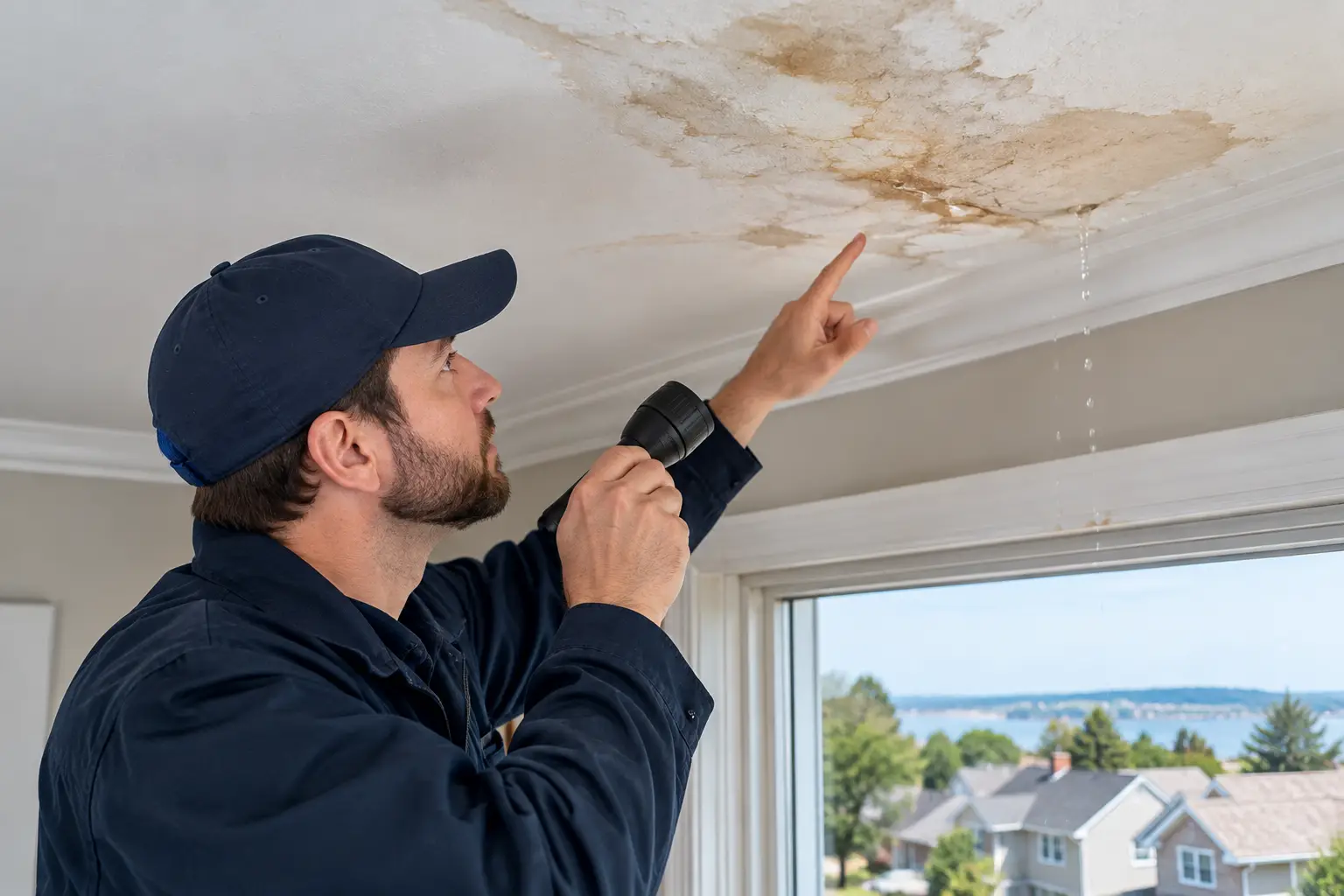
Start inside, especially after steady rain, wind-driven rain, or snowmelt. Check ceilings and upper walls for yellow, brown, or gray discoloration. Fresh water stains may look damp or darker than the surrounding surface, while older stains can leave a dry ring or peeling paint.
Pay close attention to rooms below roof valleys, chimneys, skylights, vent pipes, and exterior walls. These roof details handle a lot of water and are common locations for leaks when flashing or sealants wear out. A stain near one of these areas is useful information, but it does not confirm the source on its own.
A musty odor, bubbling drywall, soft spots, or a damp ceiling corner can also point to hidden moisture. In an unfinished attic, you may notice damp insulation, darkened roof decking, water marks on rafters, or rusty roofing nails. If you can safely look from the attic floor using adequate lighting, avoid stepping on insulation or the ceiling surface. Leave close roof access and any repair work to a qualified professional.
Condensation can sometimes resemble a roof leak. For example, poor attic ventilation or an uninsulated duct may create moisture during cold weather. The difference often comes down to timing. Moisture that appears only after rain is more likely connected to the roof or another exterior opening, while repeated dampness during cold conditions may need a closer look at ventilation and insulation as well.
Exterior Clues You Can See From Ground Level
You do not need to climb onto the roof to notice many warning signs. From the ground, look for shingles that are missing, lifted, cracked, curled, or visibly out of place. A patch of roof that looks uneven may indicate damaged shingles or deteriorated decking beneath them.
Granules in gutters or at the bottom of downspouts can be another clue. Asphalt shingles naturally shed some granules as they age, but a sudden buildup after a storm or heavy accumulation on an aging roof deserves attention. Granules protect shingles from sunlight and weather, so significant loss can shorten their service life.
Also look at the metal components where roofing meets another surface. Flashing is the metal barrier installed around chimneys, vent pipes, skylights, walls, and roof transitions. Loose, bent, rusted, or separated flashing can allow water behind the roofing materials. Cracked rubber collars around plumbing vents are another frequent source of small but persistent leaks.
On flat or low-slope roofs, watch for standing water that remains long after rainfall, open seams, cracked coating, bubbling surfaces, or debris collecting near drains. Flat roofing sheds water differently from a shingle roof, and even a small drainage issue can put repeated stress on seams and penetrations.
Why the Drip May Not Be Below the Leak
Water follows the path of least resistance. Once it passes through a roofing detail, it may run along the underside of roof decking, a rafter, a pipe, or insulation before appearing in a ceiling several feet away. This is why adding caulk around the visible interior stain does not solve the problem.
Wind also changes the picture. A roof that stays dry during a light shower but leaks during a windy storm may have an issue at flashing, siding-to-roof transitions, chimney connections, or areas where wind can push water upward beneath shingles. Snow and ice can create different conditions, especially near eaves where melting water refreezes.
For multifamily properties and commercial buildings, finding the entry point can be more complex. Water may travel across a larger roof deck or through multiple layers of materials before becoming visible inside. A professional roof inspection helps distinguish a surface-level issue from a condition that may involve the roof assembly, drainage, or adjacent exterior details.
Roof Leak or Another Exterior Problem?
Not every water mark originates with the roof. Gutters, siding, chimneys, and masonry can all direct water where it does not belong.
Clogged, sagging, or damaged gutters may overflow against the fascia, soffit, siding, or foundation. If you see water spilling over the gutter edge during rain, the roof may be shedding water correctly while the gutter system is failing to carry it away. Downspouts that discharge too close to the home can also contribute to wet foundation areas.
Chimneys need particular attention because several materials meet in one location: roofing, flashing, brick or stone, mortar joints, and the chimney crown. Cracked mortar, damaged crown surfaces, loose flashing, or missing cap components can all allow moisture into the structure. A leak near a fireplace or chimney wall may require both roofing and chimney repair to resolve it properly.
Damaged siding or deteriorated masonry can also let wind-driven rain enter exterior walls. Look for loose siding panels, cracked caulk at trim, damaged brick joints, or spalling brick, which occurs when the brick face flakes or breaks down. These issues may show up as dampness around windows or on wall sections rather than on the ceiling.
The practical takeaway is simple: the location of interior water damage is a clue, not a diagnosis. A thorough exterior inspection should consider the entire water-shedding system instead of assuming every leak is caused by shingles.
What to Do When You Find Active Water
If water is actively dripping indoors, move furniture, electronics, and valuables out of the area if it is safe to do so. Place a container under the drip and take clear photos of the affected ceiling, wall, or attic area. Note when the leak began and what weather conditions were present. Those details can help during the inspection.
Do not get on a wet roof, attempt to remove roofing materials, or ignore a ceiling that is visibly sagging. A bulging ceiling can hold a significant amount of water and may be unstable. Keep people away from the area and arrange a professional assessment as soon as possible.
If the leak follows storm damage, inspect the property from the ground for fallen branches, missing materials, or visible debris. Avoid touching downed power lines or trying to clear heavy limbs yourself. The immediate goal is to prevent further interior damage while the roof and related exterior components are evaluated safely.
Repair or Replacement Depends on the Whole Roof
A roof leak does not automatically mean you need a full roof replacement. If the roof is otherwise in good condition and the problem is limited to a damaged flashing detail, vent boot, small section of shingles, or isolated flat-roof seam, targeted repair may be the sensible option.
Replacement becomes more worth considering when leaks recur in different areas, shingles are broadly worn, decking has widespread moisture damage, or the roof is near the end of its expected service life. The same principle applies to gutters, siding, chimney masonry, and flashing: repairing a localized issue can be effective, but repeated failures may indicate that the surrounding system has aged beyond a simple patch.
Material selection and scope affect the cost of any project. Roof size, slope, access, number of penetrations, chimney condition, drainage needs, and concealed damage can all change the work involved. A clear estimate should explain what the contractor observed, what work is recommended, and whether there are conditions that can only be confirmed after damaged materials are opened.
When to Arrange a Professional Inspection
Arrange an inspection if you see a new stain, notice attic moisture, find damaged shingles or flashing, or experience a leak after heavy weather. It is also wise to have the roof checked after a major storm, before listing a property, or when an aging roof begins showing more than one sign of wear.
For homeowners in New Jersey and Staten Island, Top Pros Construction LLC can assess roofing concerns alongside related gutter, chimney, siding, and masonry conditions. We focus on identifying the likely path of water, explaining the repair options clearly, and helping you make a practical decision for your property.
A small stain is easier to investigate than a ceiling repair, mold concern, or damaged roof deck. If something looks different after the next rainfall, document what you see and arrange an inspection before the problem has more time to spread.