
Flat Roof Blisters: Causes, Risks, and Repairs
A raised bubble on a low-slope roof can be unsettling, especially when the roof otherwise appears intact. Flat roof blisters are not always an active leak, but they do indicate that part of the roofing membrane has lost full contact with the layer beneath it. The right next step depends on the blister’s size, condition, location, and whether moisture has entered the roof assembly.
For homeowners, landlords, and commercial property owners, the goal is not to guess at the cause from ground level. It is to identify whether the roof can be repaired locally, whether moisture is affecting insulation or decking, and how to prevent a small defect from becoming a recurring leak.
What Are Flat Roof Blisters?
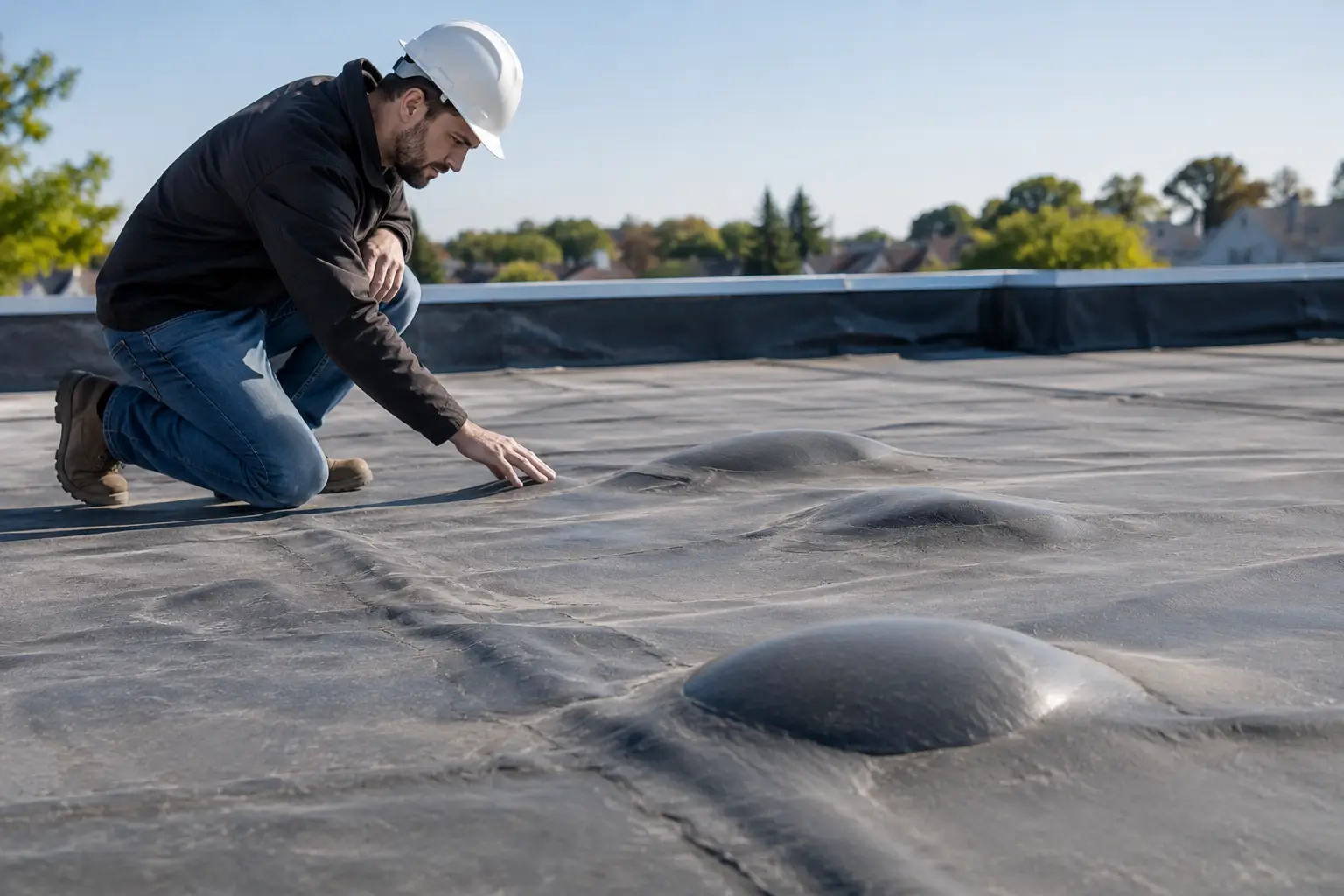
A blister is a raised area that forms beneath or within a flat roofing membrane. It may look like a soft dome, a ripple, or a bubble in the roof surface. Blisters are most commonly seen on built-up roofs and modified bitumen systems, though membrane roofs can also develop areas of separation that need attention.
A flat roof is not truly flat. It should have a slight slope that directs water toward drains, scuppers, or gutters. The roof itself is made of layers: the structural deck, insulation in many systems, adhesives or asphalt, and the weather-resistant roofing surface. When air, moisture, or vapor becomes trapped between those layers, changing temperatures can cause that trapped material to expand. The pressure can lift the membrane and create a blister.
A blister may feel firm and stable, or soft and springy. That difference matters, but it does not confirm what is happening underneath. A professional roof inspection is the safest way to determine whether the area is dry, deteriorating, or connected to a larger problem.
Why Do Flat Roof Blisters Form?
The most common cause is trapped moisture or air during installation. If a roof surface was not sufficiently dry when materials were applied, moisture can remain below the membrane. Heat from the sun turns that moisture into vapor, creating pressure between layers.
Installation conditions are only one possibility. Aging materials can lose adhesion over time, allowing layers to separate. Repeated expansion and contraction from New Jersey’s hot summers, freezing winters, and rapid temperature swings can add stress. Poor drainage may also keep water on the roof longer than intended, increasing the chance that water finds a vulnerable seam, flashing, or surface defect.
In some cases, a blister develops after a leak has allowed water into the roof system. In others, it is a limited adhesion issue that has not yet allowed water inside. That is why it is not wise to assume every bubble means a full roof replacement, or to assume that every bubble is harmless.
Related conditions that can look similar
Not every raised section is technically a blister. Wrinkles, ridges, loose seams, wet insulation, and uneven substrate conditions can produce a similar appearance. Ponding water around the area, cracked coating, exposed reinforcement, or separated seams may point to a more urgent repair need.
Roof edges and penetrations deserve close attention. Flashing around walls, vents, skylights, HVAC supports, and drains often experiences more movement than open roof areas. A raised membrane near one of these details can allow water to travel beneath the surface, sometimes showing up indoors far from the original entry point.
When Is a Blister a Serious Roofing Concern?
A small, dry, intact blister is sometimes monitored rather than immediately opened or removed. Cutting into a stable blister without a clear repair plan can create an opening for water. The decision should be based on the membrane condition and the surrounding roof, not simply on whether a bubble is visible.
The concern increases when a blister is growing, cracking, soft underfoot, located in a traffic path, or near a seam or roof penetration. A ruptured blister exposes the underlying roofing layers to weather. Once water gets beneath the membrane, it can saturate insulation, reduce thermal performance, deteriorate the deck, and contribute to leaks inside the building.
Arrange an inspection sooner if you notice water stains on ceilings, dripping after rain, damp insulation visible from the interior, or new bubbling after a storm. On commercial and multifamily properties, leaks can disrupt tenants and damage finishes, equipment, or inventory, so documenting the location and timing of symptoms is useful before the inspection.
How Professionals Evaluate Flat Roof Blisters
A proper assessment starts with the entire roof, not just the visible bubble. We look at the membrane condition, seams, flashing, drainage paths, drains, edge metal, and areas where water collects. The roof surface can reveal whether the blister is isolated or part of a broader pattern of moisture or adhesion failure.
Interior observations also help. Ceiling staining, musty odors, and signs of water around parapet walls or mechanical penetrations can help narrow down likely entry points. Where appropriate, a contractor may recommend further testing to determine whether moisture is present beneath the membrane. The method depends on the roof type, accessibility, and the scope of the suspected issue.
This evaluation is also a good time to check related exterior components. Clogged gutters or blocked downspouts can worsen drainage at roof edges. Deteriorated masonry joints on a parapet wall or a failed chimney crown can introduce water that appears to be a roofing leak. Looking at the full exterior helps avoid repairing only the symptom.
Repair Options Depend on What Is Below the Surface
If the roof system beneath a blister is dry and structurally sound, a localized repair may be appropriate. The affected membrane can be addressed with compatible roofing materials, then sealed and integrated with the surrounding surface. The repair must maintain proper overlap, adhesion, and drainage rather than merely covering the raised area.
If moisture has spread below the membrane, the repair may require removal of damaged roofing material and wet insulation in the affected section. The area then needs to be rebuilt with compatible materials. This is more involved than a surface patch, but leaving saturated material in place can lead to continued deterioration and repeat leaks.
When blisters, loose seams, drainage issues, and patchwork repairs appear across a large portion of an aging roof, replacement may be the more sensible long-term option. Replacement is not automatically required because of one blister. It becomes a stronger consideration when the membrane is near the end of its useful life or the underlying system has widespread moisture damage.
Cost can vary based on roof size, access, membrane type, how much material must be removed, the condition of insulation and decking, and the number of penetrations or edge details involved. A clear written scope should explain whether the work is a localized repair, moisture-related restoration, or broader roof replacement.
What You Can Do Before an Inspection
Avoid walking on a blistered area, especially if it feels soft. Foot traffic can rupture the membrane or push water into vulnerable seams. Do not puncture, cut, or try to flatten the bubble yourself. A quick opening may seem like a way to release pressure, but it can compromise the roof’s waterproofing layer.
If it is safe to view the roof from the ground or a window, note where the blister is located and whether water is collecting nearby. Indoors, move valuable items away from active drips and use a container to catch water if necessary. Take photos of visible ceiling staining or exterior conditions after rain, then share them during the inspection.
Routine maintenance also reduces avoidable stress on a flat roof. Keep drains, scuppers, gutters, and downspouts clear of leaves and debris. Have the roof checked after severe weather and periodically as it ages. Prompt attention to small seam openings, cracked flashing, and drainage problems can help protect the roof system before moisture becomes trapped beneath it.
Protect the Roof Before a Small Bubble Opens Up
Flat roof blisters are a condition worth evaluating, not a reason to panic. The visible bubble may be isolated, or it may be a clue that water or separation is developing below the roof surface. The only dependable answer comes from examining the membrane, drainage, and surrounding roof details together.
If you have noticed bubbling, soft spots, repeated leaks, or standing water on a flat roof in New Jersey or Staten Island, Top Pros Construction LLC can help you understand the condition and discuss practical repair or replacement options. A careful inspection can give you a clearer path forward before a minor surface issue becomes a larger interior problem.