

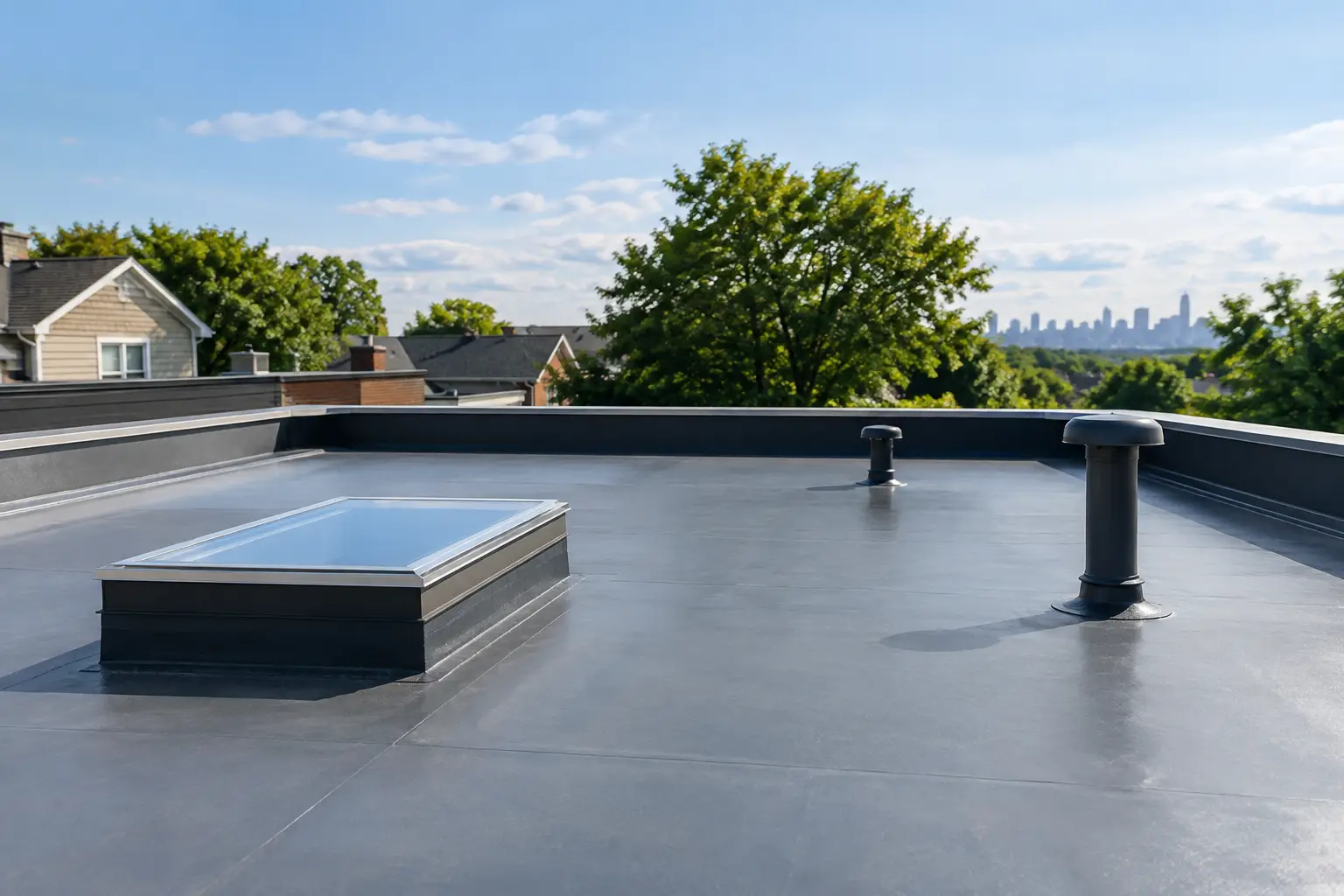
Flat Roof Example: What a Healthy System Looks Like
A flat roof that looks smooth from the ground can still have weak points at its seams, drains, walls, and equipment penetrations. The most useful flat roof example is not simply a clean-looking roof surface. It is a complete system that sheds water, protects vulnerable edges, and has details designed to handle New Jersey and Staten Island weather.
For homeowners, landlords, and commercial property owners, knowing what a sound flat roof should look like makes it easier to spot concerns early. A few small warning signs may point to a repairable detail. Widespread aging, repeated leaks, or trapped moisture below the membrane can change the conversation toward replacement.
A flat roof example starts with slope and drainage
Despite the name, a flat roof is not completely flat. It should have a slight slope that moves water toward drains, scuppers, or gutters. This is often called a low-slope roof. The slope may be built into the structure, created with tapered insulation, or formed by the roof deck beneath the membrane.
Picture a one-story home addition with a low-slope roof beside a steeper shingle roof. A healthy installation has a continuous membrane across the roof field, carefully sealed seams, and a clear route for water to reach the edge gutter or drain. After rain, the surface may remain damp for a short time, but large puddles should not sit in the same areas for days.
Standing water, also called ponding, does not automatically prove that a roof has failed. However, it deserves attention when it is persistent, growing, or occurring near seams and flashings. Water adds weight, speeds up surface wear, and can expose small installation or drainage issues over time.
The drain path matters as much as the roof surface
A roof drain or scupper can be in good condition while the drainage system below it is clogged or undersized. Leaves, roof debris, and loose granules can block outlets. On residential properties, overflowing gutters can let water run back toward the roof edge, fascia, siding, and masonry instead of safely away from the building.
That is why a flat-roof assessment should include the gutters and downspouts, not only the membrane. We look at where the water is intended to go and whether the entire path is working. A drainage correction may involve cleaning and repair, but recurring ponding can also require adjustments to the roof’s slope or drainage layout.
What the membrane should look like
The membrane is the waterproof layer that covers a flat or low-slope roof. Common systems include modified bitumen, EPDM rubber, TPO, and PVC. Each material has different seam methods, weathering characteristics, and suitable applications. The right choice depends on the existing roof, building use, roof shape, drainage, foot traffic, and the condition of the deck below.
In a sound flat roof example, the membrane lies securely against the roof surface without open seams, tears, deep wrinkles, or loose edges. The perimeter is especially important because wind can work under a poorly secured membrane. A roof may look acceptable across the middle while showing problems around the edges, corners, or transitions to vertical walls.
On some systems, surface granules or coatings provide protection from sunlight and weather. Normal aging can change the appearance of these materials. What raises more concern is bare or brittle material, cracked sections, exposed reinforcing fabric, or areas that feel soft underfoot during a professional inspection.
Soft areas do not confirm a specific cause from sight alone. They can be associated with wet insulation, deck deterioration, or localized damage, and a closer inspection helps determine the proper scope of work. Covering a problem area without identifying why it became soft can leave moisture trapped underneath.
Flashing is where many leaks begin
Most flat-roof leaks do not begin in the middle of an uninterrupted roof field. They often develop where the roof changes direction or meets another building component. These intersections are protected with flashing, which is the material used to direct water away from seams and openings.
A good flat roof example includes well-secured flashing at parapet walls, roof edges, skylights, vents, pipes, chimneys, and adjoining sloped roofs. The membrane should turn up vertical surfaces to the appropriate height and be terminated securely. Metal edge details should be fastened and sealed so wind-driven rain cannot get behind them.
Pay attention to visible lifting at wall flashings, separated sealant around pipes, cracked caulk, rusted metal edging, and exposed fasteners. Water stains on an interior ceiling below these areas are a reason to arrange an inspection, especially after heavy rain or wind.
Chimneys deserve particular care where they pass through or meet a low-slope roof. Deteriorated mortar joints, a cracked chimney crown, or damaged flashing can all allow water into the same general area. The stain inside may look like a roof issue, a chimney issue, or both. Examining the roofing and masonry together helps avoid repairs that address only part of the water path.
A practical example for a small commercial building
Consider a small retail building with a low-slope roof, a parapet wall around the perimeter, two interior drains, and rooftop mechanical equipment. The roof surface appears mostly intact, but staff notice a ceiling stain after wind-driven rain.
A proper inspection would not assume the membrane is the sole cause. The roofer may examine drain strainers, seams around the equipment curbs, the base of the parapet walls, counterflashing, and the condition of the wall coping. They may also check whether water is pooling near the drains or whether debris has restricted drainage.
If the issue is a localized split at a penetration, a targeted repair may be reasonable when the rest of the roof remains serviceable. If there are open seams in several areas, extensive ponding, or evidence of moisture beneath an aging membrane, replacement may offer a more dependable long-term approach. The decision should come from the roof’s overall condition, not one isolated stain.
Repair or replacement depends on the complete picture
Property owners often want a simple answer: Can this flat roof be patched, or does it need to be replaced? The answer depends on the membrane’s age and condition, the number and location of leaks, drainage performance, previous repair history, and whether the roof deck and insulation are dry and sound.
A repair is often appropriate for a limited puncture, damaged flashing, loose edge detail, or small seam separation on an otherwise well-maintained roof. Repair work should tie into compatible materials and restore the system’s ability to shed water.
Replacement becomes more practical when repairs are frequent, the material has reached the end of its useful service life, or moisture has affected a broad area. A replacement project is also a chance to correct recurring drainage concerns, upgrade insulation where appropriate, and address edge details that have contributed to leaks.
Cost is influenced by roof size, material selection, accessibility, the number of penetrations, drainage changes, tear-off needs, and any hidden deck repairs found after materials are removed. Clear estimates should explain what is included, what conditions could affect the scope, and how the work area will be handled.
Warning signs worth scheduling an inspection
You do not need to walk on a roof to identify every problem. From the ground or inside the building, watch for ceiling discoloration, peeling paint near exterior walls, musty odors, water around drains, overflowing gutters, visible membrane lifting, and recurring stains after storms.
Exterior conditions can overlap. A damaged gutter may send water onto siding. Loose siding can let moisture into wall areas. Cracked brick joints near a roofline can admit water behind the masonry. These problems do not always share one cause, but they can affect the same parts of the building. Coordinating roofing, gutter, siding, masonry, and chimney observations helps create a more complete repair plan.
For safety, avoid walking on a wet or visibly damaged flat roof. Keep drains and gutter outlets clear from ground level where possible, and document stains or pooling with dated photos after rainfall. Those details can help a roofing professional understand the pattern without guessing.
Plan for maintenance before a leak appears
Flat roofs benefit from regular observation because small drainage and flashing issues can become more costly when ignored. Check the roof’s visible edges after severe weather, watch how quickly water leaves the roof after rain, and keep nearby trees trimmed back when branches regularly drop debris onto the surface.
For multifamily and commercial properties, it also helps to keep a record of past repairs and leak locations. Repeated trouble in the same area may point to a drainage or detail problem that needs a broader solution rather than another temporary patch.
If you are concerned about ponding water, a ceiling stain, deteriorated flashing, or an aging low-slope roof, Top Pros Construction LLC can inspect the condition and explain the repair or replacement options clearly. A careful assessment gives you a practical next step without assuming more work than the roof actually needs.