
What Causes Ceiling Water Stains in Your Home?
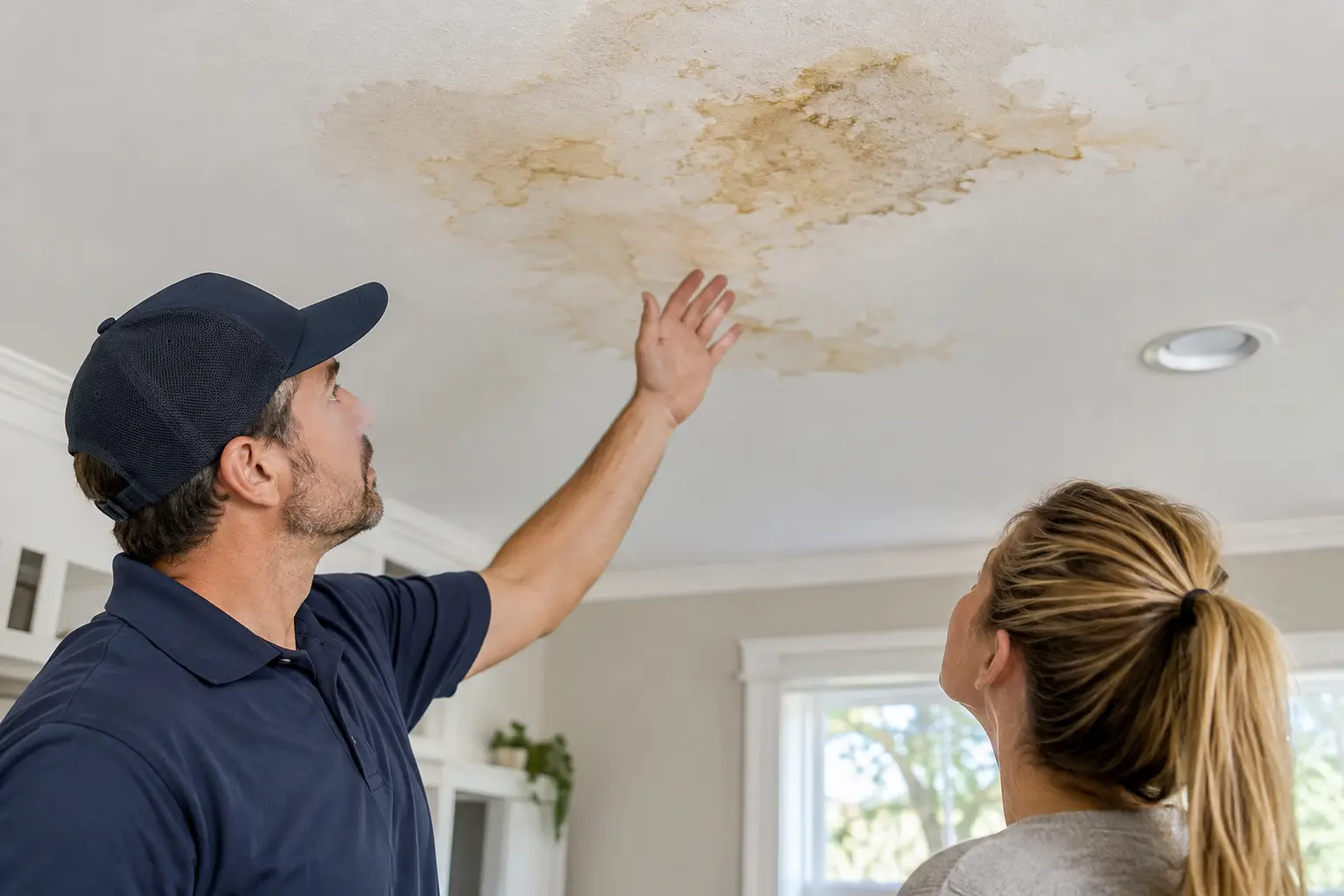
A brown ring over the living room, a yellow patch near a bathroom, or a soft spot in an upstairs ceiling can make any property owner wonder: what causes ceiling water stains? In many cases, water has entered through the roof or another exterior opening, then traveled along framing before appearing indoors. But a stain can also come from plumbing, condensation, or an older leak that has already stopped.
The location of the stain is useful, but it is not a diagnosis. Water rarely follows a straight path. A professional inspection helps identify the actual entry point so the repair addresses the cause rather than just covering the visible mark.
What Causes Ceiling Water Stains Most Often?
For homes in New Jersey and Staten Island, roof leaks are one of the most common reasons for ceiling staining. Wind-driven rain, snow, ice, aging materials, and seasonal temperature swings can expose small weaknesses in a roofing system. Water can pass beneath damaged shingles, worn flashing, or failed seals and soak into the roof deck or attic insulation before it reaches the ceiling below.
A stain directly below the roofline or in a top-floor room makes a roofing issue more likely, especially if it grows after rain or snow. Still, the timing and location alone cannot confirm the source. A stain around a bathroom, laundry area, or kitchen may point to a plumbing leak instead.
Roof Damage and Worn Flashing
Shingles are the visible outer layer of a sloped roof, but they are only one part of the water-shedding system. Flashing – the metal or membrane material installed around chimneys, valleys, skylights, vents, and roof-to-wall transitions – is often where leaks begin.
Common roof-related causes include missing, cracked, curled, or loose shingles; exposed fasteners; deteriorated pipe-boot seals; damaged valley areas; and aging flashing around penetrations. A small opening can let in enough water to create a stain, yet remain difficult to spot from inside the house.
Flat and low-slope roofs have different concerns. Standing water, separated seams, punctures, and drainage problems can allow moisture beneath the roofing membrane. In multifamily and commercial properties, water may travel farther than expected through the roof assembly before becoming visible inside.
Clogged Gutters and Faulty Downspouts
Gutters do more than keep rain from spilling over the edge of the roof. They direct runoff away from the fascia, soffit, siding, foundation, and entrances. When gutters clog with leaves, granules, or debris, water can back up under the lower edge of roofing materials.
Overflowing gutters may also wet exterior walls repeatedly. Over time, that moisture can find openings around trim, siding, windows, or roof intersections and eventually contribute to interior damage. A downspout that is disconnected, crushed, or draining in the wrong direction can worsen the problem.
If a stain develops after heavy rain and you have noticed gutter overflow, the two may be related. However, gutter cleaning alone may not solve the issue if roof-edge flashing, fascia, or nearby siding has already been affected.
Chimney and Masonry Leaks
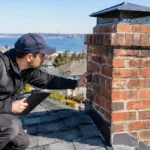
A ceiling stain near a fireplace or chimney breast deserves close attention. Chimneys are exposed on all sides and contain several potential leak points: cracked crowns, open mortar joints, damaged flashing, deteriorated brick, and gaps around the flue area.
Masonry is durable, but mortar and brick can absorb water when joints deteriorate. Freeze-thaw cycles can make small cracks larger, particularly in older New Jersey homes. Water entering a chimney can travel down its interior or along framing, causing stains on ceilings or walls that seem unrelated to the visible exterior damage.
The right repair depends on the condition. Repointing may address failing mortar joints, while a cracked crown, damaged flashing, or more extensive masonry deterioration may require separate work. Painting over the stain without correcting the chimney leak only hides the symptom.
Siding, Wall, and Roof-to-Wall Openings
Not every ceiling stain starts at the highest point of the roof. Rain can enter where a roof meets a vertical wall, around step flashing, through damaged siding, or at poorly sealed exterior trim. This is especially possible near dormers, additions, second-story walls, and areas where different exterior materials meet.
Loose or cracked siding, deteriorated caulk around trim, and water-damaged sheathing can allow moisture behind the wall surface. From there, water may move inward and show up on a nearby ceiling. The repair may involve roofing, siding, or both, depending on where the building envelope has failed.
Causes That May Not Be Outside the Roof
An exterior inspection is essential when staining follows rain, but some leaks start inside the home. Plumbing supply lines, drain pipes, tub or shower connections, and appliances can all leak above a ceiling. A bathroom stain that appears after showers, for example, may have nothing to do with the roof.
HVAC equipment can also create moisture problems. A blocked condensate drain, poorly insulated ductwork, or an air handler in an attic can produce water that resembles a roof leak. Condensation is another possibility in poorly ventilated bathrooms or attics, particularly when warm indoor air meets a cold surface.
In winter, ice dams can complicate the picture. Heat escaping into the attic melts snow on the roof, and the water refreezes near the colder eaves. As more meltwater collects behind the ice, it can back up beneath roofing materials. The permanent answer may involve roofing repairs as well as improvements to attic insulation and ventilation. The correct scope depends on what an inspection finds.
How to Read the Warning Signs
A water stain does not always mean there is an active leak at that moment. It may be evidence of a past issue, such as storm damage that dried after the weather changed. Still, discoloration should be taken seriously because repeated wetting can damage drywall, insulation, wood framing, and finishes.
Watch for a stain that expands after rain, feels damp or soft, develops a darker edge, or is accompanied by peeling paint, bubbling texture, a musty odor, or visible mold-like growth. Dripping water, a sagging ceiling, or a bulge in the drywall calls for prompt attention. Move belongings away from the area and avoid disturbing a ceiling that appears swollen or unstable.
Do not assume the source is directly above the stain. An attic, roof, chimney, and exterior wall inspection may be needed to trace the path of the water. If the staining is below a bathroom or mechanical equipment, plumbing or HVAC evaluation may also be appropriate.
Why Painting the Stain Is Not the Repair
Stain-blocking primer and paint can improve the appearance of a ceiling, but only after the moisture source has been corrected and the affected materials have dried properly. Otherwise, the discoloration can return, paint can blister, and concealed damage can continue.
The same principle applies to quick roof patches. A targeted repair can be the right choice when the roof is generally in good condition and the problem is isolated, such as damaged flashing or a few missing shingles. Replacement may be more practical when leaks are recurring, the roofing system is near the end of its useful life, or widespread wear is allowing water in through multiple areas.
A careful contractor should explain what was observed, what remains uncertain until materials are opened or tested, and why a repair or replacement recommendation makes sense. The scope may also include gutter work, chimney repair, siding repair, or masonry restoration if those components contributed to the leak.
What an Exterior Leak Inspection Should Consider
When we inspect a likely exterior source at Top Pros Construction LLC, we look beyond the ceiling stain itself. The goal is to assess the roof condition, roof penetrations, flashing details, chimney and masonry areas, gutters and downspouts, and nearby siding or trim where water could enter.
Weather history matters, too. A stain that appears only during wind-driven storms can behave differently from one caused by a plumbing drip or a clogged gutter. We also consider whether the home has an attic, whether insulation is wet, and whether the staining is close to an exterior wall, chimney, skylight, or roof valley.
For property owners, clear communication matters as much as the repair itself. You should understand the suspected cause, the recommended work, and whether additional evaluation from a plumber or HVAC professional may be needed. That makes it easier to choose an appropriate repair without guessing.
When to Arrange an Inspection
Arrange an inspection when a ceiling stain is new, growing, recurring, or linked to rainfall. It is also wise to have the exterior checked after a storm if you notice missing shingles, loose siding, overflowing gutters, damaged chimney mortar, or water around a roof penetration.
A ceiling stain is your home’s signal that water has been somewhere it should not be. If you are seeing one at your New Jersey or Staten Island property, contact Top Pros Construction LLC to discuss the symptoms and arrange an inspection focused on finding the source and recommending a practical next step.