
Can Old Gutters Cause Leaks? Signs to Watch
A brown ceiling stain after heavy rain can look like a roof problem, but the water may have started at the edge of the roof. Can old gutters cause leaks? Yes. A gutter system that is rusted, loose, clogged, undersized, or poorly pitched can let water back up beneath roofing materials or spill repeatedly against the exterior of your home.
That does not mean every interior leak is caused by gutters. Roof shingles, flashing, chimneys, siding details, and masonry joints can all allow water in. The practical next step is finding the actual path water takes before deciding whether a repair or replacement is needed.
How Old Gutters Can Cause Leaks
Gutters are designed to collect runoff from the roof and move it safely to downspouts. When that system is working, water is kept away from the roof edge, fascia boards, siding, foundation, and walkways. As gutters age, small problems can change that flow.
Seams may separate, hangers can loosen, and metal sections can corrode through. A gutter that sags in the middle holds standing water instead of sending it to the downspout. During a hard New Jersey rainstorm, that pooled water can overflow over the front or back edge. If it spills behind the gutter, it can soak the fascia – the board at the roofline – and reach the roof deck or wall structure.
Clogs create another common issue. Leaves, twigs, roofing grit, and debris can block a gutter or downspout. The water then has nowhere to go except over the sides. Overflow near a roof edge can contribute to leaks around the eaves, while overflow farther down can stain siding, saturate soil near the foundation, and damage exterior finishes.
Signs Your Gutter System May Be Causing Water Problems
Some gutter failures are visible from the ground. Others only become clear after rain. Watch for water pouring over the gutter edge, drips from seams, gutters pulling away from the house, or sections that appear bowed or uneven.
Inside, water staining near an exterior wall or along the ceiling close to the roofline can be a clue. Peeling paint, swollen trim, or soft-looking wood around windows and doors may also point to repeated overflow. These signs do not confirm the source on their own, but they justify a closer inspection.
Outside, look for dark streaks beneath gutter joints, washed-out mulch, eroded soil, or puddling near the foundation. Downspouts that end too close to the building can add to the problem even when the gutters themselves are intact. Water management is a system, so the roof edge, gutters, downspouts, grading, and nearby exterior surfaces all matter.
Roof-Edge Leaks Often Get Misdiagnosed
A leak near the eaves may involve damaged shingles, worn underlayment, failing flashing, or deteriorated roof decking. It may also be made worse by gutters that trap or overflow water. That distinction matters because replacing gutters alone will not correct a roof defect, and a roof repair may not last if water continues to run behind a loose gutter.
At Top Pros Construction LLC, we look at the connected exterior components rather than assuming the most visible issue is the only one. A careful inspection can identify whether the problem is gutter pitch, a failed seam, roof-edge deterioration, or more than one condition at once.
When Repair Makes Sense and When Replacement Is Better
A targeted gutter repair can be a sensible choice when the system is generally sound. Refastening loose sections, resealing a limited number of joints, correcting a small pitch issue, or replacing a damaged downspout may restore proper drainage without replacing every section.
Replacement is often worth considering when gutters have widespread rust, repeated seam failures, numerous sagging areas, holes, or chronic overflow caused by an outdated layout. Older sectional gutters have more joints, and each joint is another potential leak point. A replacement design may use longer continuous runs, correctly sized downspouts, and a layout suited to the roof’s runoff patterns.
The right decision depends on the material condition, the age of the system, the extent of water damage, and whether the roofline or drainage layout has changed over time. We explain the visible conditions, the recommended scope, and the reason for it so you can make a clear decision for your property.
Gutters Can Affect More Than the Roof
Gutter issues often cross into other exterior repair needs. Water spilling behind a gutter can rot fascia and damage the lower edge of a roofing system. It can also run down siding, leaving stains or finding its way behind loose panels and trim.
On brick or stone homes, repeated runoff can wear away mortar joints and contribute to moisture problems around masonry. Chimneys are another area where water paths can be confusing. A chimney leak may come from cracked mortar, damaged flashing where the chimney meets the roof, or roof runoff that is not being controlled near that section of the house.
For property owners, the key is not to treat these as separate cosmetic issues. Roofing, gutters, siding, masonry, and chimney components work together to direct water away from the structure. Addressing the confirmed source and any affected material helps reduce the chance of a recurring repair.
What a Professional Gutter and Roof Inspection Should Check
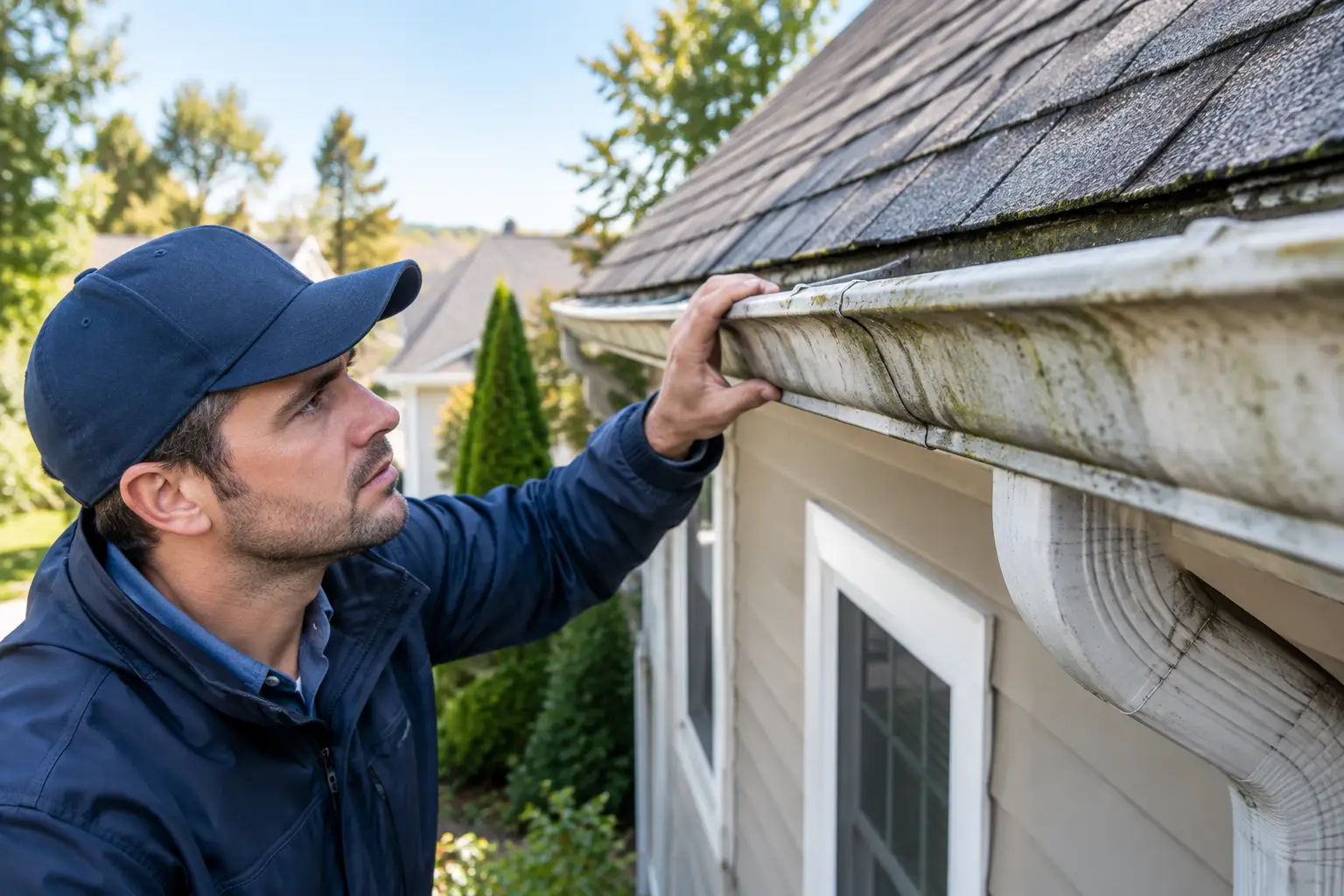
A useful inspection goes beyond looking for leaves in the gutter. We assess the condition and alignment of gutter sections, seam integrity, hangers, end caps, outlets, downspouts, and discharge locations. We also look for signs that water is getting behind the gutter or overflowing at specific areas.
At the roof edge, we check for visible shingle damage, deteriorated flashing, soft or damaged fascia, and conditions that can allow water intrusion. If the leak appears near a wall, chimney, or exterior transition, those areas should be evaluated as well. The goal is to separate possible causes from conditions that are actually visible and supported by the inspection.
For landlords and property managers, this approach can be especially useful after a tenant reports staining or a recurring drip. A defined scope helps prioritize urgent water-entry repairs while planning larger roof, siding, gutter, or masonry work when it is appropriate.
Safe Steps to Take While You Arrange Help
If you notice active leaking indoors, move belongings away from the affected area and use a container to catch dripping water where practical. Avoid climbing ladders or walking on a wet roof to inspect gutters yourself. Wet surfaces, unstable ladders, and concealed wood damage can make that work unsafe.
From the ground, you can note where water overflows during rain and whether downspouts discharge near the foundation. Photos of visible staining, overflowing sections, or gutter separation can also help document the issue. Do not rely on a dry-day visual check alone, though. Many drainage failures only show up under steady rainfall.
Protect the Building Before Small Problems Spread
Old gutters can absolutely contribute to leaks, but they are only one part of the exterior water-management system. A loose gutter might be a straightforward repair. In other cases, it may reveal roof-edge damage, compromised siding, failing chimney flashing, or masonry that has absorbed years of runoff.
If your home or building in New Jersey or Staten Island has overflowing gutters, roof-edge staining, or a leak that appears after rain, arrange an inspection with our team. We can help identify the source, explain practical repair or replacement options, and provide a clear scope for the work your property needs.