Roof Leak Repair NJ Starts With Finding the Source
A water stain on the ceiling rarely tells the whole story. By the time it appears indoors, water may have traveled beneath roofing materials, along roof decking, or around a chimney before finding its way into the home. Effective roof leak repair NJ property owners need starts with identifying where water entered – not simply patching the spot where it became visible.
New Jersey roofs face demanding conditions throughout the year. Heavy rain, wind-driven storms, snow, ice, changing temperatures, and clogged drainage systems can all expose weak points in a roofing system. A prompt professional inspection helps limit the damage and gives property owners a clear plan for protecting the structure.
Why Roof Leaks Are Often Hard to Locate
A roof leak is not always directly above the stain or drip. Water follows gravity, but it can also move along framing, insulation, nails, pipes, and roof decking. That means an interior symptom may be several feet away from the actual entry point.
The source may be a damaged shingle, worn flashing, an open seam on a flat roof, failed sealant around a vent, or deteriorated masonry at a chimney. In other cases, the roof itself may be in fair condition while overflowing gutters send water back toward the fascia, siding, and roof edge. Each situation calls for a different repair approach.
A thorough inspection considers the roof as a complete exterior system. Roofing materials, flashing, penetrations, chimneys, gutters, and drainage all need to work together to move water away from the building. Addressing only the visible symptom can leave the underlying problem active.
Common Reasons New Jersey Roofs Start Leaking
Wind damage is a frequent cause after storms. Shingles can lift, crack, loosen, or blow off entirely, exposing the underlayment and roof deck. Even a small missing section can allow water intrusion during the next rainfall.
Flashing problems are another common issue. Flashing is installed where the roof meets a wall, chimney, skylight, vent pipe, or other transition. These areas are especially vulnerable because water naturally collects or changes direction there. If flashing separates, rusts, cracks, or was improperly installed, water can enter beneath surrounding roofing materials.
Age also matters. Asphalt shingles gradually lose protective granules and flexibility. Flat roofing membranes can develop cracks, punctures, blisters, open seams, or ponding-water concerns. An older roof does not automatically require replacement, but it should be assessed carefully to determine whether a targeted repair will provide lasting protection.
Chimneys and masonry deserve close attention as well. Deteriorated mortar joints, damaged chimney crowns, loose flashing, and water-absorbing brick can create conditions that look like a roof leak from inside the home. Correctly diagnosing the source prevents roof repairs from being performed when the primary issue is actually masonry-related.
Signs That Call for Prompt Roof Leak Repair NJ
A drip during a storm is an obvious reason to request service, but early warning signs are often less dramatic. Acting before water reaches living spaces can reduce the risk of damaged insulation, stained ceilings, mold growth, and deteriorated framing.
Watch for these conditions:
- Brown or yellow ceiling stains, peeling paint, bubbling drywall, or damp spots near exterior walls
- Missing, curled, cracked, or visibly worn shingles, especially after high winds
- Granules collecting in gutters or near downspouts, which may indicate shingle wear
- Water marks around chimneys, skylights, attic vents, or plumbing vent pipes
- Musty attic odors, wet insulation, visible dampness, or daylight showing through the roof deck
Not every sign confirms an active leak. Condensation, plumbing issues, and ice-dam-related moisture can create similar symptoms. That is why a professional evaluation is more useful than assuming the roof is responsible based on an interior stain alone.
What a Professional Leak Inspection Should Include
A dependable inspection should be methodical, not rushed. The goal is to identify the cause of the leak, evaluate any related damage, and explain the most practical repair option.
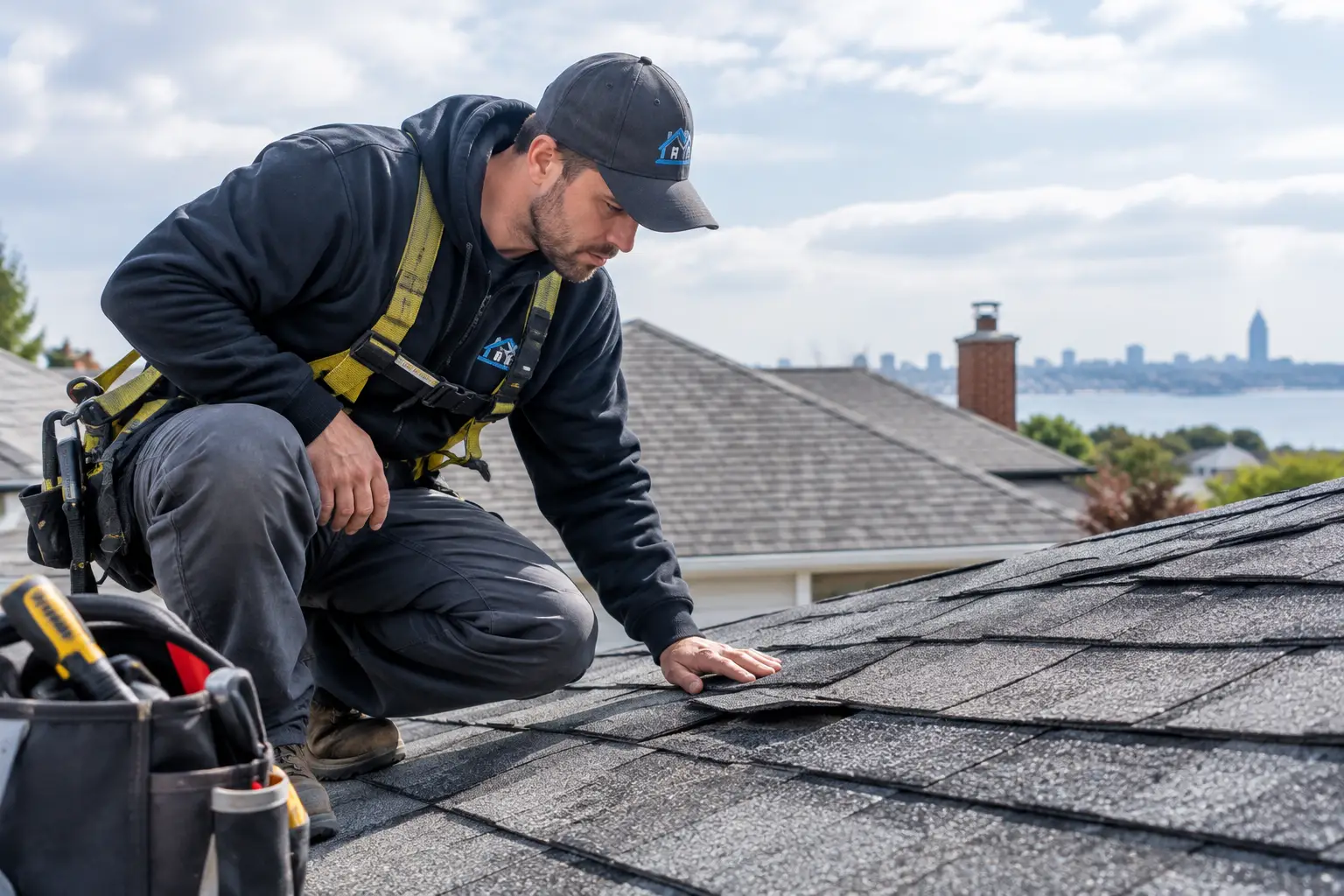
The exterior review typically examines shingles or membrane surfaces, ridges, valleys, roof edges, flashing, vents, skylights, chimneys, gutters, and downspouts. The inspector should look for storm damage, material deterioration, loose components, drainage concerns, and previous repair areas that may have failed.
An attic or interior assessment can be equally valuable. Signs of water trails, wet insulation, mold-like staining, damaged decking, or compromised framing may help trace the path of moisture. The extent of interior evidence also helps determine how long the issue may have been present.
For commercial and multifamily properties, roof access points, drains, parapet walls, seams, penetrations, and areas where water ponds need particular attention. A flat roof leak may be caused by a small membrane opening, but recurring ponding can signal a drainage concern that should be addressed alongside the repair.
After the inspection, property owners should receive a clear explanation of what was found, what work is recommended, and why that scope is appropriate. The right repair is based on the roof’s condition, the source of the intrusion, and the expected durability of the solution.
Repair or Replacement: The Answer Depends on the Roof
Many leaks can be resolved with professional repair. Replacing damaged shingles, securing flashing, repairing a localized membrane area, sealing a properly prepared penetration, or correcting a gutter-related water issue may restore the roof’s protection when the rest of the system is in sound condition.
Replacement becomes a stronger consideration when leaks are recurring, materials are broadly deteriorated, the roof is near the end of its service life, or repairs would only postpone a larger failure. Multiple patched areas, widespread shingle loss, soft decking, extensive water damage, and persistent flat-roof seam issues can all indicate that a more comprehensive solution is the better long-term decision.
There is a trade-off. A focused repair is less disruptive when the damage is isolated and the roof has useful life remaining. A replacement is a larger project, but it can make more sense when repeated repairs are no longer protecting the property reliably. An experienced contractor should explain both paths honestly rather than recommending the same answer for every roof.
Why Emergency Response Matters After a Storm
When water is actively entering a property, time matters. Ongoing moisture can spread quickly through insulation, ceilings, walls, electrical areas, and structural wood. Storm-related damage may also worsen if loose shingles, exposed decking, or open flashing are left unaddressed before another weather event.
Property owners should prioritize safety and limit access to affected areas where ceilings are sagging or water is near electrical fixtures. Then, arrange a professional roof assessment as soon as conditions allow. Fast response helps document the condition, identify the immediate source, and determine whether temporary protection or permanent repair is needed.
Top Pros Construction LLC provides exterior evaluations and roof leak repair for homeowners, property managers, and businesses throughout New Jersey and Staten Island. The focus is on locating the source of the problem, explaining the repair scope clearly, and completing work that protects the property beyond the next rainstorm.
Protecting the Roof Between Major Weather Events
Regular exterior maintenance can catch small concerns before they become interior leaks. Keep gutters and downspouts clear enough to direct water away from the roofline and foundation. Have storm damage, loose shingles, chimney deterioration, and visible flashing concerns inspected promptly rather than waiting for a ceiling stain.
It also helps to schedule an inspection when a roof is aging, before a major storm season, or after significant wind events. Preventive attention does not eliminate every leak risk, but it gives property owners a better chance to address vulnerable areas on their own schedule.
A roof leak deserves more than a quick surface patch. Clear diagnosis, quality materials, careful workmanship, and responsive service give your property the best chance of staying dry when New Jersey weather puts the exterior to the test.