
Missing Shingles Roof Repair Starts Here
A bare spot on an asphalt-shingle roof can look minor from the driveway, but it leaves one of your home’s most important protective layers exposed. Prompt missing shingles roof repair helps prevent rain, wind-driven moisture, and debris from reaching the underlayment, roof deck, attic, and interior spaces below.
For homeowners and property managers, the right response depends on the extent of the damage, the roof’s age, and whether water has already entered the structure. A professional inspection provides a clear answer before a small exposed area turns into a larger repair.
Missing Shingles Roof Repair Is Time-Sensitive
Shingles are designed to overlap in a specific pattern that directs water down and off the roof. When one or more are missing, that pattern is interrupted. Water may be able to work beneath nearby shingles, especially during heavy rain or high winds.
The visible missing shingle is not always the full problem. The same storm that removed it may have lifted surrounding shingles, loosened fasteners, cracked brittle materials, or damaged flashing around chimneys, vents, skylights, and valleys. Even if the roof is not leaking indoors today, moisture can enter gradually and remain unseen until staining, mold growth, or deck deterioration becomes apparent.
Acting quickly is particularly important after a severe weather event. New Jersey and Staten Island properties regularly face wind, rain, snow, ice, and seasonal temperature swings that can worsen an exposed section of roofing. A timely inspection helps document the condition and establish the most practical repair scope.
Signs the Damage May Be More Than a Few Shingles
A few isolated missing shingles on an otherwise healthy roof may be repairable. However, certain warning signs suggest the issue could be broader. Look for shingle pieces in the yard or gutters, curled or cracked edges on nearby shingles, granules collecting near downspouts, or uneven roof areas visible from the ground.
Inside the property, check for fresh ceiling stains, damp insulation, peeling paint near exterior walls, or a musty odor in the attic. These conditions do not automatically mean the roof needs replacement, but they do warrant professional attention. Water can travel along roof framing before it becomes visible, so an interior stain may not sit directly below the original entry point.
It is also worth considering where the shingles are missing. Damage along ridges, valleys, roof edges, and around penetrations can carry greater risk because these areas manage concentrated water flow or experience stronger wind forces. Missing shingles near a chimney may also point to flashing or masonry conditions that should be evaluated as part of the same inspection.
What a Professional Missing Shingles Roof Repair Includes
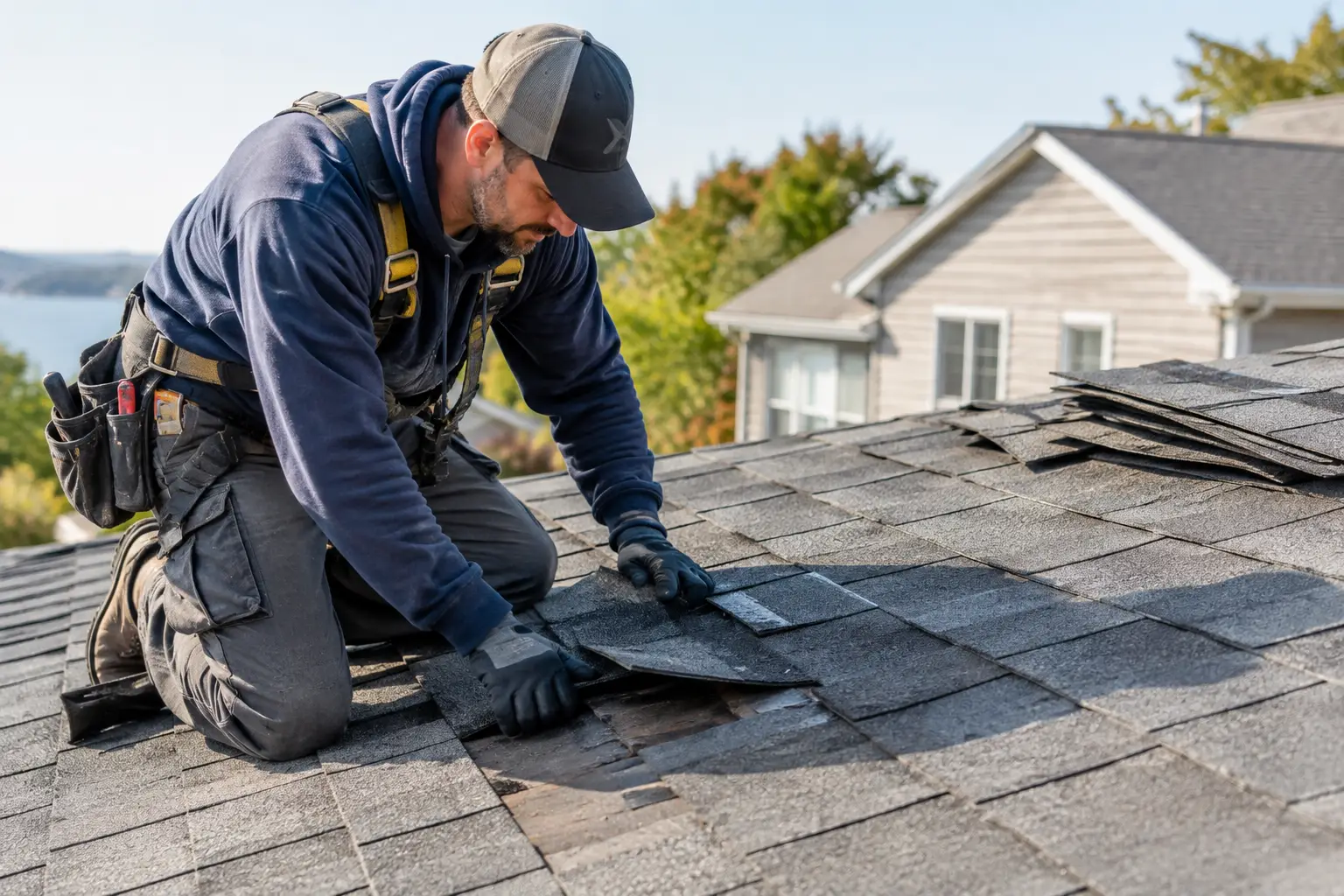
A proper repair begins with identifying the cause of the loss, not simply covering the open area. An experienced roofing contractor evaluates the missing section, the condition of adjacent shingles, the underlayment beneath them, and the roof deck where accessible. This helps determine whether the damage is isolated or part of a wider weather-related or age-related issue.
If the roof deck and underlying materials remain sound, the repair typically involves replacing damaged or missing shingles with compatible materials and securing the surrounding area so it sheds water properly. The contractor should also inspect common leak points, including flashing, pipe boots, vents, valleys, and roof-to-wall transitions.
Matching replacement shingles can be challenging on an older roof. Color can fade over time, and discontinued products may not be available. A professional can explain the available material options and whether a close blend is appropriate or whether the condition of the roof supports a larger repair area. The goal is not only to improve appearance, but to restore dependable weather protection.
For safety and to avoid causing further damage, do not walk on a roof to inspect missing shingles. From the ground, you can note the affected area, look for debris, and watch for interior changes. Then arrange an inspection as soon as conditions allow, especially if rain is expected.
Repair or Replacement: How the Decision Is Made
Roof repair is often the sensible choice when the missing shingles are limited to one area and the rest of the system is in good condition. A repair can address storm damage, restore the protective shingle pattern, and extend the useful life of a roof that still has sound materials and structure.
Replacement may be the better long-term recommendation when missing shingles are one symptom of widespread deterioration. Signs may include repeated leaks, extensive curling or cracking, large areas of granule loss, soft roof decking, or multiple past repairs. An aging roof with frequent wind damage may no longer hold replacement shingles securely, even when individual repairs are completed correctly.
There is no one answer for every property. A clear inspection should distinguish between an urgent repair needed to stop water intrusion and a broader recommendation based on the roof’s overall condition. Property owners deserve to understand what is damaged, why the recommended work is needed, and what outcomes to expect.
Protecting the Property While You Wait for Service
If shingles are missing during active rain, focus on protecting the interior and documenting what you can safely see. Move furniture or valuables away from any dripping or stained ceiling area, place a container under active drips, and take photos of visible interior damage and exterior debris from the ground.
Avoid placing yourself at risk with ladders, tarps, or roof access during wind, rain, or icy conditions. Water around electrical fixtures, a sagging ceiling, or a rapidly expanding leak calls for immediate professional attention. Emergency roofing service can help limit additional water exposure while a permanent repair plan is prepared.
After the immediate concern is addressed, consider the connected exterior systems. Clogged or damaged gutters can allow water to back up along roof edges, while failing chimney flashing or deteriorated masonry joints can resemble a shingle-related leak. Looking at the full exterior helps prevent a repair from addressing only part of the problem.
Common Questions About Missing Roof Shingles
Can one missing shingle cause a leak?
It can. The risk depends on the shingle’s location, the condition of the underlayment, roof slope, wind direction, and upcoming weather. One missing shingle does not always create an immediate interior leak, but it creates an opening that should be evaluated promptly.
Will insurance cover missing shingles?
Coverage depends on the policy, the cause of the damage, and the insurer’s assessment. Storm-related damage may be treated differently than wear and tear or maintenance-related deterioration. An inspection and clear documentation of visible conditions can help you understand the repair scope before making decisions.
How soon should a roof be inspected after wind damage?
Schedule an inspection as soon as it is safe after you notice missing shingles, shingle debris, a new leak, or visible lifting. Quick action is especially valuable before another period of rain, because exposed materials can deteriorate faster once moisture reaches them.
A missing shingle is a practical signal to check the roof before hidden moisture has time to spread. Top Pros Construction can inspect the affected area, explain the condition clearly, and recommend a repair approach built to protect your property for the long term.