
How to Patch Roof Flashing Without Missing the Leak
A roof leak that appears near a chimney, vent pipe, skylight, or wall is often blamed on shingles first. In many cases, the weak point is the flashing – the metal material that directs water away from joints and roof penetrations. Understanding how to patch roof flashing can help you recognize the scope of a problem, protect the interior, and know when a repair needs more than a quick sealant application.
For New Jersey and Staten Island property owners, flashing problems can show up after wind-driven rain, snow and ice cycles, or years of normal expansion and contraction. The visible stain inside may be several feet from where water first enters, so finding the actual source matters before any repair begins.
What Roof Flashing Does
Flashing is usually galvanized steel, aluminum, copper, or another corrosion-resistant metal installed where roofing meets a vertical surface or where something passes through the roof. Common locations include chimneys, plumbing vent pipes, skylights, dormers, valleys, and roof-to-wall intersections.
Its job is simple: move water onto the roof surface and toward the gutters instead of allowing it behind shingles, siding, masonry, or trim. A properly installed flashing system overlaps in the direction water flows. This layered arrangement is what keeps a joint weather-resistant even during heavy rain.
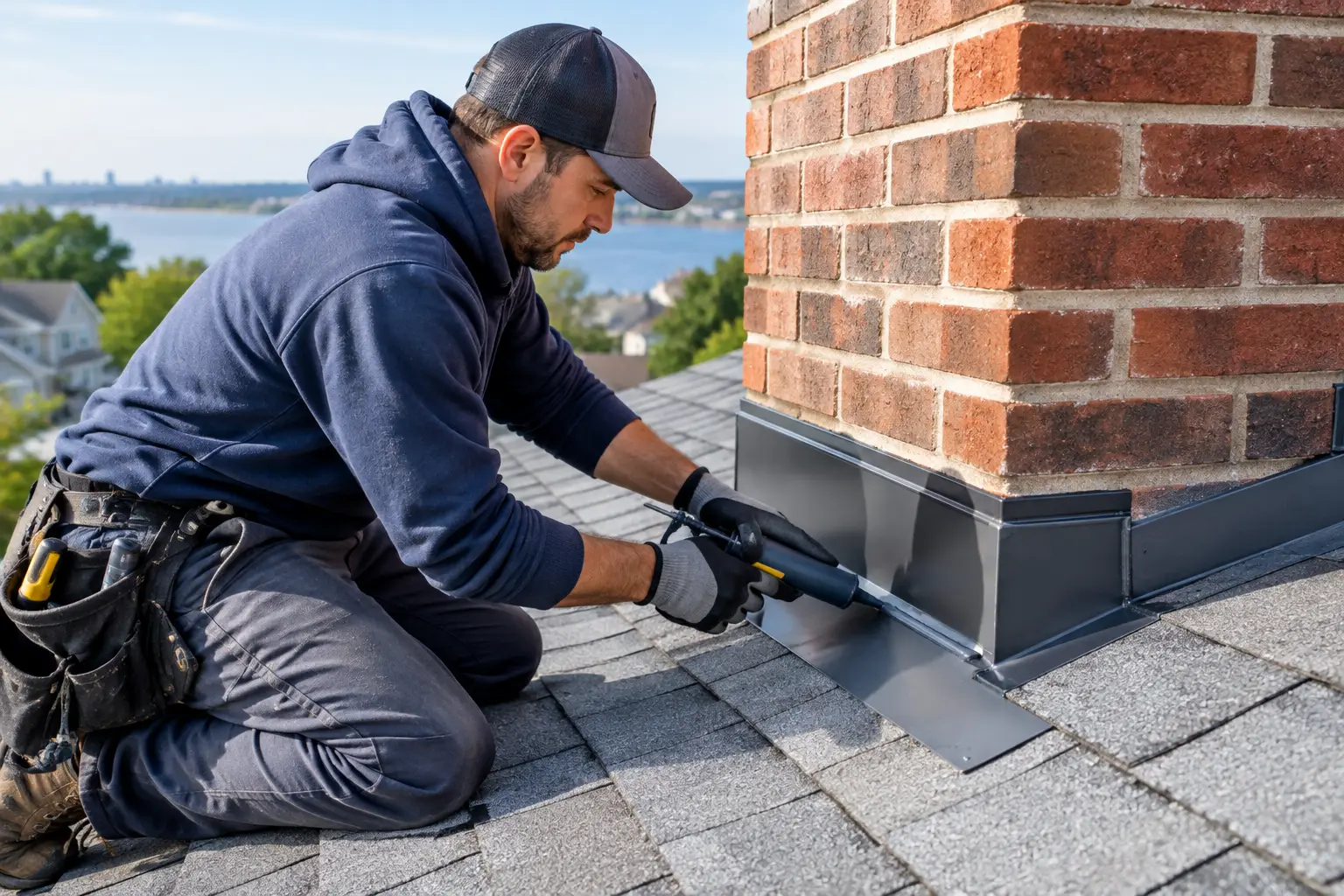
Flashing is not one universal piece of metal. Chimney flashing, for example, may include base flashing at the lower edge, step flashing along the sides, and counterflashing embedded into mortar joints or attached to the chimney. A repair that addresses only the visible edge can leave a hidden failure in place.
Signs Flashing May Need Attention
A leak does not automatically confirm damaged flashing. It could be caused by worn shingles, a failed pipe boot, a clogged gutter, deteriorated chimney mortar, or moisture entering around siding. Still, certain patterns make flashing a likely area to inspect.
Look for water stains on ceilings or upper walls near a chimney, dormer, or skylight. Damp insulation in the attic, peeling paint, soft drywall, and a musty odor after rain also deserve attention. On the exterior, you may see lifted or rusted metal, cracked sealant, missing fasteners, gaps where the roof meets a wall, or loose shingles around a penetration.
Chimneys deserve especially careful evaluation. Cracked crowns, open mortar joints, damaged brick, and missing or separated counterflashing can all admit water. Because chimney repair and roof repair often overlap, treating one area while overlooking the other may allow a recurring leak to continue.
How to Patch Roof Flashing Safely and Effectively
The right repair depends on what has failed. A small opening in otherwise sound flashing may be repairable. Corroded metal, improperly lapped sections, loose counterflashing, or surrounding roofing damage usually calls for a more involved repair.
The first step is identifying the water path, not simply covering the place where a stain appears. A roofing professional inspects the roof surface, flashing edges, shingles, fasteners, and nearby transitions. When accessible, the attic can provide useful clues such as water tracks, wet sheathing, or daylight around a penetration.
For minor defects, a repair may involve removing failed sealant, securing a loose section, and applying a compatible roofing sealant where the flashing design calls for it. The work must be done on clean, dry material. Sealant is a detail material, not a substitute for correctly installed metal flashing and overlapping shingles.
If flashing is bent, rusted through, undersized, or installed in the wrong sequence, patching it may only delay the next leak. The more durable approach is to remove the affected shingles as needed, replace the flashing, and reinstall the roofing materials so water sheds properly. Around chimneys, the repair may also require masonry work to restore the mortar joint that holds counterflashing in place.
Working on a roof has real fall and material-damage risks, particularly on steep, wet, icy, or aging roofs. Property owners can safely document interior stains and visible exterior concerns from the ground, but roof-level repairs are generally best handled by a qualified contractor with the right access and safety practices.
When Sealant Is Not Enough
A bead of caulk can look like a solution because it stops water temporarily. But if water is getting behind the flashing, expanding gaps or cracked sealant are often symptoms rather than the main problem. Excess sealant can also conceal rust, trap moisture, and make future repairs harder to evaluate.
Replacement is often the better choice when the metal has widespread corrosion, the flashing has pulled away from masonry or siding, shingles around it are brittle or damaged, or the roof is near the end of its service life. In those situations, it may make sense to coordinate flashing work with roof repair or replacement rather than disturb aging materials twice.
Flashing Problems at Common Roof Locations
Different roof features fail in different ways, which is why a one-size-fits-all patch is rarely reliable.
Chimneys
Chimney leaks may come from step flashing, counterflashing, a deteriorated chimney crown, missing mortar, or damaged brick. Water can also enter through the cap or flue area and travel down inside the structure. A complete inspection should consider both the roof connection and the chimney masonry instead of assuming the metal is solely responsible.
Plumbing Vent Pipes
Vent pipes typically use a flashing boot with a flexible collar around the pipe. Over time, the collar can crack, split, or pull away. Replacing a failed boot is usually more dependable than repeatedly sealing the split, especially if the surrounding shingles are still in good condition.
Skylights and Dormers
Skylights require manufacturer-specific flashing details and careful integration with shingles. Dormers involve both roofing and siding transitions, so a leak may originate from head flashing, step flashing, trim, or siding above the roofline. Water testing and close inspection help narrow down the source before materials are removed.
Roof-to-Wall Intersections
Where a sloped roof meets a wall, step flashing and kick-out flashing direct water away from siding and into the gutter. Missing kick-out flashing can cause staining, rot, or deterioration on the wall below. This is one area where roofing, siding, and gutter performance all affect the outcome.
What Affects the Scope of a Flashing Repair
The size of the repair is influenced by the flashing location, roof pitch, accessibility, material type, condition of nearby shingles, and whether underlying wood has been damaged. Chimney repairs can also involve repointing mortar joints, repairing a crown, or replacing compromised brick. A leak that has continued for a long time may require inspection of decking, insulation, interior finishes, and framing before the full scope is clear.
For multifamily and commercial properties, access coordination and protecting entrances, landscaping, or occupied areas can also affect the project plan. Flat roofs use different flashing systems than asphalt shingle roofs, particularly around parapet walls, curbs, drains, and mechanical penetrations. The repair materials must match the roofing system.
A clear estimate should describe the affected area, the proposed repair method, and any related work that is visible during inspection. If hidden deterioration is possible, it should be discussed as a possibility rather than presented as a confirmed condition before the area is opened.
Protect Your Roof Between Inspections
Basic maintenance can reduce the chance that water overwhelms vulnerable roof details. Keep gutters and downspouts clear so water is directed away from the roof edge and foundation. Trim branches that scrape against roofing materials, and look for displaced shingles or obvious flashing movement after major storms from a safe ground-level view.
Do not pressure-wash roof materials or apply broad coatings over flashing without knowing whether they are compatible with the roof system. These shortcuts can create new problems or make future repairs more difficult. If you notice active dripping indoors, place a container below it, move valuables away from the area, and arrange for the roof to be assessed promptly.
If you are seeing stains near a chimney, skylight, vent, or exterior wall, Top Pros Construction LLC can inspect the roof connection and related chimney, siding, gutter, or masonry conditions. We will help you understand whether a targeted flashing repair is appropriate or whether the surrounding materials need attention for a lasting result.