
How to Identify Siding Warping Before It Spreads
A siding problem can look minor from the driveway, then become much more noticeable when afternoon sun hits the wall or rain runs down it. Knowing how to identify siding warping early helps you address the source before loose panels, trapped moisture, or repeated repairs affect more of your exterior.
Warped siding does not always mean the entire wall needs replacement. Sometimes the issue is limited to a few panels installed too tightly, damage from heat, or a drainage problem around the roofline. The key is to look for patterns, consider what has changed around the area, and have the underlying condition checked before choosing a repair.
What Does Warped Siding Look Like?
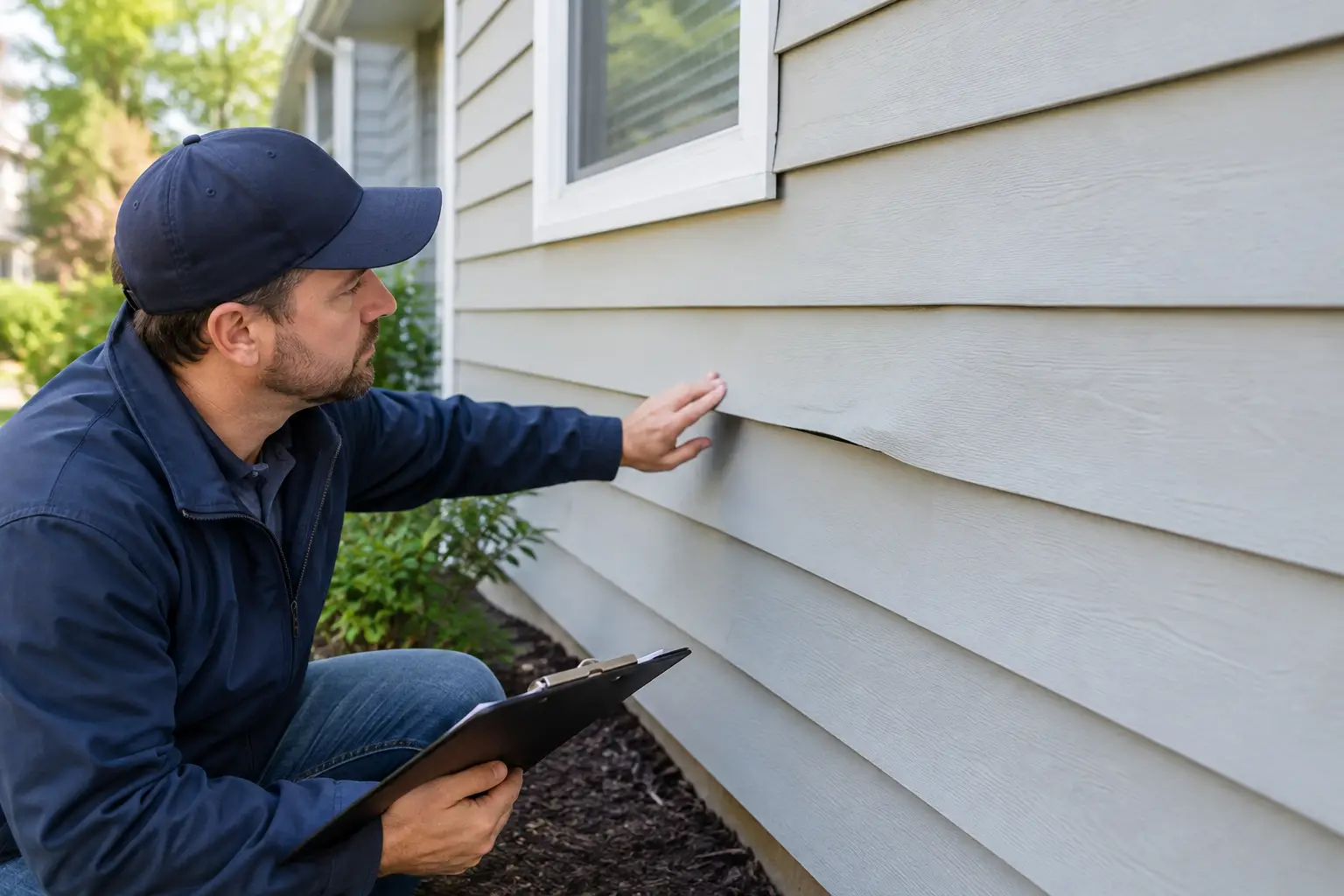
Warping is any visible change that keeps siding from lying flat and moving as intended. It may appear as a panel that bows outward, dips inward, ripples across its surface, or pulls away from a seam. On vinyl siding, warping often shows as wavy horizontal courses. On wood, engineered wood, or fiber cement siding, you may see cupping, swelling, cracked edges, or boards that no longer sit flush.
A little shadow along a siding panel is not automatically a defect. Siding profiles are designed with overlaps and channels that create lines and depth. Warping is different because the panel looks uneven compared with the panels around it, or the shape changes noticeably as you view the wall from different angles.
How to Identify Siding Warping From the Ground
Start with a slow visual check from several positions around the property. Morning or late-afternoon light can make irregularities easier to see because it casts shadows across the wall. Do not climb ladders or pull at loose material. A ground-level review can reveal enough to determine whether a professional siding inspection is appropriate.
Look for ripples and waves across a wall
On vinyl siding, heat-related movement or overly tight fastening can create a rippled appearance. Rather than hanging in straight, even rows, the panels may look like they are buckling between nail locations. The distortion may affect one section near a window or extend across a large portion of the wall.
Pay attention to whether the rippling is concentrated on the side of the building that receives intense afternoon sun. Reflected heat from nearby windows, glass doors, patio covers, or even certain roofing surfaces can sometimes contribute to heat distortion. That possibility needs to be evaluated on site, since not every sun-facing wall is affected for the same reason.
Check panel edges, seams, and corners
Siding that is pulling away at a corner, lifting at a lap joint, or separating from trim may be moving beyond its intended position. Gaps can also develop around windows, doors, utility penetrations, and exterior fixtures. These openings do not confirm water damage by themselves, but they can allow wind-driven rain to reach areas behind the siding.
Look for siding courses that seem to pinch together or leave unusually wide gaps. Vinyl panels need room to expand and contract with changing temperatures. When they are fastened too tightly or cut without enough clearance at trim, that natural movement can show up as bowing or buckling.
Notice changes in color, texture, or sheen
A warped panel may catch the light differently than the panels beside it. You may notice a dull patch, a glossy spot, fading, or a surface that looks slightly melted or distorted. Discoloration near the bottom edge of siding can also point to persistent splashback, overflowing gutters, or water collecting at the foundation.
For painted wood or fiber cement siding, peeling paint, swollen edges, or soft-looking areas deserve attention. These signs can result from moisture exposure, but an inspection is needed to determine whether the issue is surface-level or extends to the wall materials behind the siding.
Compare one wall with another
Comparing the affected elevation with a similar side of the home can be useful. If only the wall below a damaged gutter or roof valley is showing distortion, drainage should be part of the investigation. If several walls show widespread movement, the material’s age, installation, weather exposure, and overall condition may all be relevant.
Take clear photos from a distance and close range after you notice a change. Photos with dates can help show whether the condition is stable, worsening, or appearing after storms, heavy rain, or periods of extreme heat.
Common Reasons Siding Warps
Warping has more than one possible cause, and visible symptoms can overlap. A careful assessment should distinguish between a panel problem and the issue that caused it.
Heat is a common factor with vinyl siding. Vinyl expands in warm conditions, so panels that cannot move freely may bend or ripple. Concentrated reflected sunlight can also affect certain areas more than others. Replacing a visibly distorted panel without addressing the heat source or installation limitation may lead to the same issue again.
Moisture is another concern, especially with wood-based siding materials. A roof leak, failed flashing, overflowing gutter, blocked downspout, or deteriorated trim can direct water behind or onto siding repeatedly. In New Jersey and Staten Island, freeze-thaw cycles can make small exterior openings more troublesome by widening cracks and stressing already damp materials.
Impact damage can also change the shape of siding. Wind-blown debris, a fallen branch, or contact from lawn equipment may crack, dent, or loosen a panel. Storm damage may be easy to spot, but it is still worth checking nearby trim, gutters, roof edges, and masonry surfaces for related damage.
Finally, age matters. Older siding can become brittle, lose its ability to stay flat, or show wear at seams and fastener points. That does not automatically require a full replacement, but isolated repairs become harder when surrounding materials are faded, fragile, or no longer available in a close match.
Why Roofs and Gutters Matter to a Siding Problem
Siding is only one part of the building envelope. Water from a damaged roof edge, leaking flashing, clogged gutter, or disconnected downspout can run where it should not and affect the wall below. A recurring stain, warped siding near the eaves, or soft trim around a window may be connected to drainage above rather than the siding alone.
This is why a siding inspection often includes a look at the roofline and gutter system. The goal is not to assume every issue requires roofing or gutter work. It is to identify the path water is taking and avoid repairing the visible symptom while missing the cause.
Masonry details can matter as well. Cracked brick joints, loose step flashing where a roof meets a wall, or deteriorated chimney masonry can allow water into nearby exterior assemblies. When the affected siding is close to one of these areas, a broader exterior review can provide a clearer repair plan.
Repair or Replacement: What Is Usually Considered?
The right solution depends on how widespread the warping is, what caused it, and whether water has reached materials behind the siding. A limited issue may be addressed by replacing damaged panels, correcting trim details, or improving roof and gutter drainage. Matching color and profile is often a practical consideration when only part of the wall is being repaired.
Replacement may make more sense when damage covers multiple elevations, panels are brittle or repeatedly failing, moisture has affected the wall system, or compatible replacement materials are not available. For planned siding replacement, material selection, insulation details, trim, ventilation, drainage, and transitions at roofing and masonry should be considered together.
Cost is influenced by the size and height of the affected area, siding type, access, condition of the wall underneath, trim work, and whether related roof, gutter, or flashing repairs are needed. A clear written scope should explain what is visible, what needs further evaluation, and which repairs are recommended based on confirmed conditions.
When to Arrange a Professional Inspection
Arrange an inspection when siding is visibly buckling, separating, cracking, or showing possible moisture-related swelling. It is especially wise to call after a storm if panels are loose or missing, or when you see staining near the roofline, windows, gutters, or chimney area.
You should also seek professional input if the same siding section has been repaired before. Repeated movement is a sign that the original cause may still be present. A thorough evaluation can review the siding, trim, drainage components, and nearby roof details without guessing from one symptom.
At Top Pros Construction LLC, we help property owners across New Jersey and Staten Island evaluate siding concerns alongside the exterior systems that may be contributing to them. If you are noticing waves, gaps, or loose siding panels, arrange an inspection or request an estimate so you can make a repair decision based on the condition of your home, not just its appearance.