

Attic Moisture Damage Case Study for Homeowners
A faint ceiling stain in an upstairs bedroom can be the first visible sign of a much larger issue above it. This attic moisture damage case study follows a typical situation homeowners face after a wet New Jersey winter: moisture had been affecting the attic for months, but the problem was not caused by one obvious hole in the roof.
The homeowner initially noticed a musty odor near a second-floor closet and slight discoloration at the ceiling corner. There was no active drip during the first call, and the roof looked generally intact from the ground. That is exactly why attic moisture problems deserve a careful inspection. Water can enter through small exterior vulnerabilities, form from condensation inside the attic, or result from both conditions at the same time.
What the homeowner saw first
The home had an asphalt-shingle roof and an unfinished attic. The homeowner had recently seen moisture on the inside of an upstairs window and assumed the ceiling stain was connected to indoor humidity. That was partly true, but it did not tell the whole story.
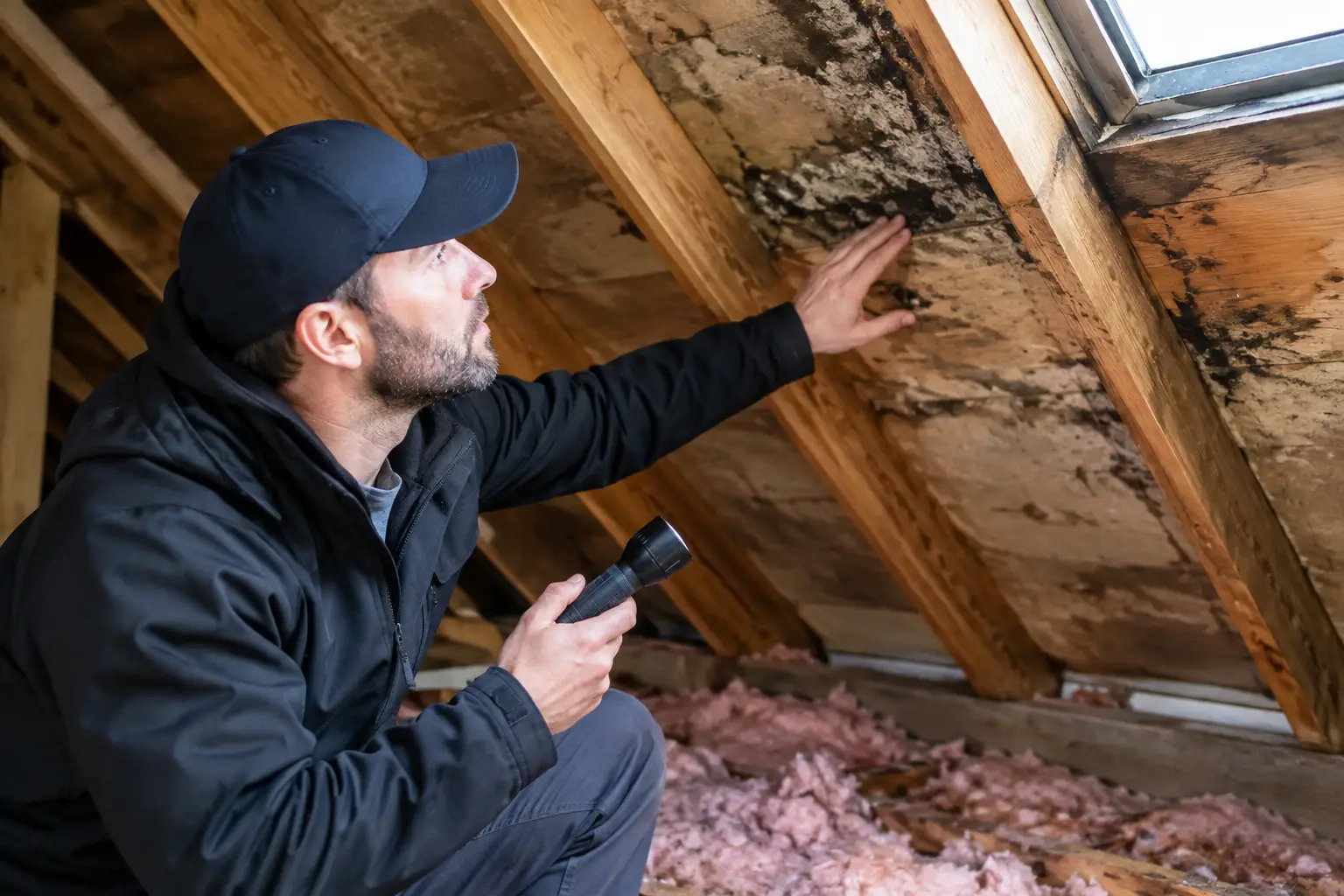
In the attic, several warning signs were present: darkened roof sheathing near the eaves, damp insulation in isolated areas, rusty nail tips, and a light mildew odor. The sheathing was not severely deteriorated, but it had been wet often enough to require prompt attention. Left alone, recurring moisture could have damaged framing, reduced insulation performance, and created a more extensive interior repair.
The key lesson was that a small stain below does not reliably show the location or size of the issue above. Water can travel along framing, roof decking, or insulation before it becomes visible on a ceiling.
Attic Moisture Damage Case Study: The Inspection Findings
A thorough inspection needs to look at the roof system and the attic as one connected assembly. In this case, the exterior review identified aged sealant at a roof penetration and shingle wear in a section that received heavy weather exposure. Neither condition had created a dramatic opening, but both could allow wind-driven rain to reach the roof deck under certain conditions.
The attic inspection revealed a second contributor: limited ventilation at the lower roof edge. The attic had exhaust ventilation near the top of the roof, but intake airflow was restricted. Without enough fresh air entering at the eaves, warm, humid air from the living space was more likely to remain trapped in the attic during cold weather.
When warm indoor air reaches cold roof sheathing, condensation can form. The result may look similar to a roof leak: damp wood, wet insulation, mold-like staining, and drips. The distinction matters because replacing shingles alone would not fully correct a ventilation-related moisture issue. On the other hand, adding ventilation without addressing exterior entry points would also leave the home exposed during rain.
This was a combined problem. Minor water intrusion during storms and seasonal condensation were both adding moisture to the attic.
Why the source was not obvious from inside the house
The ceiling stain appeared near the center of an upstairs room, while the most affected attic sheathing was closer to an exterior wall. This is common. Gravity, insulation, framing members, and air movement can all change where moisture eventually appears.
It also depends on weather conditions. A stain that darkens after wind-driven rain points more strongly toward exterior water entry. Frost, dampness, or rusty nails throughout the attic during cold spells can point toward condensation. In many homes, the pattern is mixed, which is why a complete diagnosis is more useful than treating the first symptom.
The Recommended Repair Scope
The repair plan focused on stopping new moisture from entering and helping the attic dry and perform as intended. The exterior work included replacing compromised roofing materials in the affected area and properly addressing the roof penetration where worn sealant had become a concern. Damaged materials were removed only where the inspection showed they were necessary to replace.
Inside the attic, the wet insulation was evaluated and affected material was removed so trapped moisture would not remain against the ceiling structure. The ventilation path at the eaves was then addressed to improve airflow from intake to exhaust. Any ventilation work has to be matched to the roof design, attic layout, and existing exhaust components. More ventilation is not automatically better if it is poorly balanced or installed in the wrong location.
The work sequence mattered. Repairing the roof first helped prevent additional rainwater from entering. Addressing ventilation and wet insulation next reduced the conditions that allowed condensation to continue. Finally, the homeowner could monitor the attic and interior ceiling after changing weather conditions to confirm that the space was drying properly.
What could have happened if the problem waited
Attic moisture damage often progresses quietly. A homeowner may only see a stain, smell an odor, or notice that an upper floor feels unusually cold. Meanwhile, repeated wetting can gradually affect the roof deck and framing.
Moisture can also compress or degrade insulation, making it less effective. That can raise heating and cooling demands and make the upper level less comfortable. If conditions remain damp over time, staining and microbial growth may spread across wood surfaces. A small repair can turn into a larger roofing, insulation, and interior restoration project.
That does not mean every attic stain requires major work. Some cases are localized and can be corrected before damage spreads. The important point is to identify the cause early rather than covering the stain and waiting for the next storm or cold season.
Signs Your Attic May Have a Moisture Problem
Homeowners do not need to enter an attic to recognize every concern. An upstairs ceiling stain, peeling paint, a persistent musty smell, or unexplained moisture around windows can justify an exterior and attic inspection. After a storm, look for changes in ceiling discoloration or water marks around chimneys, vents, and exterior walls.
If attic access is safe and practical, visible condensation, damp insulation, darkened roof decking, or rusty fasteners are all reasons to call a professional. Do not walk on exposed attic framing or disturb damp insulation while trying to locate a leak. Roof systems can be slippery, attic surfaces can be unstable, and the apparent wet spot may not be the actual source.
Property managers should take these warning signs seriously in multifamily buildings as well. Moisture can travel between roof areas, attic spaces, and units, making a prompt, documented inspection especially useful.
A Better Way to Respond to Ceiling Stains
The right response starts with finding out whether moisture is entering from outside, condensing inside the attic, or doing both. A contractor should review roof coverings, flashing, penetrations, gutters and drainage where relevant, attic insulation, and airflow conditions. The goal is not to sell a larger project than necessary. It is to recommend a repair scope that addresses the source and protects the property over time.
For homeowners in New Jersey and Staten Island, changing temperatures, heavy rain, snow, and wind can expose weak points in aging exterior systems. A responsive inspection after a new stain, roof leak, or attic odor can prevent unnecessary damage and uncertainty. Top Pros Construction approaches these concerns by examining the full exterior picture, then explaining what was found and what practical work is needed.
A ceiling stain may be small, but it is still your home asking for attention. Acting before the next major storm or cold-weather cycle gives moisture less time to become a larger repair.