TPO Versus EPDM Roofing for Your Flat Roof
A flat or low-slope roof leak rarely starts as a simple material question. Drainage, flashing details, rooftop equipment, foot traffic, insulation, and the condition of the existing roof all affect long-term performance. Still, when property owners are deciding between common single-ply membranes, TPO versus EPDM roofing is one of the most practical comparisons to make.
Both systems can provide dependable protection when they are specified for the building and installed with care. The better choice depends on how the roof is used, how much sun and standing water it receives, what is beneath the membrane, and whether repairs or a full replacement are needed. A professional inspection helps separate a membrane failure from a drainage or flashing problem that a new roof alone would not solve.
What TPO and EPDM Roofing Have in Common
TPO and EPDM are both single-ply roofing membranes used on low-slope residential, multifamily, and commercial roofs. Unlike asphalt shingles, these roofing systems create a continuous waterproof surface across broad roof areas. They are commonly installed over insulation and may be mechanically attached, fully adhered, or held in place with ballast where the roof design allows.
Each material is flexible enough to work around drains, parapet walls, penetrations, and rooftop equipment. Both can be part of a long-lasting roof system, but neither membrane can compensate for poor edge detailing, damaged flashing, blocked drains, or water that repeatedly ponds in the same area.
The installation details matter as much as the membrane selection. Seams, transitions, pipe boots, curbs, roof edges, and the connection to walls are all areas where experienced workmanship protects the property from water intrusion.
TPO Versus EPDM Roofing: The Core Differences
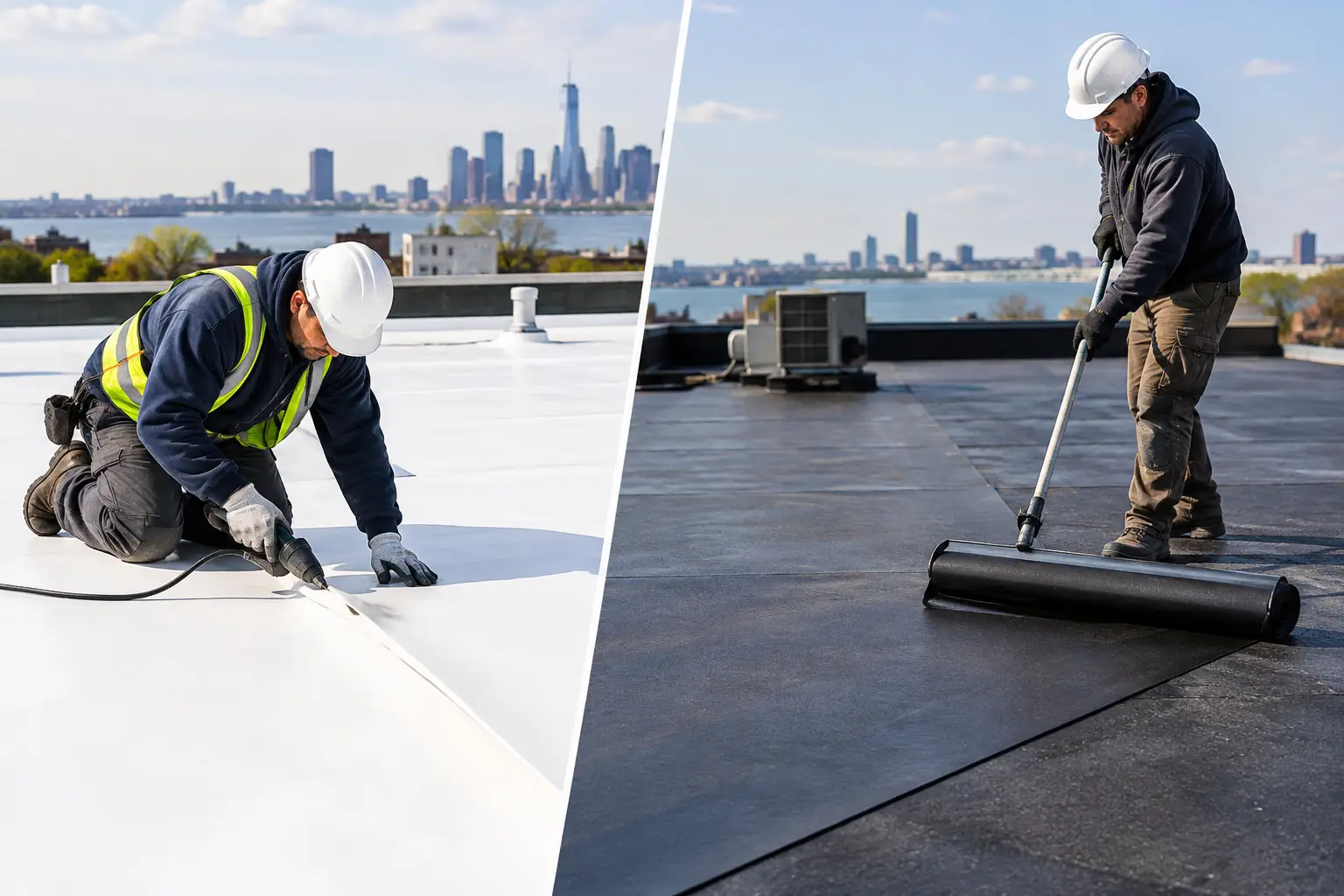
TPO stands for thermoplastic polyolefin. It is most often installed in white or light colors, although other colors may be available. Its seams are heat-welded, forming a fused connection between membrane sheets. This welding process is a major reason TPO is frequently selected for large, exposed low-slope roofs.
EPDM is a synthetic rubber membrane. Traditional EPDM is commonly black, though lighter-colored options are available. Its seams are typically joined using adhesives and seam tape rather than heat welding. EPDM has been used on low-slope roofs for many years and is known for its flexibility.
Neither difference automatically makes one material right for every building. Instead, property owners should consider how those material characteristics fit the roof’s conditions and maintenance needs.
Heat and sunlight
A white TPO roof reflects a significant amount of sunlight, which can help limit heat absorption at the roof surface. That characteristic can be especially useful on buildings with broad, open roof areas exposed to direct summer sun. It may also support a cooler roof environment around certain mechanical equipment.
Black EPDM absorbs more heat than white TPO. In colder weather, that can help warm the membrane surface, but it does not replace proper insulation or solve ice and snow concerns. For New Jersey and Staten Island properties, the local climate includes summer heat, heavy rain, snow, and freeze-thaw cycles. The roof assembly, insulation level, drainage layout, and building use should all be reviewed alongside membrane color.
Seams and repairs
TPO’s heat-welded seams are a key performance advantage when properly installed. Because the sheets are fused together, the seam becomes a strong part of the roofing system. Proper welding requires the right equipment, clean material, correct temperature settings, and careful quality control.
EPDM seams depend on surface preparation, adhesive or tape application, pressure, and weather-appropriate installation conditions. A well-installed EPDM seam can perform reliably, but aging seams may need closer attention during inspections. EPDM repairs are often straightforward for an experienced roofing professional, particularly when a leak is identified before water reaches insulation or the roof deck.
In either system, a leak is not always caused by the field membrane. Penetrations, wall flashing, drains, expansion joints, and edge metal deserve just as much attention during diagnosis.
Flexibility and movement
EPDM remains highly flexible and can accommodate normal movement in a roof assembly. This can be valuable on roofs with numerous details or changing temperatures. Its rubber-like character is one reason it remains a common option for low-slope applications.
TPO is also flexible, but its performance depends heavily on using compatible components and following the manufacturer’s installation requirements. A roof should be designed as a complete system, not as a membrane chosen in isolation. Mixing incompatible materials, using improper sealants, or overlooking transitions can create preventable problems later.
Puncture resistance and roof traffic
Roofs that support HVAC servicing, maintenance crews, or other regular foot traffic need special consideration. Both TPO and EPDM can be damaged by sharp objects, dropped tools, or repeated walking in the same areas. Walkway pads and thoughtful equipment access routes can help protect either membrane.
Material thickness, reinforcement, insulation type, and the amount of expected traffic all influence puncture resistance. A roof with several serviceable units may need a different specification than a small residential low-slope addition with limited access. The right question is not simply which membrane is tougher. It is whether the full roof system is designed for the demands placed on it.
When TPO May Be the Better Fit
TPO is often a strong choice for properties that have large, sunny roof surfaces and benefit from a light-colored membrane. Its welded seams can be particularly appealing on roofs with long runs of membrane and many exposed seams. It is also commonly considered for commercial buildings, multifamily properties, and residential low-slope sections where a clean, reflective roof surface is preferred.
TPO may be less suitable if the roof has unusual details that are better addressed by another system or if the installer cannot provide the level of seam preparation and quality control the membrane requires. The membrane itself is only one part of the decision. Drainage corrections, insulation upgrades, flashing replacement, and removal of wet materials may be necessary to create a reliable finished system.
When EPDM May Be the Better Fit
EPDM can be an excellent option for low-slope roofs where flexibility, proven performance, and repair considerations are priorities. It is commonly used on buildings with a variety of roof penetrations and details. A properly installed EPDM roof can handle seasonal temperature changes while providing a durable waterproof layer.
For some property owners, the traditional black membrane appearance is acceptable or even preferred. Others may prioritize a lighter roof surface, which can shift the discussion toward white EPDM or TPO. Roof appearance matters, but it should not outweigh water management, proper detailing, and the condition of the existing structure.
EPDM also requires close attention to seam workmanship and compatible repair materials. If a roof has previous patches, coatings, or multiple layers of aging repairs, an inspection can determine whether targeted repair is reasonable or whether replacement will better protect the building.
Do Not Let Ponding Water Decide the Material Alone
Standing water is one of the most misunderstood low-slope roof issues. TPO and EPDM are both designed for low-slope applications, but persistent ponding can accelerate wear, expose weaknesses at seams and details, and make leak detection more difficult. Switching membrane types without addressing the reason water collects may leave the underlying problem in place.
During an inspection, a roofing professional should look at drain locations, scuppers, gutters, roof slope, insulation settlement, structural deflection, and debris buildup. A clogged drain can create an urgent issue after a storm. A recurring low spot may require a more involved correction as part of the roofing project.
Questions to Ask Before Choosing a Membrane
Before approving a TPO or EPDM roof, property owners should understand the scope of work. Ask whether wet insulation or damaged decking has been identified, how drains and flashing will be addressed, and how rooftop equipment will be protected during the project. It is also reasonable to ask how seams, penetrations, and roof edges will be inspected before the job is complete.
For property managers, communication and scheduling matter as well. Occupants, tenants, and building operations may need to be considered when staging materials and completing work around active entrances or mechanical equipment. A clear estimate should explain the recommended system and the conditions it is intended to address.
A dependable roof decision starts with the actual condition of the property, not a one-size-fits-all material preference. For a low-slope roof in New Jersey or Staten Island, an experienced inspection can clarify whether TPO, EPDM, repair work, drainage improvements, or a complete replacement is the practical path forward. Addressing the source of water intrusion early gives your property the best chance of staying dry through the next storm.